Air Taxi Pilot Programs Show Future Transportation Moving Toward Real-World Tests
FAA pilot programs are moving electric air taxis toward structured testing, but public use still depends on safety, certification, infrastructure and local acceptance.
Save Article
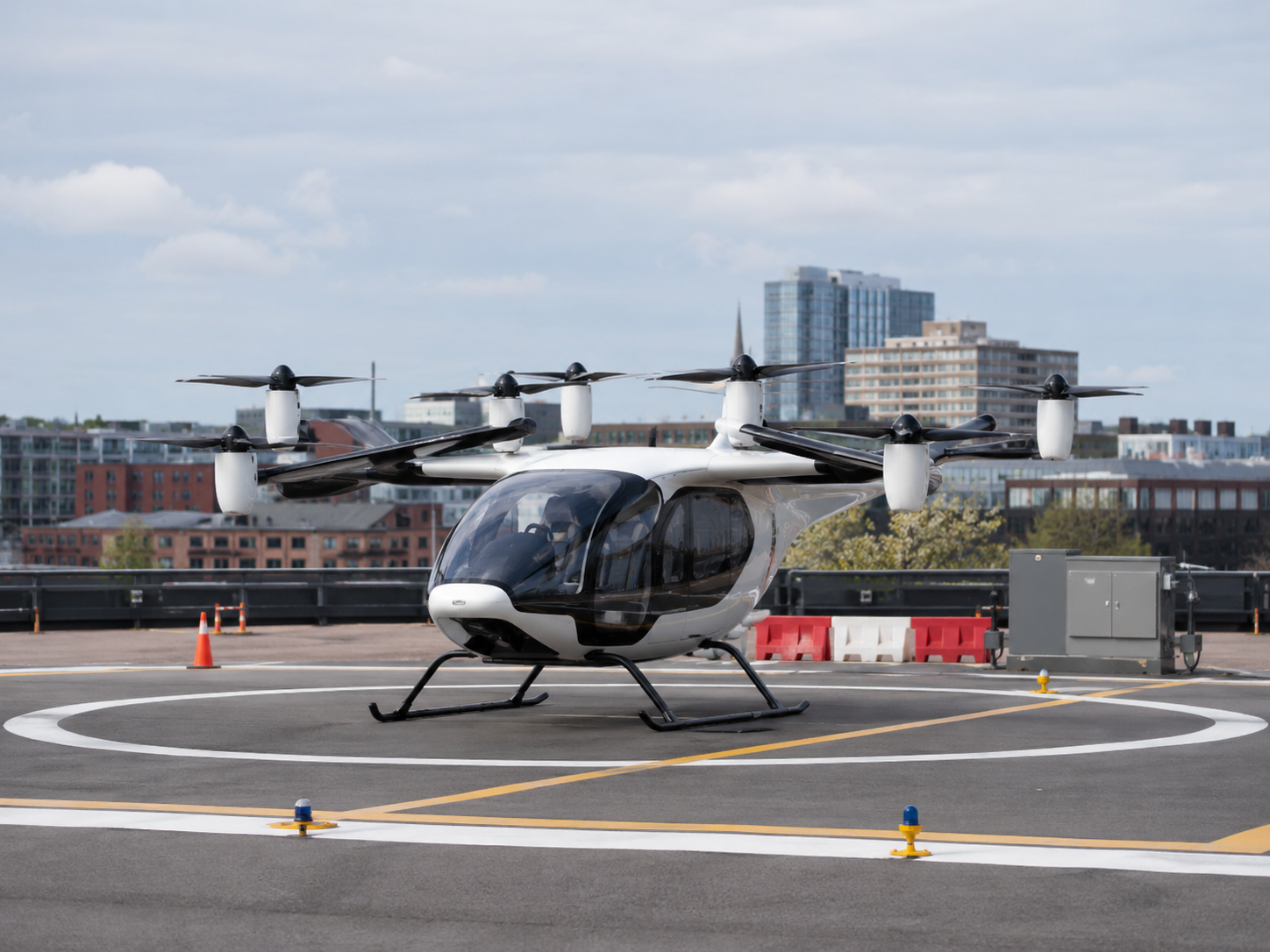
Air taxi programs are moving toward real-world tests, but public use still depends on safety, infrastructure and airspace rules. Editorial illustration by TheDailyGlobe.
Key Facts
- FAA describes Advanced Air Mobility aircraft as typically highly automated, electrically powered and capable of vertical takeoff and landing.
- FAA says many such aircraft are often referred to as air taxis.
- FAA introduced the eVTOL Integration Pilot Program in 2026 to accelerate safe deployment of AAM vehicles in the national airspace.
- FAA selected eight proposals as part of the eVTOL Integration Pilot Program.
- Pilot programs do not mean broad public availability is already here.
The appeal of an air taxi is easy to understand: a short trip over traffic instead of sitting in it. The harder question is whether that idea can work safely in real cities, near airports, above neighborhoods and inside already busy airspace.
The Federal Aviation Administration is moving that question into structured testing. The agency introduced the eVTOL Integration Pilot Program in 2026 to accelerate safe deployment of advanced air mobility vehicles in the national airspace.
That does not mean air taxis are about to become a normal part of everyday travel. The current story is more measured: federal officials are trying to understand how these aircraft can be tested, certified, operated and managed before public use becomes routine.
What Air Taxis Are Actually Testing
Air taxis are often described as electric vertical takeoff and landing aircraft, or eVTOLs. FAA materials describe advanced air mobility aircraft as typically highly automated, electrically powered and able to take off and land vertically.
That vertical takeoff ability is part of what makes the idea attractive. In theory, aircraft could operate from smaller landing areas than traditional runways and handle short regional or urban trips. But the aircraft is only one part of the system.
A real service would also need safe landing sites, charging or energy infrastructure, maintenance systems, trained operators, air traffic coordination, emergency procedures and rules that local communities can live with.
Why FAA Involvement Matters
Aviation is not like launching a new phone app or putting a new scooter on a sidewalk. Aircraft safety depends on certification, operating rules, pilot or automation standards, maintenance requirements and coordination with other aircraft.
That is why FAA pilot programs matter. They give regulators and participants a way to test how air taxi technology fits into the national airspace before the public is asked to trust it at scale.
FAA's selection of eight proposals for the program shows that the agency is moving beyond abstract discussion. But proposal selection is still not the same as mass public service. It is a step toward learning what works, what needs rules and what may not be ready.
What Could Slow Public Use
Several practical questions remain unresolved. Safety certification is the first. Aircraft carrying passengers over populated areas have to meet standards that are much higher than ordinary consumer technology.
Infrastructure is another issue. Cities would need places for these aircraft to land and take off, and those sites would need to fit into transportation networks without creating new problems for surrounding neighborhoods.
Noise and local acceptance may matter as much as engineering. A route that looks efficient on paper may face resistance if communities are worried about aircraft noise, safety, visual clutter or traffic around landing sites.
What Remains Unclear
The biggest unknown is when air taxis could become practical for ordinary passengers. FAA materials confirm the pilot-program work, but they do not establish a broad public-service timeline.
Cost is also uncertain. Even if the aircraft work safely, that does not tell readers whether rides would be affordable, widely available or mostly limited to business travelers, airport routes or specialized use cases.
Another open question is how these aircraft will share airspace with planes, helicopters, drones and emergency aircraft. That coordination has to work reliably before air taxis can move from limited tests to normal public service.
What To Watch Next
The next signals to watch are FAA updates on pilot sites, aircraft certification milestones and local infrastructure decisions. Those will show whether the industry is moving from demonstration flights toward repeatable operations.
Readers should also watch how local governments respond. Air taxi service cannot become normal on federal approval alone. Cities, airports and communities will have to decide where this technology fits and where it does not.
For now, air taxis are best understood as future transportation entering a serious testing phase. The idea is no longer just science fiction, but it is also not yet a normal ride option. The real test is whether the technology can earn its place through safety, reliability and practical use.
Reporting note: Reporting draws on Federal Aviation Administration materials, advanced air mobility program resources, aviation safety guidance, and reviewed background materials. This article was produced with AI-assisted research and reviewed by an editor before publication.