AI Order Delay Shows the Fight Over Who Checks Powerful Models
President Trump postponed a planned AI order after concerns that federal review of advanced systems could slow U.S. technology development.
Save Article
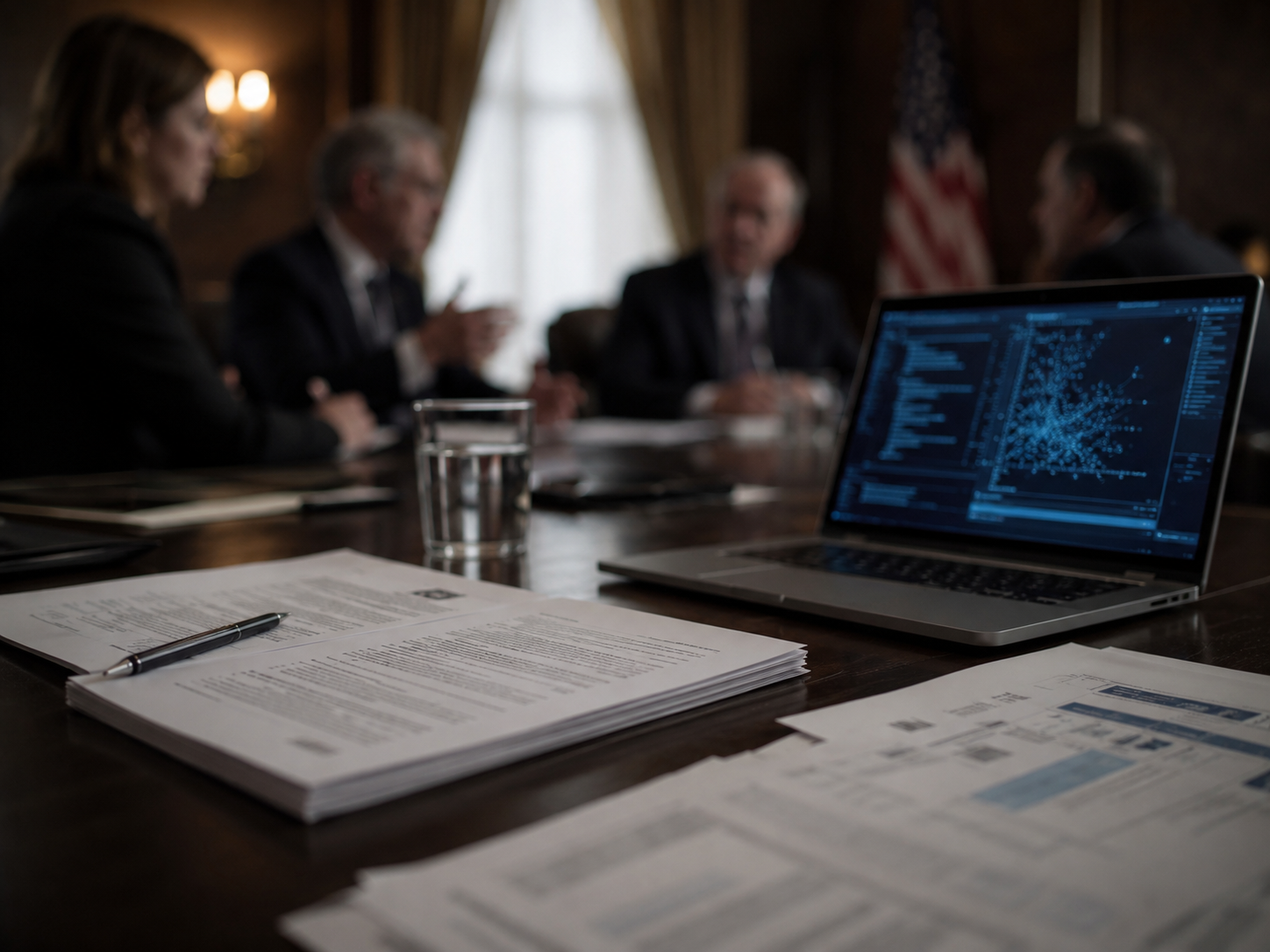
President Trump postponed a planned AI order after concerns that federal review of advanced systems could slow U.S. technology development. Editorial illustration by TheDailyGlobe.
Key Facts
- President Trump called off a planned May 21 signing ceremony for an AI executive order.
- AP reported that the draft order would have created a framework for reviewing national security risks from advanced AI systems before public release.
- Nextgov/FCW reported that the order was expected to create a voluntary framework for government review of AI models ahead of release.
- The order has not been signed, so reported draft provisions should not be treated as final federal policy.
- Administration officials have publicly described AI policy as a balance between promoting innovation and addressing cybersecurity, privacy, and safety concerns.
President Donald Trump postponed a planned White House signing ceremony for an artificial intelligence executive order on Thursday, leaving unresolved one of the hardest questions in technology policy: when should the federal government get a closer look at powerful AI systems before companies release them?
The order was not signed, and its final text has not been issued. That matters. The public record right now shows a postponed ceremony, reported draft provisions, and an administration trying to hold together two goals that can pull against each other: keeping the United States ahead in AI development while guarding against cybersecurity, national security, and privacy risks.
For readers who do not follow every turn of Washington technology policy, the delay is still worth understanding. The fight is not only about one unsigned order. It is about whether the most advanced AI models should face some form of government review before public release, how voluntary that process should be, and whether added review would protect the country or slow American companies at the wrong moment.
What the Draft Order Reportedly Considered
According to AP, the draft order would have established a way for the government to assess national security risks tied to the most advanced AI systems before those systems were released to the public. AP attributed that account to a person familiar with White House discussions who was not authorized to speak publicly.
Nextgov/FCW also reported that the order was expected to set up a voluntary framework for government review of AI models before release. It reported that the order could involve national security and civilian agencies in steps related to federal network defenses and AI testing.
Those details are important, but they need careful wording. A draft order is not law. It is not final policy. It can change, disappear, or be replaced. The confirmed fact is that the White House planned a signing and then postponed it. The reported draft details help explain what was being debated, but they should not be described as something the government has already put in place.
Why the Delay Matters
The delay shows how difficult AI oversight has become. Many policy debates are about whether to regulate a technology after harm appears. Advanced AI systems create a harder question: should the government examine some risks before the public gets access?
Supporters of review argue that the most capable AI systems may create risks that are easier to manage before release than after release. Those risks can include cybersecurity concerns, misuse by hostile actors, privacy problems, and the possibility that models could help users discover weaknesses in software or digital systems.
Critics or skeptics worry that review could slow U.S. companies, create uncertainty, or give foreign competitors more room to move. That concern appears to have been central to the postponement. AP reported that Trump said he did not want to do anything that could get in the way of the United States’ lead in AI.
That is the central tradeoff. A review system could help the government understand risks before a model is widely available. But if the process is slow, unclear, or politically unpredictable, companies may argue that it becomes a drag on development rather than a useful guardrail.
The Cybersecurity Question
Cybersecurity is one reason this debate has become more urgent. AP reported that concern has grown in banking and other institutions about AI systems becoming more capable at finding software vulnerabilities. In plain English, that means advanced models may be useful not only to defenders trying to patch systems, but also to people looking for weaknesses.
That does not mean every advanced AI model is a direct threat. It does mean the government, companies, and major institutions are trying to understand how fast model capabilities are changing. The problem for policymakers is that AI systems can improve quickly, while federal review systems usually move slowly.
The administration has described its approach as collaborative with companies. Vice President JD Vance said this week that the administration wants to be pro-innovation while also protecting people and balancing safety against innovation, according to AP. That framing helps explain why a voluntary approach may have been under consideration instead of a more direct regulatory requirement.
What This Means for Tech Companies
For major AI companies, the practical question is whether federal review becomes a predictable process or a political bottleneck. A voluntary system could give companies a way to work with the government on sensitive risks without creating a formal approval process. But even voluntary review can create pressure if companies believe skipping it would bring criticism from Washington, customers, or security officials.
The companies most affected would likely be those building the most advanced models, not every startup using AI tools. Reported discussions have centered on leading systems and the risks they may pose before public release. That distinction matters because most businesses using AI are not building frontier models. They are buying, adapting, or integrating systems made by larger companies.
For ordinary users, the effects would be indirect at first. A federal review process would not necessarily change the chatbot or AI tool someone uses tomorrow. But over time, it could affect how quickly new models are released, what safeguards companies build before launch, and how much information the government receives about risks before those tools reach the public.
What Remains Unclear
Several important questions remain unanswered. The White House has not issued a signed order. The final text, if one appears, may not match the draft described in reporting. It is also not clear whether the postponed order will be revised, delayed for a short period, or dropped in favor of a different approach.
It also remains unclear which agencies would have had the largest role, how companies would participate, what information they would share, and whether the process would apply only to certain high-end systems. Without signed text, those details should stay in the category of reported draft planning, not settled policy.
There is also a bigger political question. The Trump administration has criticized rules it sees as slowing AI growth, while also acknowledging risks tied to cybersecurity and privacy. Those two positions can exist together, but they are hard to turn into a clean governing system. The postponed order shows that the administration has not yet landed on where that line should be.
What Happens Next
The next clear marker will be whether the White House releases a revised executive order, schedules another signing, or leaves the issue to agency-level action. Until then, companies, security officials, and lawmakers will be watching for signs of whether federal AI review is still moving forward.
The broader debate will not wait for one order. AI companies are still racing to release more capable systems. Federal agencies are still trying to understand how those systems could affect cybersecurity and national security. Voters and workers are still asking what the technology means for jobs, privacy, schools, energy use, and daily life.
That is why the delay matters. It does not create new policy by itself. But it shows the central problem Washington has not solved: how to check the risks of powerful AI without turning oversight into a brake that no one trusts.
Reporting note: Reporting draws on Associated Press reporting, Nextgov/FCW reporting, White House presidential-actions materials, and reviewed background context on federal AI policy. This article was produced with AI-assisted research and reviewed by an editor before publication.