Wildfire Smoke Can Follow People Indoors
EPA guidance shows why closing the door is only part of protecting indoor air when wildfire smoke spreads into a community.
Save Article
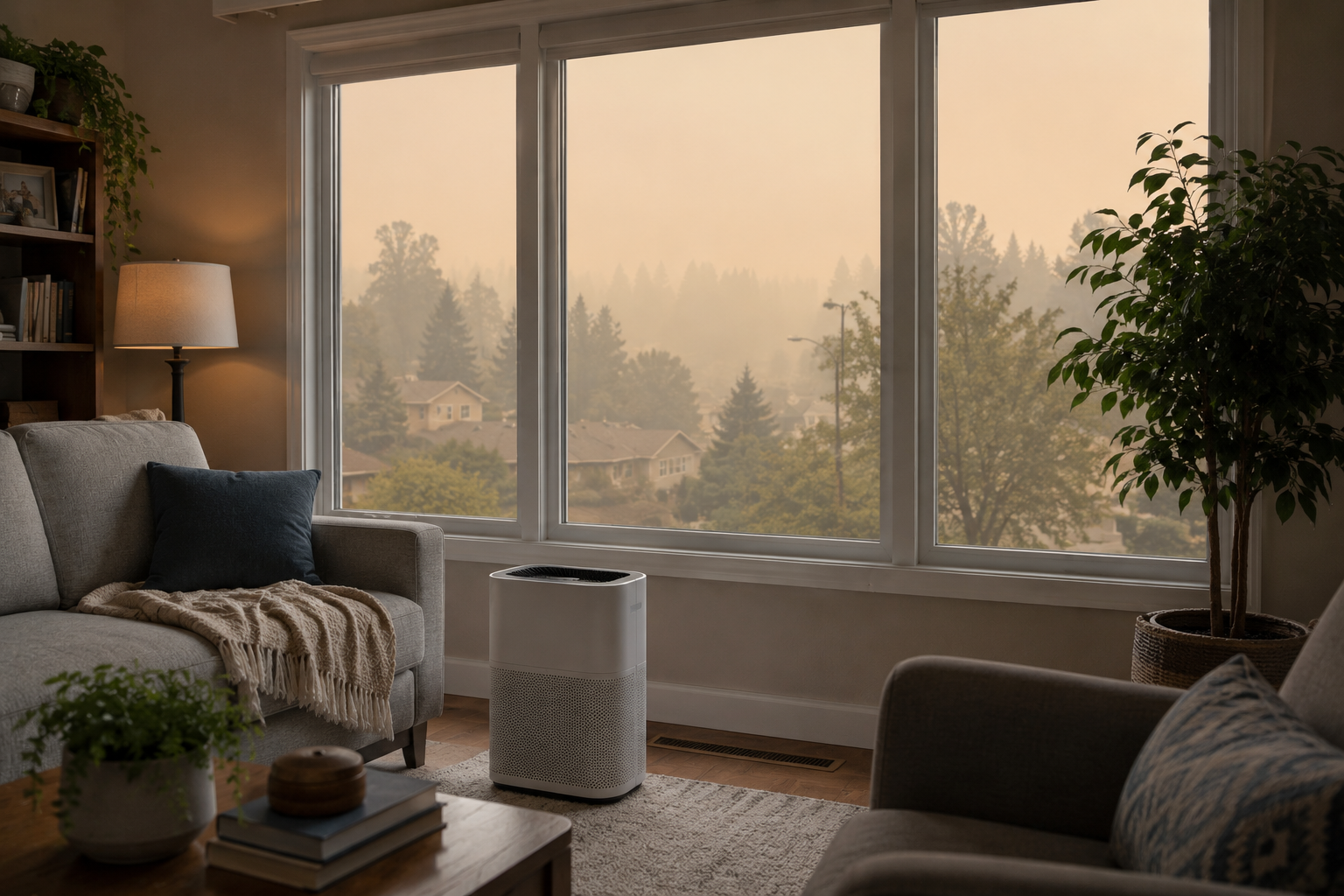
Wildfire smoke can affect indoor air quality even when people stay inside during poor-air days. Editorial illustration by TheDailyGlobe.
Key Facts
- EPA says outdoor air, including fine particles from wildfire smoke, can enter homes through open windows and doors, mechanical ventilation, HVAC fresh-air intakes, and small cracks or openings.
- EPA provides guidance for preparing homes before wildfire smoke events and reducing exposure during smoke events.
- EPA says smoke can affect indoor air quality differently depending on proximity to the fire and smoke density.
- Indoor exposure can vary by housing conditions, ventilation, filtration, smoke level, and local air quality.
A family sees the sky turn gray, smells smoke outside, and does the first thing that feels obvious: close the doors and windows.
That can help. But federal indoor air guidance makes clear that staying inside does not automatically make wildfire smoke disappear. Fine particles from smoke can still move indoors through normal building pathways, including ventilation systems, fresh-air intakes, open doors or windows, and small cracks or gaps in a home.
That is why wildfire smoke has become more than an outdoor-weather problem. It is also a household air-quality issue for families, schools, workplaces, older adults, children, and people with asthma or other respiratory conditions.
How Smoke Gets Inside
Wildfire smoke is a mix of gases and particles. The particles are the reason smoke can become a health concern even after people move indoors. EPA guidance says outdoor air can enter through obvious openings, such as doors and windows, but also through less visible routes: mechanical ventilation, HVAC fresh-air intakes, and small openings in the building.
That means indoor air during a smoke event depends partly on the home itself. A newer, tighter building with good filtration may respond differently from an older home with leaks, limited cooling, or a ventilation system that pulls in outdoor air. A renter may also have fewer choices than a homeowner when it comes to upgrades, repairs, or major equipment changes.
The same idea applies beyond houses. Schools, offices, child care centers, and community spaces all have their own ventilation and filtration systems. During major smoke events, the building people gather in can shape how much protection they actually get from being indoors.
Why Indoor Air Planning Matters
The practical lesson is not that every household needs to panic when smoke appears. It is that planning works better before the air turns bad.
EPA wildfire smoke resources focus on preparing homes before smoke events and taking steps to reduce exposure when smoke is present. That includes understanding how outdoor air enters a building, how ventilation works, and what local air-quality and health officials are advising during a specific event.
This matters most for people who may be more sensitive to smoke. Children, older adults, and people with respiratory or heart conditions can face greater risk during poor-air days. For them, indoor air is not just a comfort issue. It can affect whether a smoky day is manageable or dangerous.
What Staying Indoors Can and Cannot Do
Staying indoors can reduce exposure, especially when windows and doors are closed and the building is set up to limit outdoor air. But it is not a perfect shield. EPA guidance notes that smoke can affect indoor air quality differently depending on how dense the smoke is and how close the building is to the fire or smoke plume.
That is an important distinction. A house in light haze may face a different problem than a building surrounded by heavy smoke. A home with working filtration may have more options than a household that depends on open windows for cooling. During heat, power outages, or heavy smoke, people may need local guidance because the safest choice can depend on the conditions in that moment.
The limits are also economic. Not every household can buy equipment, replace filters, improve sealing, or control a landlord-owned HVAC system. Any advice about indoor smoke needs to recognize that preparation is easier for some families than others.
What to Watch Before the Next Smoke Day
The next useful step for readers is to watch local air-quality alerts before smoke arrives, not only once the sky looks bad. Local health departments, weather alerts, and EPA smoke resources can help households decide when to reduce outdoor activity, check ventilation settings, or prepare a cleaner indoor space.
For schools and employers, the same question becomes larger: how ready is the building for a poor-air day, and who decides when outdoor activities should be changed or moved inside?
Wildfire smoke may start outdoors, sometimes far from where people live. But once smoke reaches a community, the important question often moves indoors: what is getting into the air people are actually breathing, and what can be done before the next smoky day arrives?
Reporting note: Reporting draws on Environmental Protection Agency wildfire smoke guidance, indoor air quality preparedness resources, federal environmental health materials, and reviewed background context. This article was produced with AI-assisted research and reviewed by an editor before publication.