Team-Based Care Study Points to a Practical Way to Lower Blood Pressure
NIH-supported research found that coordinated care, home monitoring and coaching helped low-income patients with uncontrolled hypertension lower blood pressure.
Save Article
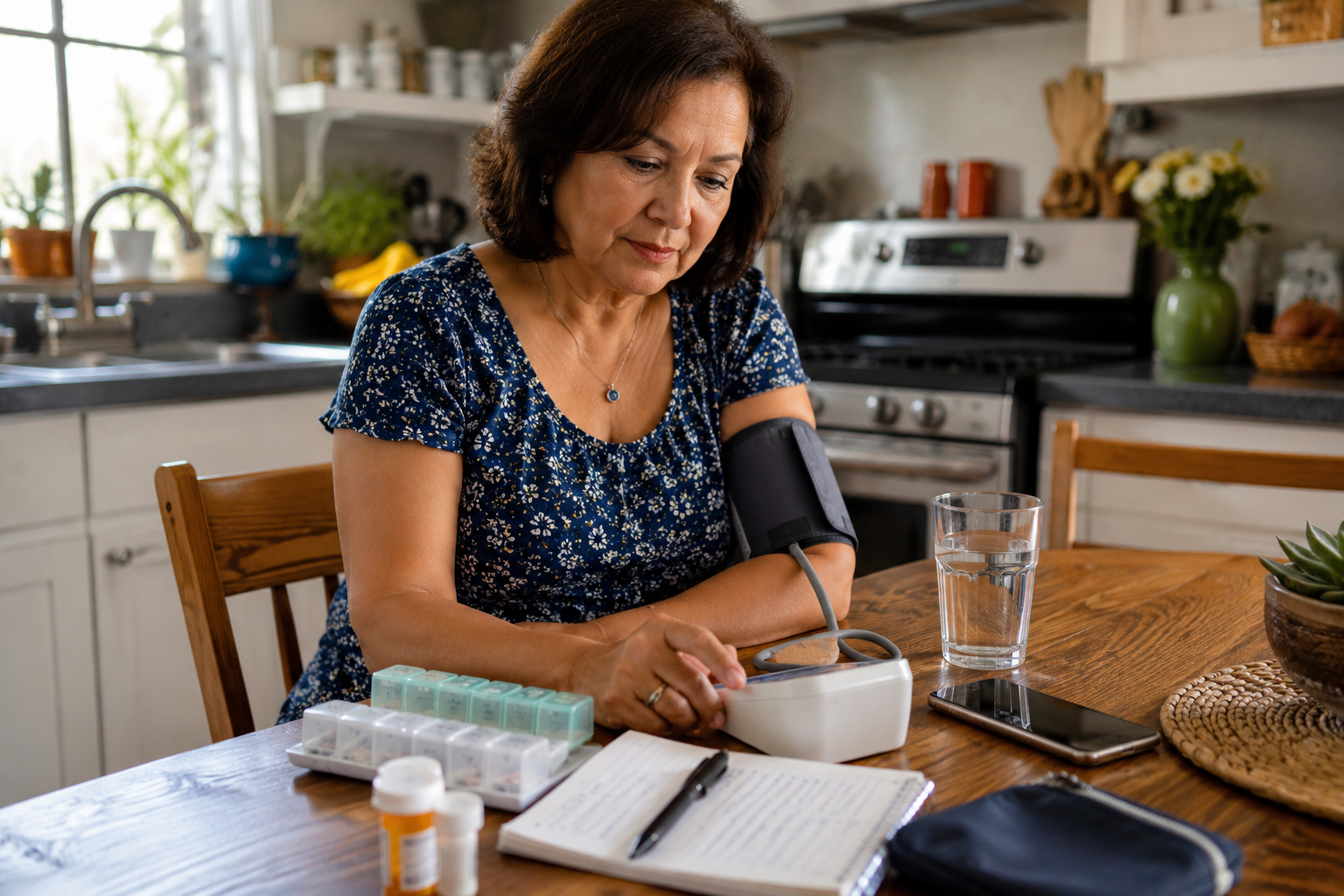
NIH-supported research found that coordinated care, home monitoring and coaching helped low-income patients with uncontrolled hypertension lower blood pressure. Editorial illustration by TheDailyGlobe.
Key Facts
- NIH Research Matters said a multifaceted intervention was better than a standard approach at reducing high blood pressure among low-income patients.
- NIH said the model included intensive blood-pressure tracking and feedback, health coaching, medication-adherence support and home blood-pressure monitoring.
- UT Southwestern said the study involved community health clinics and low-income patients with uncontrolled hypertension.
- CDC background materials say team-based care can improve blood-pressure control and may be cost-effective.
- The study focused on specific clinic settings and low-income patients with uncontrolled hypertension.
A new NIH-supported study points to a practical lesson in blood-pressure care: patients may do better when the health system gives them a team, feedback and home monitoring, not just another reminder to try harder.
NIH Research Matters said a multifaceted intervention was better than a standard approach at reducing high blood pressure among low-income patients. The model included intensive blood-pressure tracking and feedback, health coaching, medication-adherence support and home blood-pressure monitoring.
The findings matter because high blood pressure is common, often silent and difficult to manage over time. For many patients, the challenge is not simply knowing that blood pressure should be lower. It is getting steady support between clinic visits.
What the Care Model Included
The intervention was built around coordinated care rather than a single pill, app or office visit. NIH said the model included intensive blood-pressure tracking and feedback, health coaching, medication-adherence support and home blood-pressure monitoring.
That combination matters because blood-pressure control often depends on repeated small decisions: taking medication as prescribed, measuring blood pressure correctly, following up when numbers stay high and understanding what the readings mean.
Home monitoring can also change the conversation between patients and clinics. Instead of relying only on occasional office readings, care teams can see patterns over time and help patients respond before a problem is ignored for months.
Who Was Studied
UT Southwestern said the study involved community health clinics and low-income patients with uncontrolled hypertension. That setting is important. The findings are not just about patients with easy access to care, flexible work schedules or extra money for health tools.
Low-income patients can face barriers that make chronic disease management harder: transportation, cost, time away from work, pharmacy access, food insecurity, unstable housing or difficulty getting regular follow-up. A team-based model can help address some of those barriers by making care more organized and continuous.
The study should not be read as proof that the same model will work the same way for every patient or every clinic. It does show that care delivery itself can be part of the treatment, especially when patients need more than brief appointments.
Why Team-Based Care Can Help
The CDC says team-based care can improve blood-pressure control and may be cost-effective. In plain language, that means doctors do not have to carry the whole burden alone, and patients do not have to manage everything by themselves.
A team can include clinicians, pharmacists, nurses, health coaches, community health workers or other trained staff, depending on the setting. Different team members may help with medication questions, home readings, appointment follow-up, lifestyle coaching or problem-solving when a patient is struggling.
That approach can be especially useful for high blood pressure because the condition usually requires long-term management. A patient may feel fine even when readings are high, so consistent follow-up can make the difference between knowing the risk and actually lowering it.
What This Does Not Mean
The study does not mean readers should change medications, stop medications or adjust care plans on their own. Blood-pressure treatment should be handled with a qualified health professional.
It also does not mean personal habits are irrelevant. Diet, activity, sleep, stress, medication use and other health conditions can all matter. The point is that individual behavior is easier to manage when the care system is built to support the patient.
That distinction is important. Public health messages often tell people what to do. This research points to how clinics may help people actually do it, especially in communities where the usual care model may not be enough.
What Remains Unclear
The study focused on specific clinic settings and low-income patients with uncontrolled hypertension. More work may be needed to understand how well the model translates to other health systems, rural areas, different insurance arrangements or patients with different medical needs.
It is also unclear how widely clinics could adopt similar models without new staffing, funding, training or reimbursement support. A low-cost model may still require organization and resources that not every clinic has ready.
For readers, the clearest takeaway is that better blood-pressure control may depend not only on what patients are told, but on how care is delivered. A team, regular feedback and home monitoring can turn a familiar health warning into a more workable plan.
Reporting note: Reporting draws on NIH research materials, NIH-supported clinical trial information, UT Southwestern materials, CDC public health background, and established health reporting. This article was produced with AI-assisted research and reviewed by an editor before publication.