Emergency Rooms Should Not Be the Waiting Room for Every Broken System
When patients spend hours or days waiting for care after a decision to admit them has already been made, the problem is often bigger than the emergency room itself.
Save Article
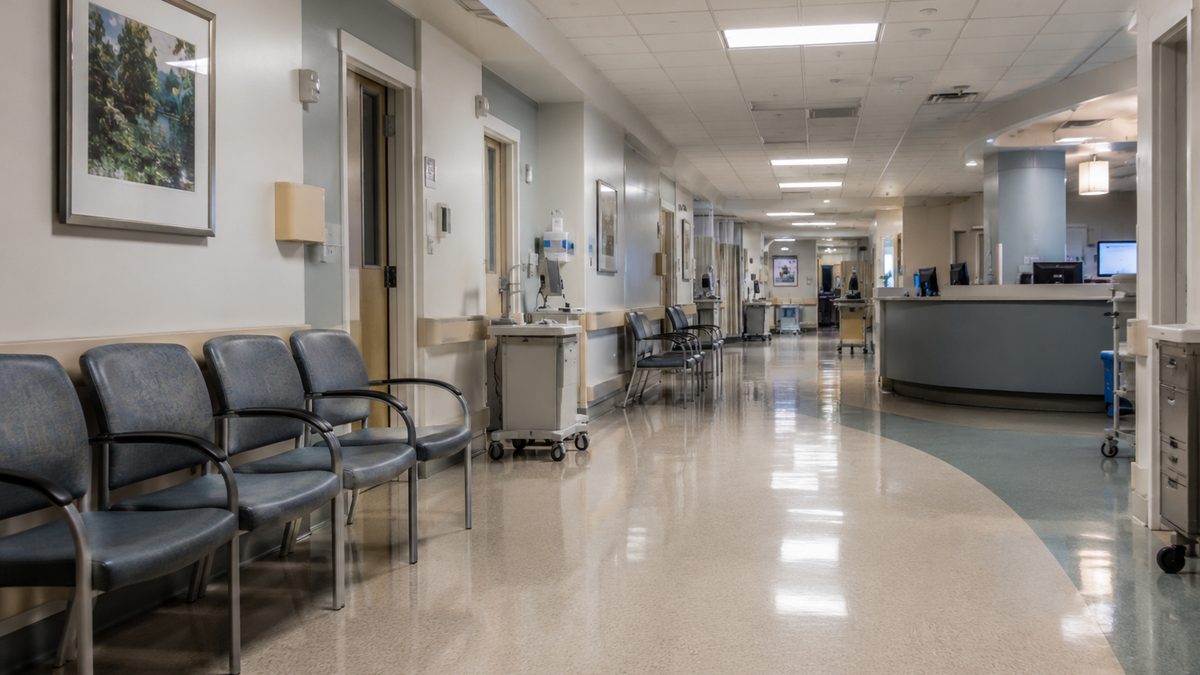
Emergency rooms often reveal failures that began elsewhere in the health care system. Editorial illustration by TheDailyGlobe.
Imagine being told that a loved one is sick enough to be admitted to the hospital, but there is no hospital bed available. The decision has been made. The need for care is clear. Yet the patient remains in an emergency department hallway, treatment area, or temporary space while waiting for somewhere else to go.
That experience has become familiar to many families across the country. It is easy to look at a crowded emergency room and assume the emergency room itself is the problem. In many cases, it is not.
The harder truth is that emergency departments are increasingly being asked to absorb failures that begin elsewhere. When behavioral health beds are unavailable, when inpatient units are full, when long-term care placements are delayed, when addiction treatment capacity is limited, or when people cannot access care before a crisis develops, the emergency room often becomes the place where those unresolved problems finally arrive.
The Crisis Behind the Waiting Room
The Agency for Healthcare Research and Quality has described emergency department boarding as a public health crisis. Boarding occurs when patients remain in the emergency department after a decision has been made to admit them because no appropriate inpatient bed is available.
According to AHRQ, some admitted patients can remain in emergency departments for extended periods while waiting for placement. The American College of Emergency Physicians has reported that more than 90 percent of emergency departments routinely experience crowding and has identified boarding as the primary cause of that overcrowding.
Those facts matter because they challenge a common assumption. The visible problem is a crowded emergency department. The underlying problem is often that patients who should move elsewhere cannot.
Why Blame Falls on the Wrong People
When waits become frustrating, patients understandably look for someone to hold responsible. The people they see are nurses, physicians, technicians, and other frontline staff.
But many emergency workers are experiencing the same frustration. They did not create the shortage of inpatient beds. They did not create behavioral health capacity gaps. They did not create long-term care bottlenecks. They are often the people trying to manage the consequences.
That does not mean hospitals bear no responsibility. Hospital systems should be judged on how effectively they manage capacity, staffing, discharge planning, and patient flow. Yet it is difficult to solve a problem entirely inside an emergency department when much of the pressure originates outside it.
The Last Institution Standing
One useful way to understand boarding is to think of emergency rooms as the last institution standing. They cannot easily close their doors. They cannot tell a patient in crisis to return next week. They remain available even when other parts of the system are strained.
As a result, emergency departments become the place where larger social and health care failures become visible. A shortage of psychiatric treatment capacity may first appear as a patient waiting in an emergency room. Delayed placement in a long-term care facility may appear as a patient occupying a hospital bed needed by someone else. Limited access to primary care can eventually show up as an emergency visit that might have been avoided earlier.
The emergency room becomes the scoreboard, not necessarily the cause of the loss.
A Fair Argument Requires Fair Counterpoints
Not every boarding problem has the same cause. Conditions vary widely by state, region, hospital system, and patient population. Some facilities face severe staffing shortages. Others struggle with reimbursement pressures or aging infrastructure. In some communities, behavioral health capacity may be the biggest issue. In others, discharge delays or long-term care placement shortages may play a larger role.
That complexity matters. It would be a mistake to claim there is a single national fix. It would also be a mistake to assume every crowded emergency department reflects the same chain of failures.
Still, complexity should not become an excuse for accepting the status quo. Families do not experience boarding as a policy debate. They experience it as uncertainty, fear, discomfort, and delay.
What Leaders Should Be Measured On
The public conversation often focuses on health care spending, insurance disputes, or political arguments. Those discussions matter, but boarding offers a more practical test. Are patients getting where they need to go in a reasonable amount of time once a medical decision has been made?
Leaders should be willing to measure boarding, report it publicly, and reduce it. That may require additional inpatient capacity, stronger behavioral health systems, better discharge coordination, more treatment options before crises occur, or reforms that vary from one region to another.
The exact solutions will differ. The principle should not. A society should not wait until people reach a crisis point and then ask emergency departments to solve every problem that came before.
Emergency rooms exist to respond to emergencies. When they become long-term holding areas for failures elsewhere in the system, patients suffer, families lose confidence, and health care workers carry burdens they were never meant to shoulder alone. The crowded hallway is the symptom. The real challenge is everything upstream that keeps sending people there.
Reporting note: Reporting draws on federal health agency materials, medical organization guidance, health care reporting, and reviewed background materials used to ground the argument. This article was produced with AI-assisted research and reviewed by an editor before publication.