NOAA Space Weather Forecast Shows Why Solar Activity Still Matters on Earth
NOAA's May 28 space-weather forecast showed a modest radio-blackout risk, a reminder that solar activity can affect communications, GPS, satellites and aviation.
Save Article
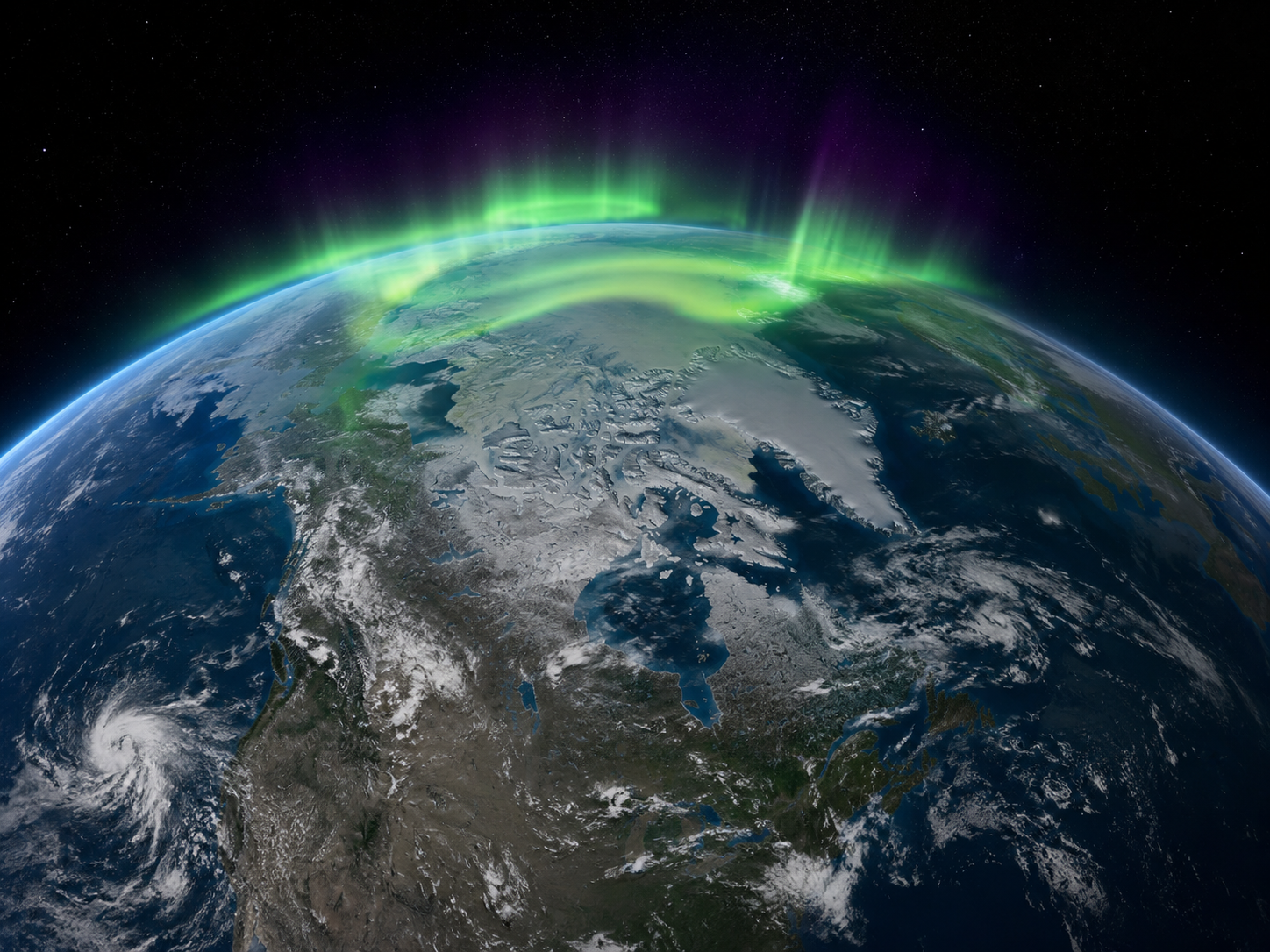
Space weather can affect technology on Earth even when the Sun looks ordinary from the ground. Editorial illustration by TheDailyGlobe.
Modern life depends on signals moving through the air and above the atmosphere: radio calls, GPS timing, satellite links, aviation communications and systems used by emergency managers.
That is why space weather matters even when most people never notice it. NOAA's Space Weather Prediction Center dashboard on May 28 showed no observed R, S or G-scale maximums over the previous 24 hours, but forecast a 40% chance of R1-R2 radio blackouts for May 28-30 UTC.
What NOAA's Scales Mean
NOAA uses lettered scales to describe different kinds of space-weather activity. R refers to radio blackouts, S refers to solar radiation storms and G refers to geomagnetic storms.
In this forecast, the radio-blackout risk was listed at R1-R2, which means minor to moderate. That is not a general public emergency. It is a technical warning that can matter more for people and systems that rely on high-frequency radio, aviation routes, satellites or related operations.
Why Solar Activity Can Reach Earth
Solar activity can disturb parts of the space environment around Earth. Depending on the event, it can affect radio communications, GPS accuracy, satellites, aviation operations, emergency management and electric power systems.
NOAA listed no geomagnetic storm forecast for the same May 28-30 period, which matters because geomagnetic storms are a different kind of space-weather concern than radio blackouts. A modest radio-blackout forecast should not be treated as the same thing as a major infrastructure warning.
What Readers Should Watch
Space-weather forecasts can change quickly as solar activity evolves. A quiet dashboard can become more active, and a forecast risk may also fade without major effects.
The practical step is to watch NOAA/SWPC alerts when solar activity is in the news, especially if conditions change on the R, S or G scales. The calmer takeaway is simple: space weather is usually invisible from the ground, but it can still matter for the technology people depend on every day.
Reporting note: Reporting draws on NOAA Space Weather Prediction Center forecast materials, agency impact guidance, and reviewed space-weather context. This article was produced with AI-assisted research and reviewed by an editor before publication.