NASA's Roman Telescope Could Help Reveal a Hidden Population of Worlds
NASA says its upcoming Roman Space Telescope could help astronomers find thousands of planets that current search methods often overlook, offering a fuller picture of the galaxy's planetary population.
Save Article

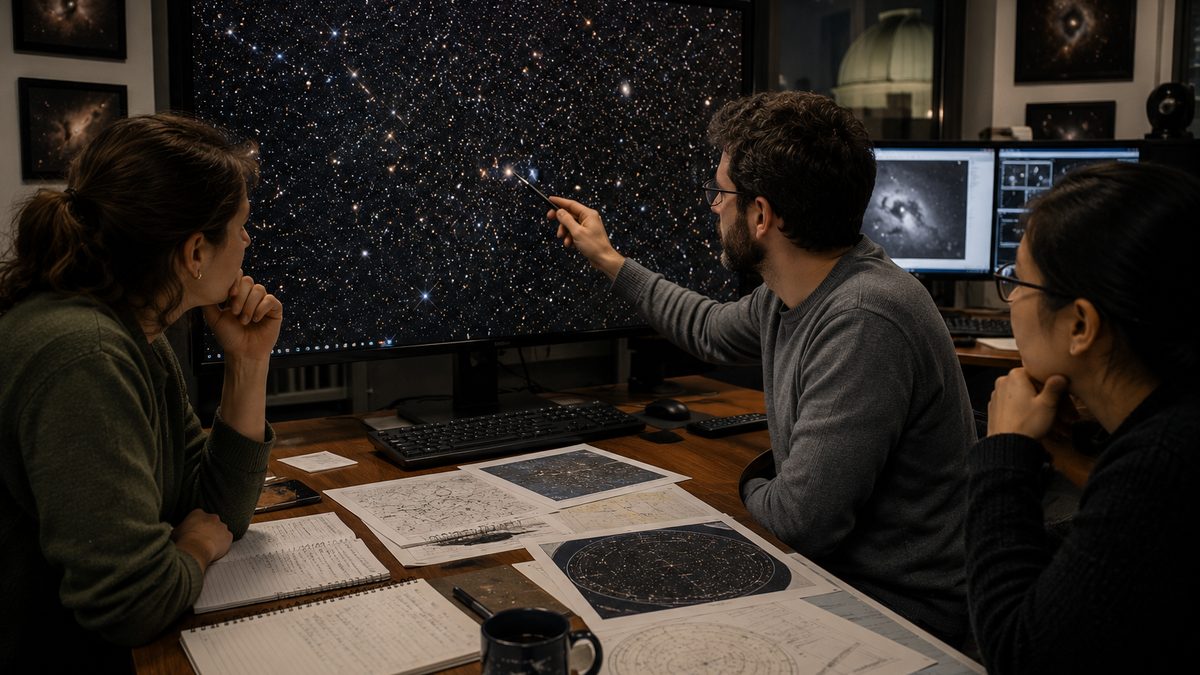
Future telescope missions could help astronomers find worlds that current planet searches often miss. Editorial illustration by TheDailyGlobe.
Key Facts
- NASA says the Roman Space Telescope is expected to advance exoplanet detection.
- Mission projections suggest Roman could help identify around 100,000 worlds.
- The telescope is designed to find planets in orbital ranges that are often difficult for current methods to detect.
- Roman will rely heavily on a technique known as gravitational microlensing.
- The projected planet totals remain estimates and depend on mission performance and later confirmation work.
Astronomers have discovered thousands of planets beyond our solar system, yet many researchers believe they have only sampled part of the story. The reason is surprisingly simple: the tools used to find planets are often better at detecting certain kinds of worlds than others.
That possibility—that large numbers of planets remain hidden not because they are rare but because they are difficult to detect—is one reason scientists are excited about NASA's Nancy Grace Roman Space Telescope. Recent mission updates highlight how the observatory could help reveal planetary populations that current surveys may undercount.
Roman has not launched yet, and the planets being discussed today have not been discovered. Still, NASA says the telescope could dramatically expand humanity's census of worlds orbiting distant stars by looking in places current methods often struggle to explore.
The Blind Spots in Today's Planet Searches
Many of the exoplanets discovered so far have been found using methods that work best under specific conditions. Some techniques detect planets when they pass in front of their stars. Others look for the tiny gravitational pull a planet exerts on its host star.
Those approaches have produced remarkable results, but they naturally favor certain planetary systems. Worlds that orbit farther from their stars, for example, can be harder to spot because they produce fewer detectable signals.
Roman is designed to help fill some of those gaps. Rather than simply adding more planets to an existing list, scientists hope it will reveal categories of worlds that current surveys do not capture as effectively.
How Roman Plans to Find Hidden Worlds
A major part of Roman's planet-hunting strategy involves gravitational microlensing. The concept sounds complex, but the basic idea is straightforward. When a star passes in front of another distant star, its gravity can bend and magnify the background light.
If a planet is orbiting the foreground star, that planet can create an additional signal within the magnified light. By carefully analyzing those brief changes, astronomers can infer the presence of worlds that might otherwise remain invisible.
Because the method works differently from many current exoplanet surveys, it can provide access to a different slice of the galaxy's planetary population. That is what makes Roman scientifically valuable even before a single new planet is counted.
Why a Better Planet Census Matters
Finding planets is exciting on its own, but scientists are interested in a larger question: how common different kinds of worlds are throughout the Milky Way.
If astronomers can build a more complete inventory of planetary systems, they can better understand how planets form, how solar systems evolve, and whether our own planetary neighborhood is typical or unusual.
A larger and more diverse catalog could also help researchers identify trends that are difficult to see when observations are concentrated in only a portion of the planetary landscape.
What Scientists Still Do Not Know
The excitement surrounding Roman comes with important caveats. The mission's projected discoveries are forecasts, not completed findings. NASA's estimates are based on mission design, simulations, and expectations about how the telescope will perform once operational.
It remains unclear exactly how many candidate planets Roman will detect. It is also unclear how many of those detections will ultimately be confirmed through follow-up observations and additional analysis.
As with any major scientific mission, real-world performance can differ from projections. Researchers will not know the telescope's actual yield until it begins collecting data.
What Comes Next
The next chapter for Roman is not a discovery announcement but the mission itself. Once launched and operational, the telescope will begin gathering the observations needed to test the predictions scientists are making today.
For now, the most important takeaway is not the exact number of planets Roman might find. It is the possibility that many worlds remain hidden from view, and that a new generation of instruments may help astronomers finally see a broader picture of the galaxy around us.
Reporting note: Reporting draws on NASA mission materials, NASA Science updates, scientific summaries, and reviewed background materials. This article was produced with AI-assisted research and reviewed by an editor before publication.