NASA Tests Powerful Plasma Thruster That Could Help Future Mars Missions
NASA’s Jet Propulsion Laboratory has tested a powerful lithium-fed plasma thruster, an early step toward electric propulsion systems that could one day support human missions to Mars.
Save Article

NASA’s Jet Propulsion Laboratory has tested a powerful lithium-fed plasma thruster, an early step toward electric propulsion systems that could one day support human missions to Mars. Editorial illustration by TheDailyGlobe.
Key Facts
- NASA’s Jet Propulsion Laboratory tested a lithium-fed magnetoplasmadynamic thruster.
- The prototype reached 120 kilowatts during testing.
- The technology is being studied as part of future nuclear electric propulsion systems.
- Electric propulsion can be more efficient than chemical propulsion for some deep-space uses.
- NASA says much more development is needed before this type of system could support human Mars missions.
NASA has tested a powerful new plasma thruster that could become part of future deep-space missions, including long-term plans for sending humans to Mars.
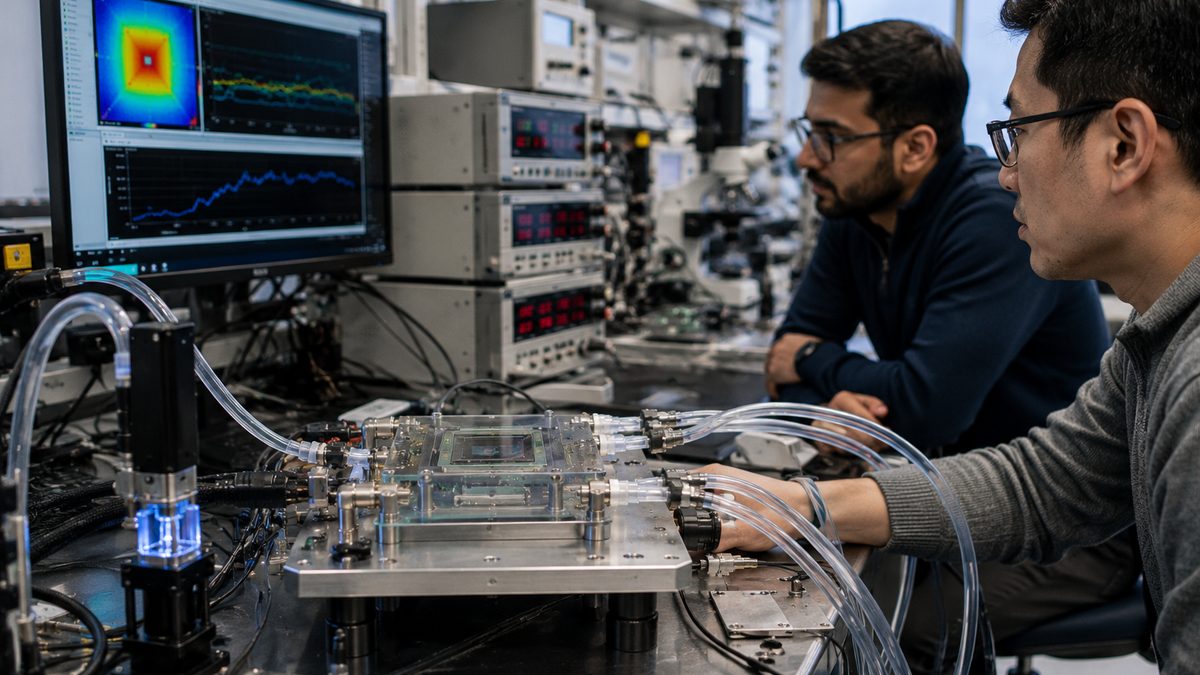
The test took place at NASA’s Jet Propulsion Laboratory in Southern California, where engineers fired a prototype lithium-fed magnetoplasmadynamic thruster. NASA said the engine reached 120 kilowatts during testing, a major step for this type of electric propulsion system in the United States.
That does not mean astronauts are about to ride one of these engines to Mars tomorrow. The technology is still in development. But the test matters because future Mars missions will likely need ways to move heavy spacecraft and supplies more efficiently than traditional chemical rockets can manage on their own.
Why This Matters
Chemical rockets are powerful, but they burn through propellant quickly. They are excellent for launch and major maneuvers, but deep-space travel creates a different challenge. Spacecraft traveling to Mars may need to carry heavy cargo, life-support systems, shielding, equipment, and fuel for long missions.
Electric propulsion works differently. Instead of a short, powerful blast, it can provide steady thrust over a long period. That can make it useful for moving large spacecraft through space once they are already away from Earth.
The basic idea is simple: use electricity to push charged particles out of an engine at high speed. In this case, the prototype uses lithium metal vapor that becomes plasma and is accelerated by electromagnetic forces.
What NASA Tested
The thruster tested at JPL is not a normal rocket engine. It does not work by burning fuel the way a launch vehicle does. Instead, it uses electricity and magnetic fields to accelerate plasma.
NASA describes the system as lithium-fed because it uses lithium metal vapor as the material that becomes plasma. Inside the engine, electric current and magnetic fields help push that plasma out, creating thrust.
The result is not the kind of explosive force people see during a rocket launch. Electric engines are usually much gentler at first. Their advantage is that they can keep pushing for a long time, which can add up during a long mission.
Why Mars Missions Need New Options
A human mission to Mars would be far more complicated than sending a robotic spacecraft. Astronauts would need supplies, protection, power, communications, equipment, and a way home. Every pound matters.
That is why NASA and other space agencies study propulsion systems that could make deep-space travel more efficient. If a spacecraft can use less propellant, it may be able to carry more useful cargo or support longer missions.
NASA has said future systems for human Mars missions would need far more power than this first test produced. The 120-kilowatt result is an early milestone, not the finish line.
The Nuclear Electric Connection
One reason this test is getting attention is its connection to nuclear electric propulsion. In that kind of system, a nuclear power source would generate electricity, and that electricity would run electric thrusters.
That does not mean the thruster itself is a nuclear engine. The engine uses electricity. The nuclear part would be the power source that makes enough electricity available during deep-space travel, where solar power may be limited depending on mission needs.
For long missions, power is one of the central problems. A spacecraft needs energy for propulsion, life support, instruments, communications, and thermal control. A high-power electric propulsion system would need a reliable source of electricity to be useful.
What Still Has To Happen
The JPL test was important, but the technology still has a long road ahead. Engineers need to show that the system can scale up, operate reliably, handle heat, survive long use, and work as part of a full spacecraft system.
Testing an engine in a chamber on Earth is not the same as flying it on a mission. Space systems must survive vibration, launch conditions, vacuum, radiation, temperature swings, and years of operation with little room for repair.
NASA’s work is still early enough that readers should be careful with big promises. This test does not make Mars travel easy. It does show that one possible path for future propulsion is moving from theory into more serious hardware testing.
The Bigger Picture
Space exploration often advances through quiet engineering steps before the public sees the result. A thruster test may not look as dramatic as a launch, but it can matter just as much for missions that are still years away.
For future Mars missions, the challenge is not only reaching the planet. It is doing so with enough safety, power, supplies, and flexibility to make the mission realistic. Better propulsion could be one part of that answer.
The new test does not guarantee a specific Mars mission timeline. But it does show why NASA is still investing in the hard engineering behind deep-space travel. Getting humans to Mars will not depend on one breakthrough. It will depend on many systems becoming reliable enough to trust far from Earth.
Reporting note: Reporting draws on NASA Jet Propulsion Laboratory materials, public space propulsion reporting, NASA technology context, and reviewed background materials. This article was produced with AI-assisted research and reviewed by an editor before publication.