NASA's Swift Mission Shows How Spacecraft Servicing Is Moving Into Practice
NASA is preparing a robotic mission to boost the Swift Observatory's orbit, a test of whether valuable science spacecraft can be serviced after launch.
Save Article
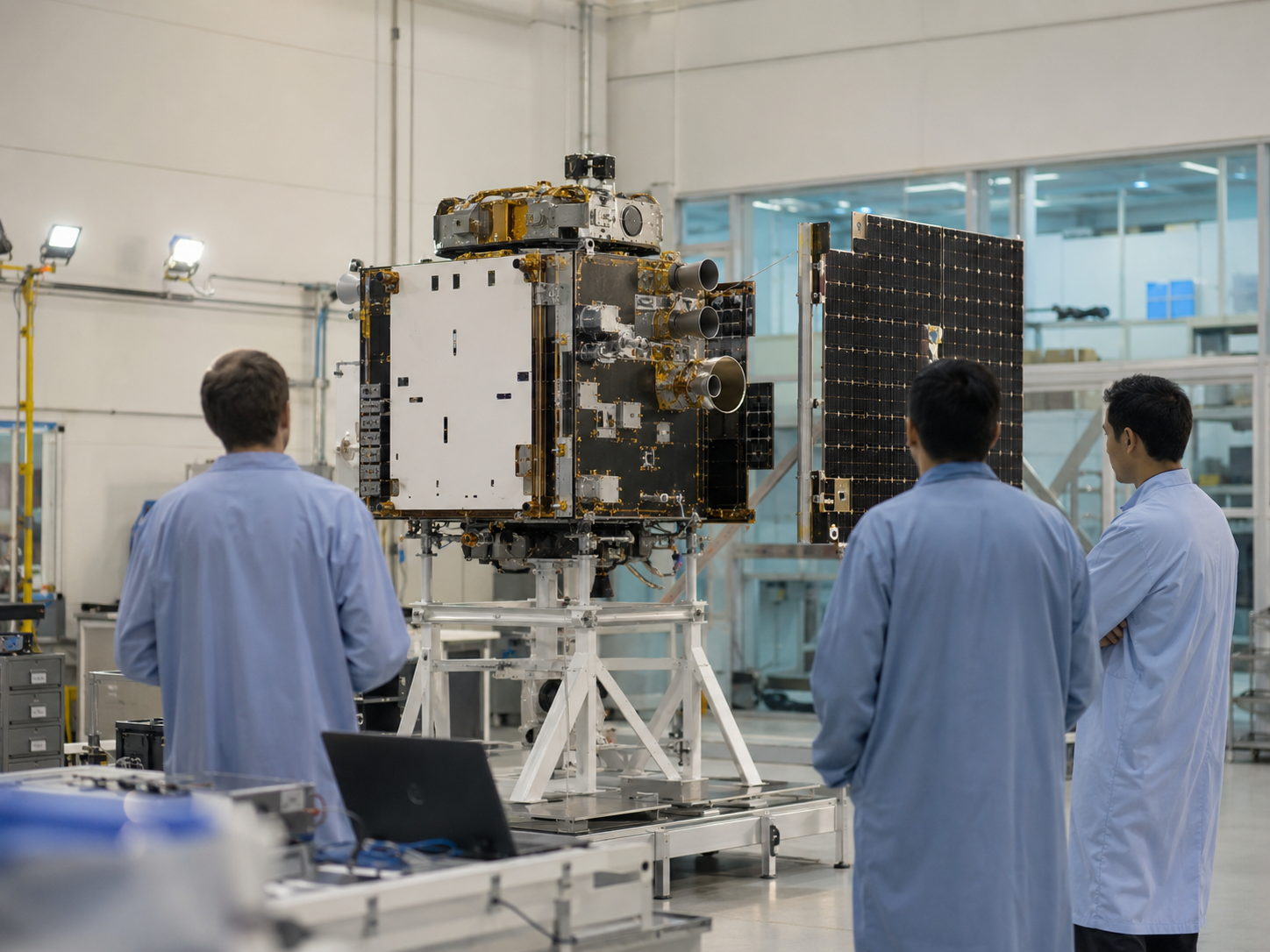
Spacecraft servicing could help agencies preserve valuable science missions after they are already in orbit. Editorial illustration by TheDailyGlobe.
Key Facts
- NASA invited media to Wallops on June 17 to view the Pegasus XL rocket carrying Katalyst's LINK robotic servicing spacecraft.
- NASA says the mission will attempt to boost the orbit of the Neil Gehrels Swift Observatory.
- NASA Science says the boost mission is expected to launch no earlier than June 2026.
- NASA says the mission is designed to extend Swift's scientific life and demonstrate a servicing capability.
- The mission has not launched yet, and the orbit boost has not been completed.
A spacecraft does not always stop being useful because its instruments fail. Sometimes the problem is simpler and harder to ignore: its orbit changes, and the mission needs a way to stay where it can keep doing science.
That is the practical idea behind NASA's planned mission to boost the orbit of the Neil Gehrels Swift Observatory. NASA has invited media to Wallops on June 17 to view the Pegasus XL rocket carrying Katalyst's LINK robotic servicing spacecraft, part of a mission designed to help extend Swift's scientific life.
Why Swift Needs An Orbit Boost
Swift is a space observatory used for high-energy astronomy, including the study of sudden cosmic events. Keeping a spacecraft like that operating can be valuable because the instruments, mission team and scientific pipeline are already in place.
The planned boost mission is meant to address Swift's orbit rather than replace the observatory. NASA says the goal is to raise the spacecraft's orbit and extend its scientific life. That turns the mission into more than a one-off fix; it is also a demonstration of whether robotic servicing can protect an existing science asset.
The important limit is that the attempt has not happened yet. A planned orbit boost is not the same as a completed servicing mission.
What LINK Is Supposed To Do
Katalyst's LINK spacecraft is being prepared for a robotic servicing job. The mission depends on several difficult steps: launch, reaching the right orbit, approaching Swift safely, attaching or interacting with the observatory as planned, and performing the boost.
Each of those steps matters. Spacecraft servicing is not like repairing a device on a workbench. The hardware has to operate in orbit, near another spacecraft, with little room for error.
That is why the mission is useful to watch even before launch. If it works, it could show one way to extend the life of spacecraft that still have scientific value. If it struggles, engineers and agencies will still learn from the limits of the approach.
Why Servicing Matters Beyond One Telescope
Space missions are expensive, slow to build and often scientifically valuable long after launch. When a mission ends because of fuel, orbit decay or another serviceable problem, agencies may lose useful tools even if the instruments themselves still work.
Robotic servicing could change how space agencies think about those missions. Instead of treating every spacecraft as untouchable once it reaches orbit, agencies may eventually have more options for maintenance, orbit changes or life-extension work.
That does not mean every satellite or observatory will be easy to service. Different spacecraft have different designs, orbits, risks and costs. The Swift mission is best understood as a practical test of capability, not proof that spacecraft maintenance has suddenly become routine.
What Remains Uncertain
The biggest unknowns are still ahead. NASA Science says the boost mission is expected to launch no earlier than June 2026, but the final launch date, mission readiness and on-orbit performance still matter.
Mission success will depend on the full sequence working, not just the rocket or spacecraft being prepared. Launch has to go as planned. LINK has to reach Swift. The servicing operation has to perform safely. The boost has to place Swift in a more useful orbit.
Readers should watch for NASA's June media event, the final launch schedule, mission milestone updates and whether LINK successfully reaches and boosts Swift. The larger question is simple: can spacecraft already in orbit be maintained well enough to keep valuable science going longer?
Reporting note: Reporting draws on NASA mission updates, NASA Science materials, company mission information, established space reporting, and reviewed space-science context. This article was produced with AI-assisted research and reviewed by an editor before publication.