NASA Study Adds Clue To How Earth Got Ingredients Needed For Habitability
NASA-supported research used meteorites and models to study how early Earth may have acquired nitrogen and phosphorus, two elements tied to habitability.
Save Article
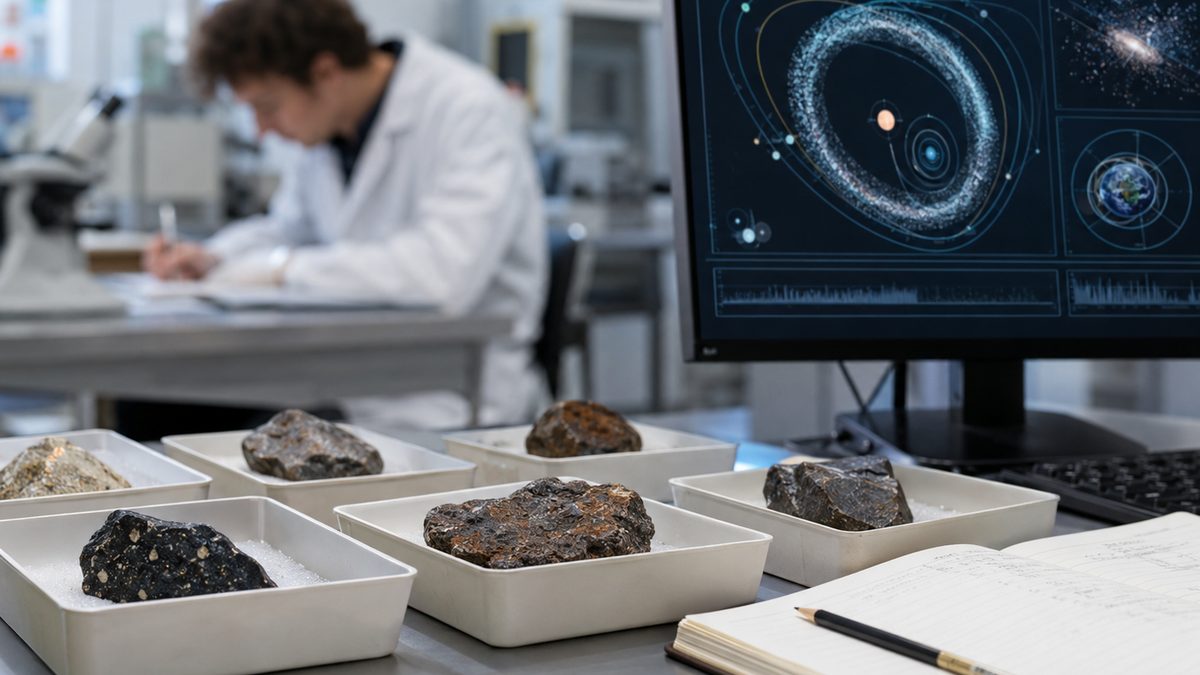
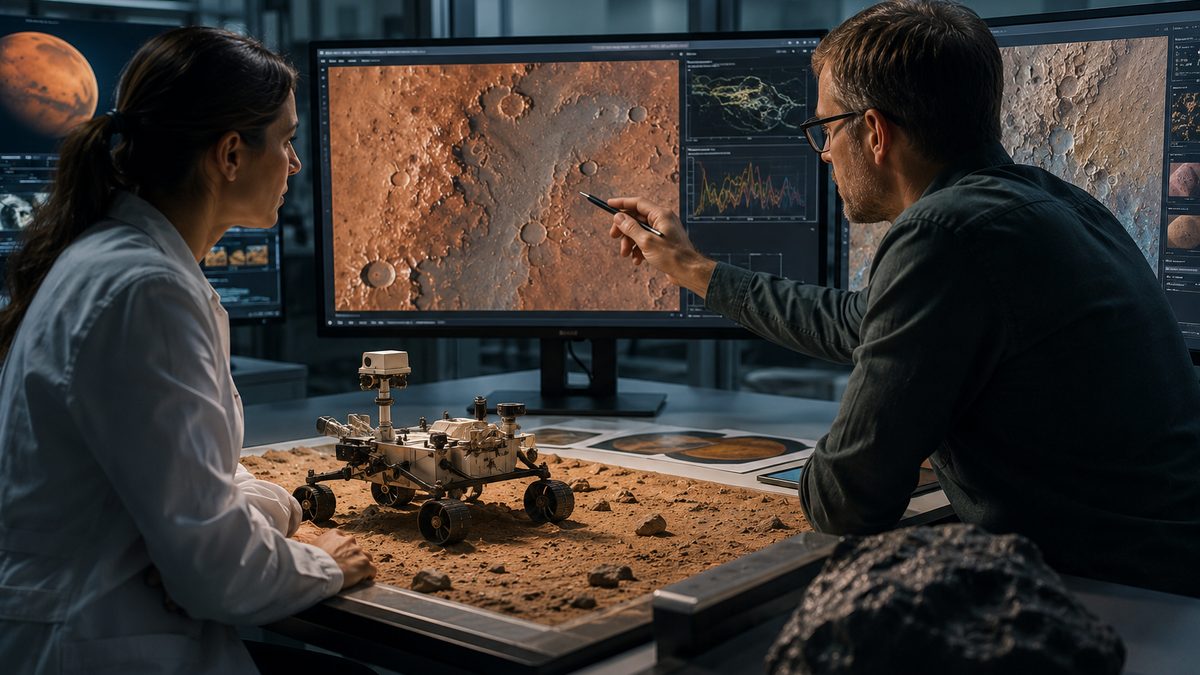
Meteorites help scientists study the chemical history of the early solar system. Editorial illustration by TheDailyGlobe.
One of the biggest questions in planetary science is also one of the simplest to ask: how did Earth get the ingredients that made habitability possible?
A NASA-supported study offers a new clue, but not a final answer. NASA reported June 3 that scientists provided new information about how early Earth may have acquired elements needed for habitability, focusing on nitrogen and phosphorus in the young solar system.
What The Study Looked At
The study, published in Science Advances, examined the ratio of phosphorus to nitrogen in iron meteorites and chondrites. Scientists use meteorites because they preserve chemical evidence from the early solar system, long before Earth looked anything like it does now.
NASA said the research suggests Earth acquired phosphorus and nitrogen primarily from the inner solar system. The study also suggests Jupiter’s growth may have helped shape how those ingredients were distributed when the solar system was young.
Why Jupiter Matters Here
Jupiter is not part of the story because it delivered life to Earth. The point is more basic: a giant planet forming early in the solar system could have affected where different materials moved and where certain chemical ingredients ended up.
That makes the finding useful for understanding Earth’s chemical starting point. Nitrogen and phosphorus are tied to habitability, but their presence alone does not explain how life began. The study is about planetary formation and life-essential elements, not a discovery of life or proof of life’s origin.
What Remains Unknown
The work relies on laboratory experiments and geochemical models, which means it helps scientists test a possible pathway rather than close the case. NASA said questions remain about whether planetary systems without a Jupiter-like planet can develop similar chemical conditions.
That uncertainty is part of why the study matters. If researchers can better understand how Earth received key ingredients, they may also get better at asking which other worlds could form with similar chemical building blocks. For now, the finding is a careful clue about Earth’s early history, not a sweeping answer about life elsewhere.
Reporting note: Reporting draws on NASA science materials, peer-reviewed planetary science research, laboratory and geochemical modeling, and reviewed background materials. This article was produced with AI-assisted research and reviewed by an editor before publication.