NASA’s Roman Telescope Could Sharpen the Search for Distant Worlds
The Roman Space Telescope is expected to help scientists search less-explored parts of the Milky Way, but its planet count remains an estimate until the mission gathers data.
Save Article
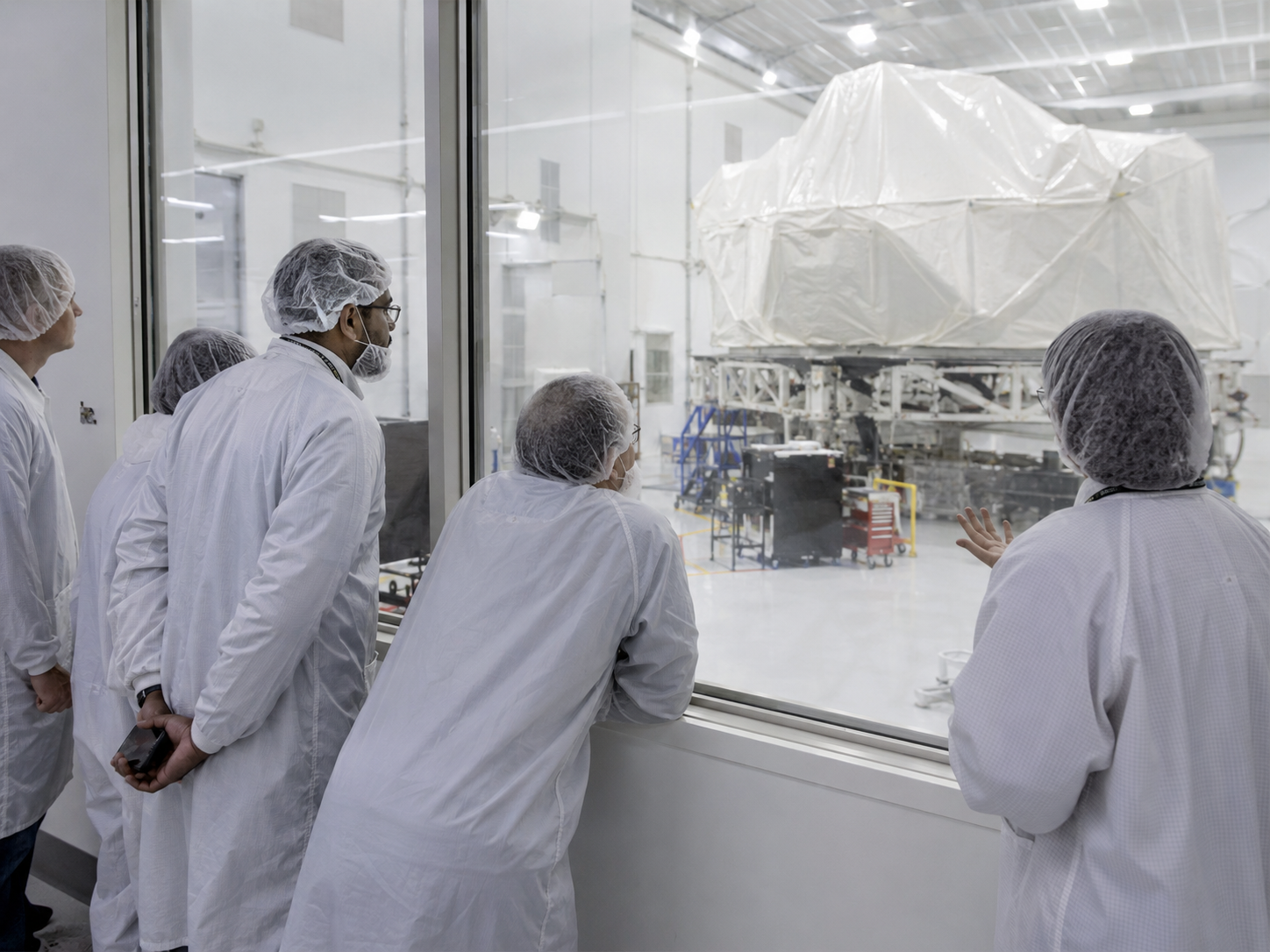
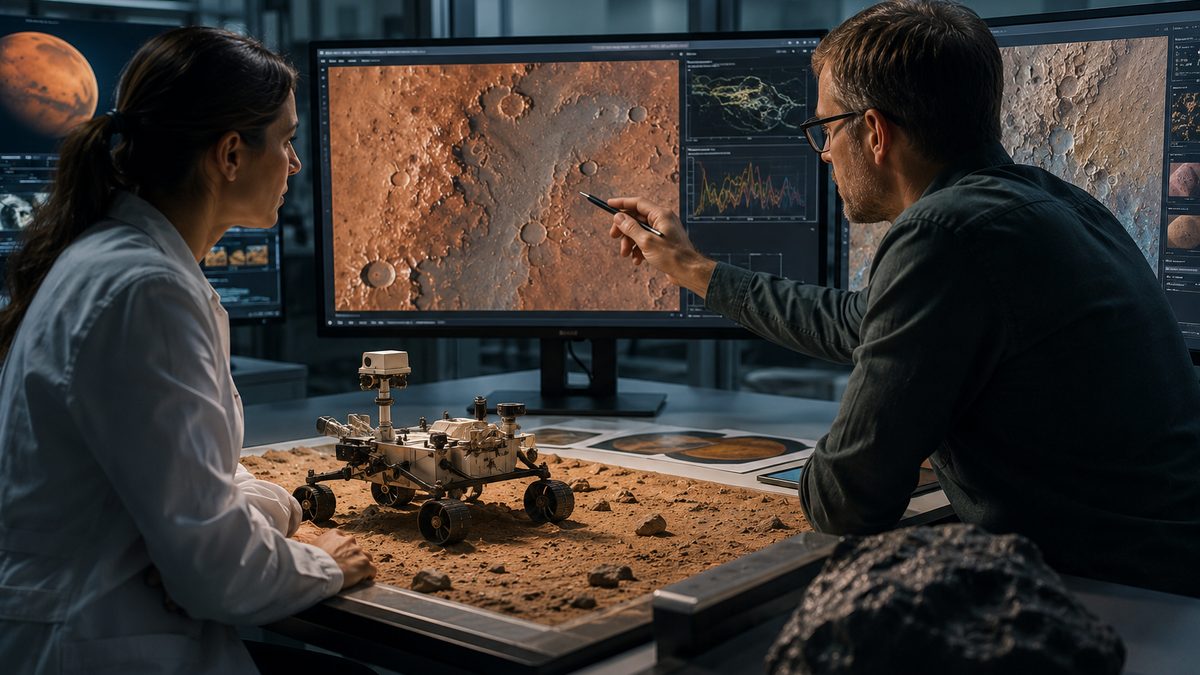
NASA’s Roman Space Telescope is being prepared for a mission that could greatly expand scientists’ catalog of distant worlds. Editorial illustration by TheDailyGlobe.
Key Facts
- NASA’s Roman Space Telescope is expected to expand the search for planets beyond the solar system.
- Scientists estimate Roman could uncover about 100,000 previously unknown worlds.
- Roman is expected to search less-explored parts of the Milky Way.
- NASA recently invited media to view Roman’s arrival at Kennedy Space Center in the coming weeks.
- The estimated planet count depends on mission performance and future observations.
One of the simplest questions in astronomy is also one of the hardest to answer: how common are planets like the ones in our solar system?
Scientists have already found thousands of planets beyond the sun, but those discoveries do not yet give a full picture of the galaxy. Many known exoplanets come from surveys that are better at finding certain kinds of worlds, in certain places, under certain observing conditions.
NASA’s Nancy Grace Roman Space Telescope is expected to widen that search. NASA-linked reporting says scientists estimate Roman could uncover about 100,000 previously unknown worlds by looking into less-explored regions of the Milky Way. The number is an estimate, not a discovery count, but it helps explain why the mission is drawing attention as the telescope moves closer to launch preparations.
What Roman Is Designed To Add
Roman is not being presented as a telescope that has already found new planets. Its importance is in what it is designed to do once it is operating: give scientists a broader way to look for exoplanets across parts of the galaxy that have not been surveyed as deeply.
That matters because the current catalog of known exoplanets is powerful but incomplete. Some methods are better at finding planets close to their stars. Others are better at finding large planets or systems lined up in just the right way from Earth’s point of view. A wider census can help researchers test whether the planets already found near us are typical, rare, or only part of the story.
The Roman mission is expected to help scientists compare planetary systems across different regions of the Milky Way. That kind of comparison is less dramatic than a single discovery announcement, but it can be more useful for understanding how planets form and how common different kinds of worlds may be.
Why The 100,000 Number Needs Care
The estimate that Roman could uncover about 100,000 previously unknown worlds is eye-catching, but it should be read carefully. It is a projection based on mission planning and scientific modeling, not a tally of confirmed planets.
Space missions also depend on real-world performance. Launch timing, instrument behavior, observing conditions, and survey execution can all affect what a telescope ultimately delivers. A mission can meet expectations, exceed them, or face limits that change what scientists are able to measure.
That uncertainty does not make the estimate meaningless. It simply means readers should understand the difference between scientific potential and completed results. Roman may greatly expand the catalog of distant worlds, but the proof will come from the observations themselves.
What A Wider Planet Census Could Show
The value of Roman’s exoplanet work is not just in adding more names to a list. A larger and more varied sample can help scientists ask better questions about the galaxy.
If Roman finds many planets in regions that have been harder to study, researchers may be able to compare those worlds with planets found closer to home. They may learn more about whether certain planet types are common across the Milky Way or concentrated in particular environments.
That kind of work could shape future astronomy missions. A better map of where different kinds of planets appear can help scientists decide which systems deserve closer study later. It can also give students, educators, and general readers a clearer picture of what astronomers mean when they say the galaxy is full of worlds.
What Happens Before The Science Arrives
For now, Roman remains in the preparation stage. NASA recently invited media to view the telescope’s arrival at Kennedy Space Center in the coming weeks, a step that points to the mission moving further into its launch pipeline.
The next milestones to watch are practical ones: the telescope’s arrival, launch schedule updates, commissioning after launch, and eventually the first survey data. Each stage will say more about when scientists can begin testing the mission’s exoplanet expectations against real observations.
Roman’s promise is not that it will answer every question about distant worlds. Its promise is narrower and stronger: it could give scientists a much wider view of the planets they have been missing.
Reporting note: Reporting draws on NASA mission updates, NASA Goddard science materials, space agency announcements, and reviewed background materials. This article was produced with AI-assisted research and reviewed by an editor before publication.