ISS Shelter Order Shows Why the Aging Space Station Still Needs Close Watch
Astronauts briefly took shelter in a SpaceX Dragon spacecraft during work on air leaks in the Russian segment of the International Space Station, a reminder that spaceflight safety often depends on cautious procedures before a crisis develops.
Save Article
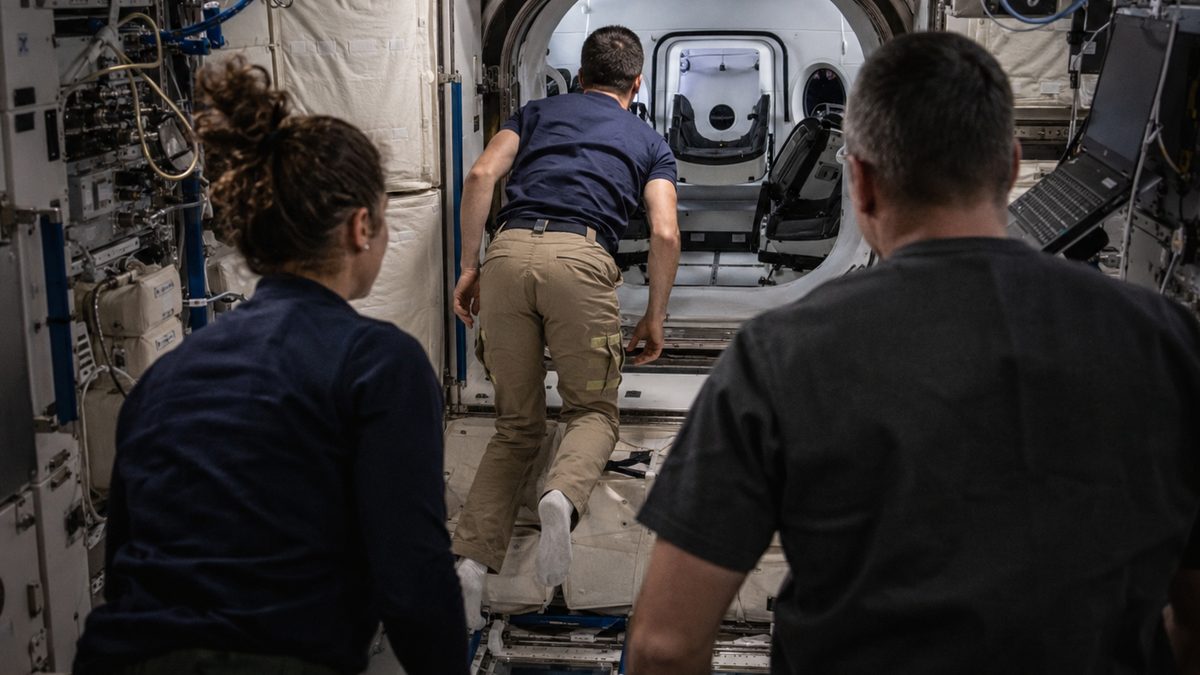
Astronauts aboard the International Space Station briefly shifted into a precautionary shelter posture while air-leak work continued on the Russian side of the orbiting lab. Editorial illustration by TheDailyGlobe.
Key Facts
- NASA briefly directed astronauts to shelter in a docked SpaceX Dragon spacecraft during work connected to air leaks on the Russian segment of the station.
- The crew later returned to normal station activities after repair work was paused and additional assessment continued.
- The affected area is tied to the Russian segment of the station, where leak concerns have been monitored for years.
- The International Space Station remains a joint project involving NASA, Roscosmos and other international partners.
Astronauts aboard the International Space Station briefly took shelter in a docked SpaceX Dragon spacecraft Friday while crews dealt with air-leak concerns on the Russian side of the orbiting laboratory, according to Associated Press reporting and other spaceflight coverage. The precaution was later lifted, and the crew returned to normal duties after repair work was paused for further assessment.
The episode did not amount to an evacuation, and officials described the move as a safety precaution rather than a sign of immediate danger. Still, it drew attention because the International Space Station is one of the world’s most complex shared engineering projects, and even small pressure problems aboard an orbiting laboratory require careful, conservative decisions.
The station has always operated with layers of backup plans. Crews train for pressure changes, fire, toxic leaks, docking problems and other emergencies because there is no quick outside rescue in low Earth orbit. A docked spacecraft can serve as a temporary safe haven if station conditions worsen. In this case, the Dragon spacecraft was used as a precautionary place for astronauts to be ready while teams on the ground and aboard the station evaluated the repair situation.
The reported leak concerns involve the Russian segment, specifically the area associated with the Zvezda Service Module. NASA describes Zvezda as the first fully Russian contribution to the station and a major early piece of the orbiting complex. The module has provided living quarters, life-support functions, flight control systems, propulsion capability and docking support for Russian spacecraft. That role makes any recurring issue in the area important, even when a specific event does not threaten the crew.
The key point for readers is not that the station was suddenly unsafe. It is that spaceflight safety works best when crews respond early, follow procedures and avoid waiting until a small problem becomes a larger one. A shelter order can sound dramatic on first read, but in space operations it can also be a sign that controllers are using the safety margin built into the mission.
The International Space Station has been occupied for more than two decades and has hosted astronauts from many countries. That longevity is part of its value, but it also means the station is aging. Hardware that was designed, launched and assembled across different eras now has to be maintained while still supporting science, crew life and visiting spacecraft. NASA and its partners have continued using the station while also preparing for a future transition to commercial stations and an eventual end to ISS operations.
Friday’s precaution also highlights the unusual cooperation still required aboard the station. U.S., Russian, European, Japanese and Canadian space activities remain deeply connected there, even when politics on Earth are strained. Air pressure, module integrity and crew safety cannot be handled as separate national issues once astronauts are sharing the same orbiting structure.
For the public, the shareable lesson is simple: spaceflight rarely looks like movie-style emergency drama. More often, it is a chain of checklists, cautious calls and engineering reviews. The crew sheltering in Dragon was a visible example of that system. The fact that astronauts returned to normal operations does not make the episode meaningless. It shows how seriously small changes are treated when people are living hundreds of miles above Earth.
NASA and Roscosmos are expected to continue evaluating leak-related data and repair options. Until officials provide a fuller technical update, the safest reading is narrow: the crew was protected, the immediate precaution ended, and the recurring leak issue remains an important maintenance concern for one of the most important laboratories ever built.
Reporting note: Reporting draws on Associated Press reporting, NASA background materials on the International Space Station and Zvezda Service Module, The Guardian live reporting, and reviewed spaceflight background materials. This article was produced with AI-assisted research and reviewed under TheDailyGlobe editorial standards before publication.