New Research Links Climate Shifts With Rising Antibiotic-Resistance Risk
New research on Salmonella adds to evidence that climate shifts may put more pressure on antibiotic resistance, a public-health problem already shaped by drug use, sanitation and food safety.
Save Article
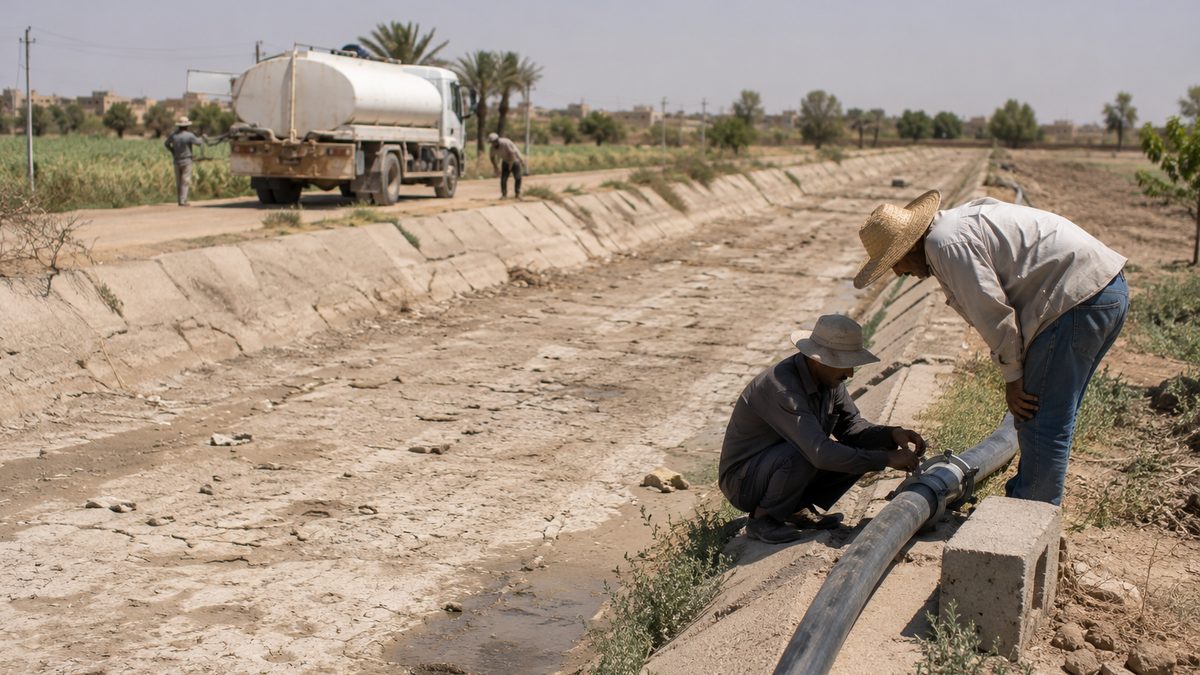
Researchers are studying how warming, rainfall, food systems and antibiotic use may intersect in the spread of drug-resistant bacteria. Editorial illustration by TheDailyGlobe.
Key Facts
- Recent reporting says the analysis examined more than 480,000 Salmonella samples from 139 countries and regions.
- The study reported climate-associated increases in antibiotic-resistance genes in Salmonella.
- Scientific review literature has described climate change and antimicrobial resistance as linked public-health concerns.
- Researchers and review authors caution that causation remains difficult to establish.
- Antibiotic misuse and overuse remain major drivers of antimicrobial resistance.
Antibiotic resistance becomes personal when an ordinary infection is harder to treat than it used to be. The concern is not only hospital medicine. It reaches food safety, farms, clinics, travel, public-health labs and the everyday drugs doctors rely on when bacteria make people sick.
New research is adding climate pressure to that picture. Recent reporting on a study of Salmonella samples from 139 countries and regions says researchers found climate-associated increases in antibiotic-resistance genes, suggesting that warming and rainfall changes may be connected to how some drug-resistant bacteria spread.
What The Salmonella Research Found
The new analysis focused on Salmonella, a bacteria group often tied to foodborne illness. Reporting from The Guardian and Medical Xpress described the study as examining a large international set of samples and finding patterns that connected climate variables with antibiotic-resistance genes.
That does not mean every case of antibiotic-resistant Salmonella is caused by climate change. The finding is more careful than that. It points to an association between climate conditions and resistance patterns, which scientists can use to ask better questions about where, when and why resistance may rise.
That distinction matters because antibiotic resistance has many causes. Overuse and misuse of antibiotics in people and animals remain major drivers. Sanitation, health-care access, food production, surveillance systems and local public-health capacity can also affect how resistant bacteria emerge and spread.
Why Climate May Add Pressure
Climate can affect health in indirect ways. Heat, rainfall and flooding can change how bacteria survive, move through water or food systems, and reach people. Those pathways are not simple, and they are not the same everywhere.
Scientific review materials, including Nature Reviews Microbiology and The Lancet Planetary Health context, describe climate change and antimicrobial resistance as increasingly connected concerns. They also point to evidence gaps, especially around proving exactly how much climate contributes compared with other forces.
For readers, the practical point is that climate is not replacing the older antibiotic-resistance story. It may be adding another layer to it. Stewardship, sanitation, food safety and disease surveillance still matter. The new research suggests those systems may have to operate in a warmer and less predictable environment.
What This Does Not Prove
The study should not be read as proof that climate change is the sole or primary cause of antibiotic resistance. Association and modeling can reveal important patterns, but they do not settle every question about direct cause.
The global nature of the research also means local differences matter. Countries and regions vary in antibiotic use, food systems, lab testing, public-health reporting, water quality and health-care access. Those differences can shape what researchers see in the data.
There is also no direct medical advice to take from this study. People should not change antibiotics, delay care or self-treat based on climate-linked resistance research. The useful takeaway is public-health awareness, not individual medication decisions.
What Public Health Officials Will Watch
The next important work is follow-up research that tests the climate-resistance connection in more detail. Scientists will need to understand which bacteria, regions and environmental conditions show the strongest links, and where surveillance is too thin to draw firm conclusions.
Health agencies will also be watching broader antimicrobial-resistance trends through updates from organizations such as WHO, CDC and national public-health systems. Those updates can show whether resistant infections are rising, where they are concentrated and which interventions are working.
The careful lesson is not panic about a new superbug. It is that two public-health problems may be intersecting. If climate shifts make some resistance risks harder to manage, then antibiotic stewardship, food safety, clean water, sanitation and surveillance become even more important, not less.
Reporting note: Reporting draws on peer-reviewed health and environmental research, scientific review literature, public-health reporting, and reviewed infectious-disease context. This article was produced with AI-assisted research and reviewed by an editor before publication.