Court Fight Over Federal Voter List Puts Mail Ballot Rules Under Review
A federal judge heard arguments over an executive order touching mail ballots and a federal voter list, leaving unresolved questions about presidential power, state authority, and election administration.
Save Article
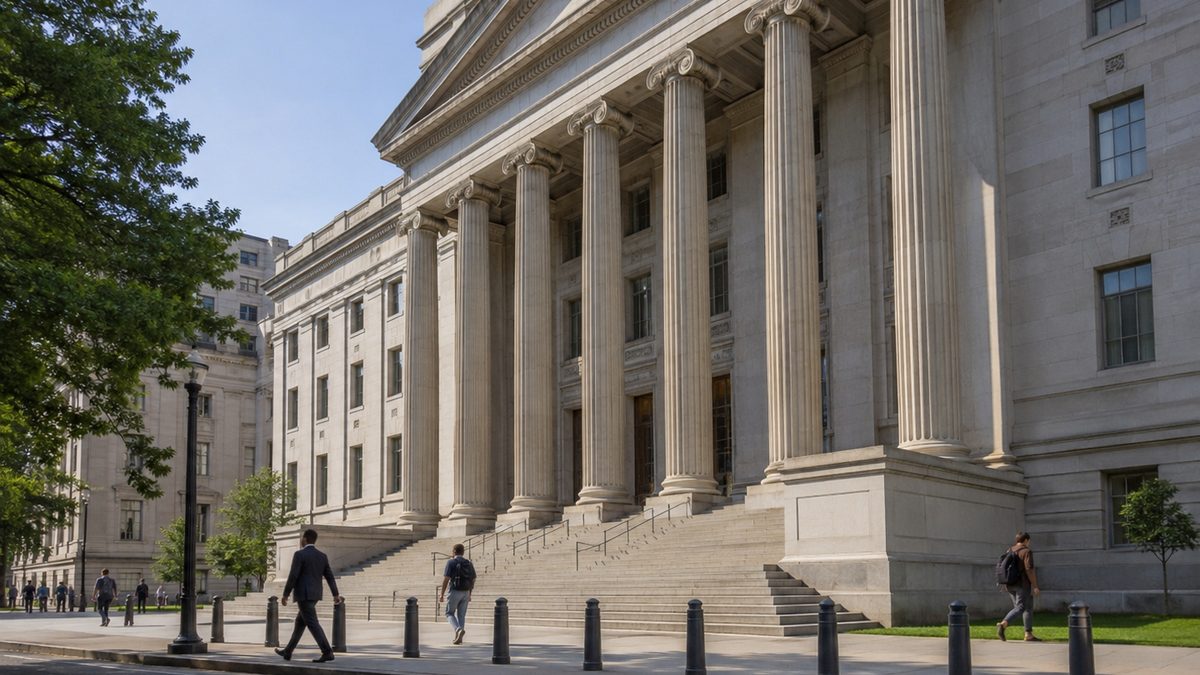
A federal court challenge is testing the limits of executive authority over election administration. Editorial illustration by TheDailyGlobe.
Key Facts
- A federal judge in Boston heard arguments over lawsuits challenging an executive order related to a federal voter list and mail ballots.
- Plaintiffs argue that states and Congress, not the president, have authority over election rules.
- The administration argues the legal challenge is premature because the list has not been finalized.
- The judge took the arguments under advisement.
- It remains unclear how the court will rule or how agencies would implement the order if it survives review.
Mail voting is familiar to many readers. The legal fight now in federal court is about something more basic: who gets to write the rules around election administration.
A federal judge in Boston heard arguments this week over lawsuits challenging an executive order involving a federal voter list and mail ballot rules. The judge took the arguments under advisement, leaving the order's future uncertain while both sides press sharply different views of presidential power.
What the Court Is Reviewing
The case centers on an executive order that challengers say reaches into election rules normally handled by states and Congress. The dispute includes questions about a federal voter list and mail ballot procedures, but the court has not yet decided whether the order can move forward.
Plaintiffs argue the order exceeds presidential authority and could create burdens for eligible voters and election officials. Those are legal claims, not findings by the judge. The administration argues the lawsuits are premature because the voter list has not been completed and the alleged harms have not yet happened.
Why the Authority Question Matters
Election administration in the United States is divided across federal, state, and local systems. That makes the question of authority important. A court fight over election rules is not only about one order; it is also about which branch or level of government has power to set the terms.
For voters, the practical concern is confidence. People need to know that election rules are clear, lawful, and administered by officials with the authority to apply them. For states and local election offices, the concern is whether new federal requirements would change planning, staffing, technology, or timelines.
What Each Side Is Arguing
The plaintiffs' case turns on the argument that the president cannot use an executive order to control election rules assigned to states and Congress. They also argue the order could burden election officials and eligible voters if implemented.
The administration is asking the court not to block the order at this stage. Its argument is that the challenge is too early because the federal list has not been finalized and the claimed harms are still speculative.
That distinction matters. The judge is not only weighing the policy dispute. The court also has to consider timing, authority, and whether the plaintiffs have shown enough immediate harm to justify intervention before implementation is complete.
What Remains Unclear
The judge has not ruled. It is also unclear whether any federal voter list would be ready before the midterm elections, how agencies would carry out the order if it survives, or whether additional rulemaking would follow.
The next point to watch is the court's ruling. After that, attention will turn to any agency steps, including possible Postal Service or federal rulemaking connected to the order.
For now, the most careful reading is also the simplest one: the dispute is active, the legal claims are contested, and the court has not yet answered the central question of how far executive authority can reach into election administration.
Reporting note: Reporting draws on Associated Press reporting, Federal Register materials, court-hearing context, official records, and reviewed background materials. This article was produced with AI-assisted research and reviewed by an editor before publication.