Students Need Support, But Schools Still Need Standards
Helping students succeed and maintaining expectations are not opposing goals. Schools need both if learning is going to recover.
Save Article
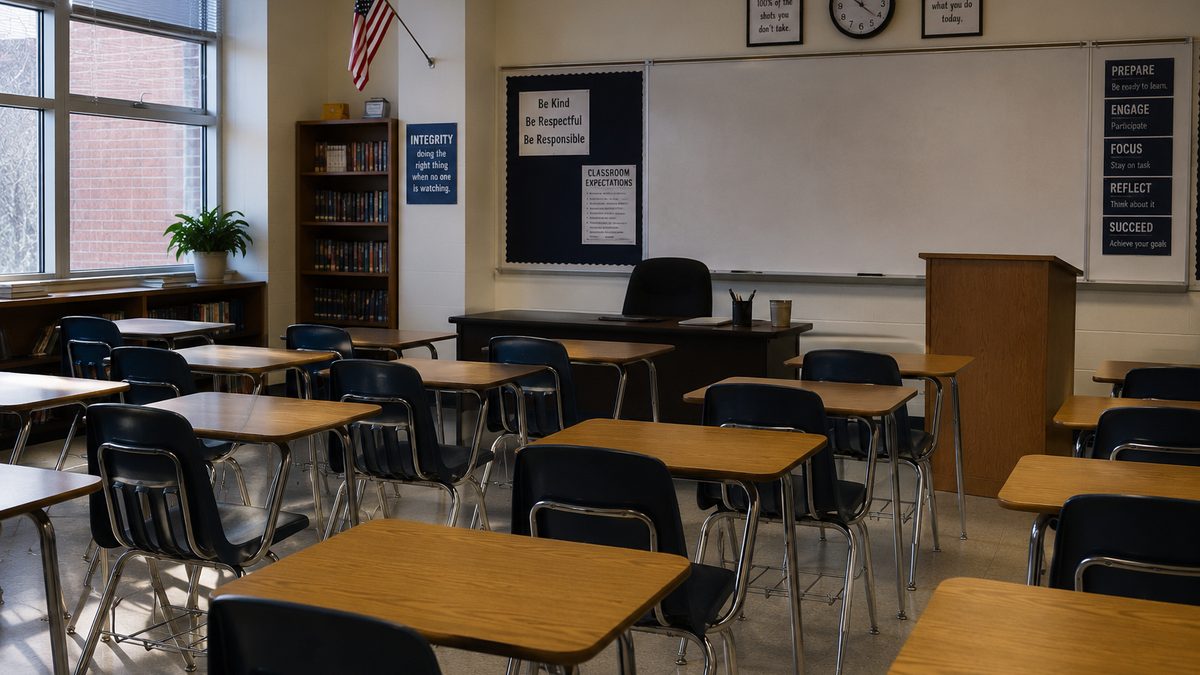
Students need support, but schools also need clear expectations that protect learning time. Editorial illustration by TheDailyGlobe.
A teacher can prepare a lesson, build relationships with students, stay after school for extra help, and work tirelessly to close learning gaps. But there is one thing even the best teacher cannot do: teach students who are not there. And when classrooms operate under unclear expectations, learning becomes harder for everyone who is.
That reality sits at the center of one of the most uncomfortable conversations in education today. Students need support. Many are dealing with challenges that extend far beyond school walls. But schools also need standards. Attendance matters. Behavior matters. Expectations matter. Pretending otherwise does not help children.
The Problem Has Not Fully Receded
Federal and research data continue to show that attendance remains a challenge in many communities years after the pandemic disrupted normal school routines. The U.S. Department of Education and related education data resources define chronic absenteeism as missing 10 percent or more of a school year. FutureEd's tracking of attendance trends has found that many places remain above pre-pandemic absenteeism levels.
At the same time, teacher surveys and education research continue to point to concerns about classroom behavior, student engagement, and the difficulty of rebuilding learning momentum. These issues do not affect every school equally, and local conditions vary widely. But the broader challenge remains visible enough that educators continue to raise it as a major concern.
Support Without Expectations Is Not Compassion
One mistake in the public debate is assuming that expectations are somehow at odds with caring about students. In reality, expectations are often part of caring.
Students who miss large amounts of school lose instructional time that cannot easily be recovered. Students who regularly disrupt classrooms make learning more difficult not only for themselves but also for classmates. Teachers facing constant disruptions have less time to teach and less energy to devote to students who need help.
None of that means students should be punished for circumstances beyond their control. A child dealing with housing instability, illness, transportation problems, anxiety, family stress, or other serious barriers needs support, not condemnation. But support loses much of its value if the system quietly communicates that attendance and engagement are optional.
Schools Cannot Solve Every Problem Alone
Another reality often ignored is that many of the challenges schools face begin outside the classroom. Family instability, poverty, mental-health struggles, social isolation, and community stress do not disappear when a student walks through the school doors.
Yet schools are increasingly expected to absorb the consequences of those problems. Teachers, counselors, principals, and support staff often become the last institution standing when earlier interventions have failed or never existed.
That is one reason simplistic blame rarely helps. Attendance problems are not always the result of weak parenting. Classroom disruptions are not always the result of bad intentions. But acknowledging those realities does not change the fact that schools still have a responsibility to create environments where learning can happen.
The False Choice That Holds Schools Back
Education debates often get trapped between two unhelpful extremes. One side treats consequences and standards as inherently harsh. The other treats support systems as excuses for poor performance. Both views miss the point.
A school can provide counseling, attendance outreach, tutoring, transportation assistance, and family support while still making clear that showing up matters. A school can use fair and consistent discipline while still recognizing that some students need additional help rather than automatic punishment.
The goal is not softness or toughness. The goal is learning. Every policy should ultimately be judged by whether it helps more students spend more time successfully engaged in school.
What Communities Should Demand
The public conversation would improve if more people rejected the false choice between support and standards. Schools need both. Students need both.
Communities should expect leaders to address barriers that keep students from attending school. They should also expect schools to rebuild attendance norms, maintain clear classroom expectations, intervene early when problems emerge, and be honest about the cost of lost learning time.
What remains unclear is which local strategies will prove most effective over the long term. Districts are experimenting with different approaches, and results vary. The important question going forward is whether schools can strengthen support systems without weakening expectations.
Students deserve compassion. They also deserve classrooms where learning is possible. A serious school recovery effort should not force communities to choose between those goals. The best schools will be the ones that insist on both.
Reporting note: Reporting draws on federal education data, research reports, public education resources, and reviewed background materials used to ground the argument. This article was produced with AI-assisted research and reviewed by an editor before publication.