Household Financial Stress Is Not Just a Mood
Americans are not imagining financial pressure just because the economy has avoided a collapse. Debt, fragile savings and weak sentiment deserve to be taken seriously.
Save Article
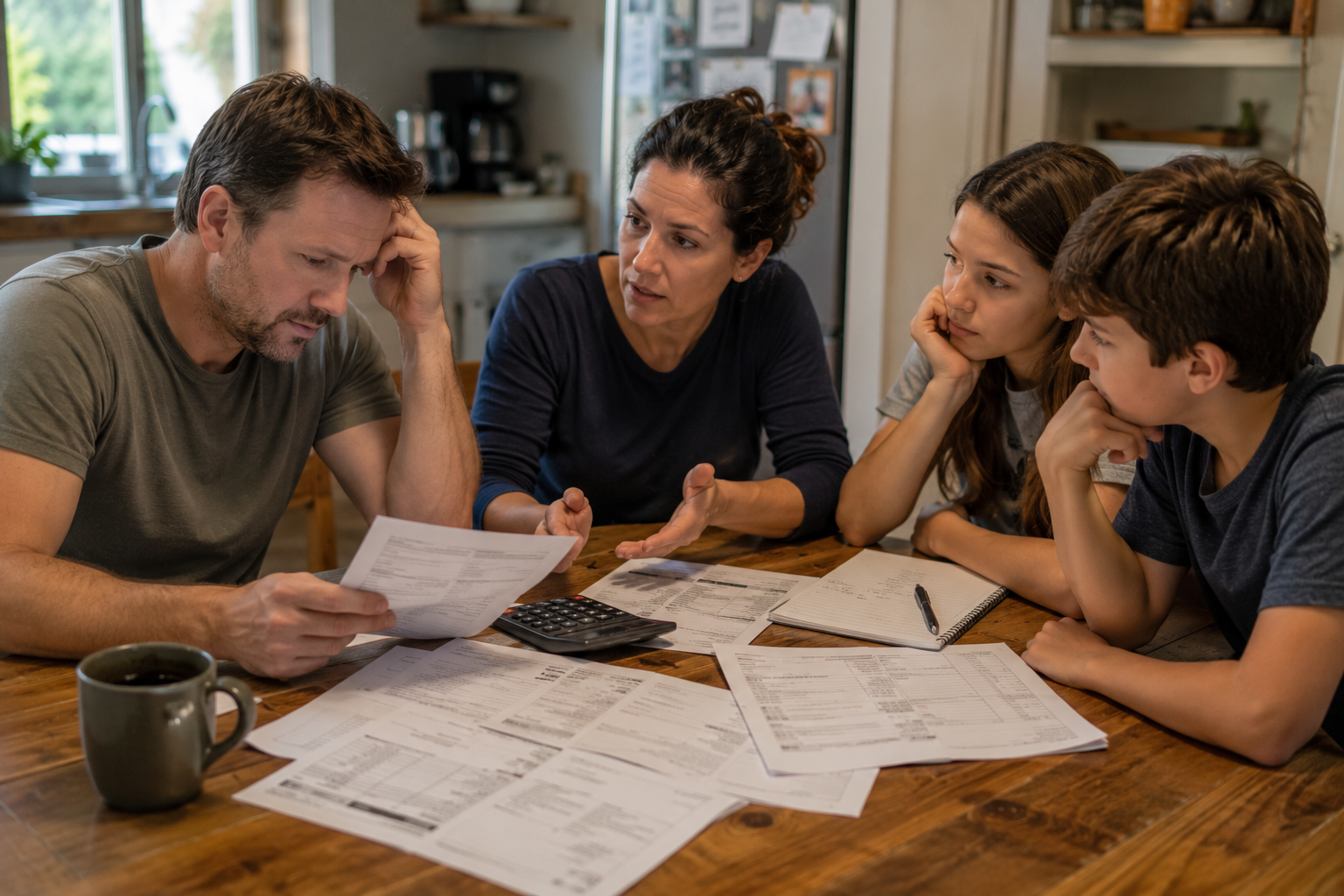
Household financial pressure remains a major concern for many Americans. Editorial illustration by TheDailyGlobe.
It has become too easy to talk about Americans’ financial anxiety as if it is mostly a mood problem.
When people say they feel stretched, the response from commentators often comes back as a lecture: unemployment has not collapsed, consumers are still spending, and the broad economy is still standing. Those facts matter. They are part of the picture. But they do not erase the pressure many households feel when bills arrive, balances grow and prices remain hard to absorb.
The better question is not whether Americans are wrong to feel uneasy. The better question is what they are reacting to.
The Numbers Are Not Just Feelings
The Federal Reserve Bank of New York reported that total household debt reached $18.8 trillion in the first quarter of 2026. That number alone does not prove a crisis. Debt can rise for many reasons, including home purchases, education costs, auto loans and normal borrowing in a large economy.
But household debt still matters because it shows how much of daily life now runs through monthly obligations. A family can have a job, keep spending and still feel boxed in by rent or mortgage payments, credit cards, car loans, student debt, insurance, groceries and utilities.
That is the part of the economy people live with directly. Most families do not experience the economy as a chart. They experience it as the amount left after the paycheck clears and the bills are paid.
Stability Can Still Feel Tight
There is a fair counterpoint here. Some labor-market and spending indicators have remained resilient. That should not be brushed aside. A job market that keeps people employed is not a small thing, and continued consumer spending can signal that households are still finding ways to manage.
But resilience is not the same as comfort. A household can stay current while cutting back. A worker can keep a job while feeling that wages are not keeping up with basic costs. A parent can pay the bills while quietly skipping savings, delaying repairs or leaning harder on credit cards.
That is why public debate should be careful with the word “strong.” The economy can be strong in some headline ways and still feel weak around millions of kitchen tables.
Financial Stress Deserves a Serious Hearing
The Federal Reserve’s household well-being report found that financial well-being remained below its recent high. The National Foundation for Credit Counseling reported financial stress near record levels. University of Michigan consumer sentiment data has shown weak sentiment and elevated inflation expectations.
None of that means every worried person is facing the same problem. Some are dealing with credit card balances. Some are worried about rent. Some are anxious about grocery prices, insurance bills or whether an emergency expense would push them backward. Some are reacting to politics, media coverage or expectations about what could happen next.
Consumer sentiment is not a perfect measure of household finances. It can be shaped by partisan views, news coverage and general expectations. But dismissing it completely is a mistake. When anxiety shows up across debt, financial well-being, counseling demand and sentiment, it deserves more than a shrug.
The Wrong Response Is Scolding People
The most useful response is not panic. It is also not scolding people for failing to appreciate good macroeconomic news.
People do not need to be told that their stress is imaginary because a national indicator looks fine. They need a clearer explanation of why the economy can avoid a dramatic breakdown while still leaving many households with little breathing room.
That distinction matters for politics, policy and basic trust. When leaders or commentators dismiss financial anxiety as irrational, they make people feel unheard. When they exaggerate that anxiety into catastrophe, they make people feel more fearful than informed. Neither approach helps.
A more honest approach would admit both truths at once: the economy has not fallen apart, and many households are still under real strain.
What Leaders Should Take From This
Household financial stress should be treated as a civic warning light. Not proof of disaster. Not a partisan talking point. A warning light.
It tells policymakers, employers, lenders and the media that the lived economy is not fully captured by broad growth, spending or employment numbers. It tells them that debt loads, emergency savings, inflation expectations and basic monthly affordability belong at the center of the conversation.
The debate should be calmer than the cable-news version and more grounded than the social-media version. Families are not wrong to feel pressure just because the country has avoided the worst-case scenario. A person can be employed, responsible and still financially tired.
That is not bad vibes. That is a real part of the American economy, and it deserves to be discussed like one.
Reporting note: Reporting draws on public records, official statements, reputable reporting, and reviewed background materials used to ground the argument. This article was produced with AI-assisted research and reviewed by an editor before publication.