Homelessness Policy Cannot Choose Between Compassion and Public Order
A humane society should refuse the false choice between helping people in crisis and maintaining safe, usable public spaces.
Save Article
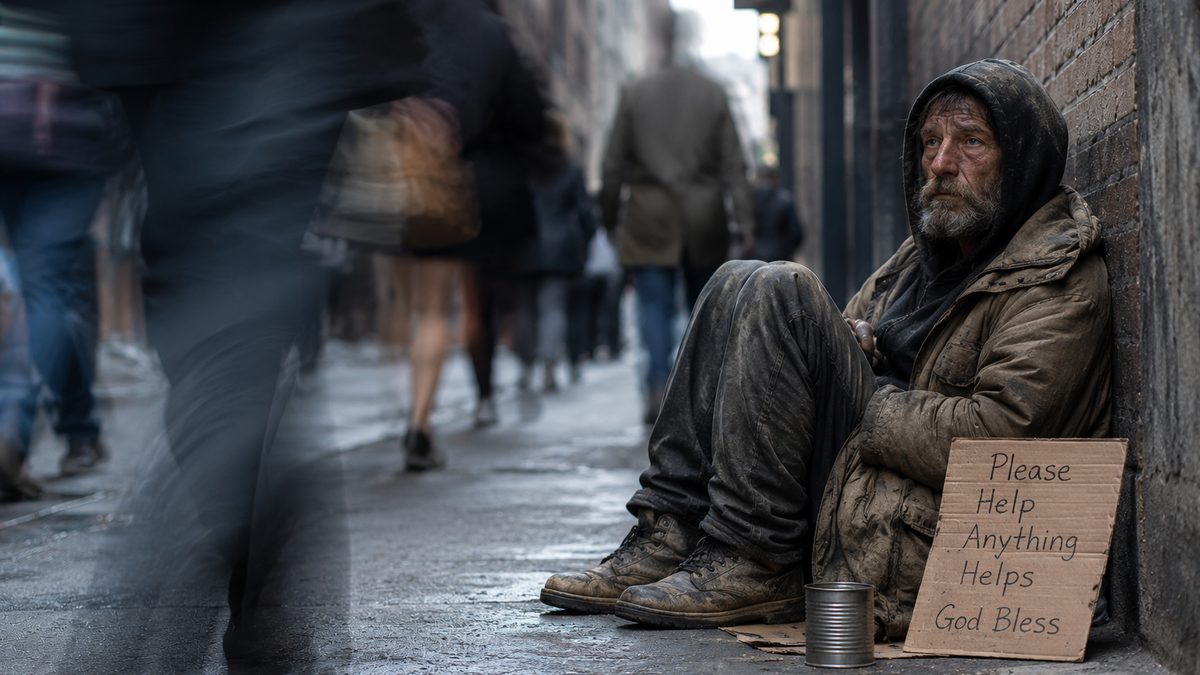
Public spaces work best when cities pair human dignity with clear standards and real help. Editorial illustration by TheDailyGlobe.
By the time homelessness becomes a public controversy, the crisis is usually already years old. The sidewalk encampment, the person sleeping in a park, the emergency room visit, the police response, or the viral video is often the final visible chapter of a much longer story involving housing shortages, untreated addiction, mental illness, poverty, family breakdown, and systems that failed to intervene earlier.
That reality is why the public debate so often goes wrong. Too many arguments begin at the end of the problem rather than the beginning. One side focuses almost entirely on compassion and treats concerns about public order as cruelty. The other focuses almost entirely on disorder and treats the crisis as if it were mainly a matter of personal responsibility. Neither approach is sufficient.
The Numbers Show a Problem That Remains Enormous
Recent federal data underscores the scale of the challenge. HUD reported that 745,652 people were experiencing homelessness on a single night in January 2025. Of those, 266,320 were living unsheltered. Those figures come from point-in-time estimates and should not be mistaken for exact counts, but they provide a useful snapshot of the size of the problem.
At the same time, the National Low Income Housing Coalition noted that the latest assessment showed the first overall reduction in homelessness in nearly a decade. That is encouraging news. It suggests progress is possible. It does not suggest the crisis has been solved.
Public Disorder Has Victims Too
A difficult truth often gets lost in homelessness debates: public disorder affects vulnerable people on both sides of the issue. The person living outside is vulnerable. So is the elderly resident who no longer feels safe using a park. So is the transit rider who avoids a station because conditions have deteriorated. So is the small business owner losing customers. So are outreach workers, shelter staff, emergency-room employees, and police officers repeatedly responding to the same crises.
Recognizing those realities is not an argument against compassion. It is an argument for taking public order seriously. Communities have a legitimate interest in maintaining safe, usable public spaces. That is not cruelty. It is one of the basic responsibilities of government.
Enforcement Alone Is Not a Solution
But the opposite mistake is just as common. Cities can clear encampments, enforce ordinances, or tighten rules governing public spaces. Those actions may change what residents see. They do not automatically reduce homelessness.
If shelter beds do not exist, if treatment options are unavailable, if mental-health services are overwhelmed, or if housing pathways remain inaccessible, enforcement can become little more than movement. People leave one location and appear in another. The visible problem shifts, while the underlying crisis remains.
That is why debates framed as compassion versus enforcement are so unhelpful. The real question is whether communities are willing to pair standards with services and accountability with meaningful assistance.
The Last Institutions Left Standing
One reason homelessness remains politically frustrating is that the institutions most visible to the public are rarely the ones that created the problem. Police officers, judges, librarians, emergency-room nurses, shelter workers, and local officials often become the last institutions standing when earlier interventions have failed.
The crisis usually begins long before a court appearance, an arrest, an encampment cleanup, or a hospital visit. By the time those institutions become involved, many opportunities for earlier intervention have already passed.
As a result, public frustration is frequently directed at people who are responding to a problem rather than preventing it. That does not mean those institutions should avoid accountability. It means voters should be asking deeper questions about treatment capacity, housing pathways, mental-health access, and long-term outcomes.
A Better Standard for Public Leaders
The standard should be straightforward. Leaders should not be allowed to sell compassion without results. Nor should they be allowed to sell order without a realistic plan for helping people in crisis.
A humane homelessness policy requires both. It requires public-space rules that are consistently enforced. It requires shelter capacity that can absorb people who need help. It requires treatment options for addiction and mental illness. It requires housing pathways that move people toward stability rather than leaving them trapped in emergency systems indefinitely. And it requires transparent measurement so the public can see what is working and what is not.
What Citizens Should Demand Next
The hardest part of this debate is accepting that there is no slogan-sized solution. Compassion without boundaries can leave people trapped in dangerous conditions. Boundaries without meaningful help can leave people trapped in the same crisis somewhere else.
The better path is less emotionally satisfying because it demands more from everyone. It asks governments to invest in treatment, housing, and intervention. It asks communities to maintain standards for public spaces. And it asks voters to reject leaders who offer only half of the answer.
The goal should not be choosing between mercy and order. A functioning society needs both. The cities that make real progress will likely be the ones that stop treating those values as opposites and start delivering them together.
Reporting note: Reporting draws on HUD homelessness data, federal policy materials, housing-policy analysis, public records, and reviewed background materials used to ground the argument. This article was produced with AI-assisted research and reviewed by an editor before publication.