Adult Caregiving Is Expensive Even When Families Do It for Free
America depends on unpaid family care, but too often treats the time, stress and cost as a private scheduling problem.
Save Article

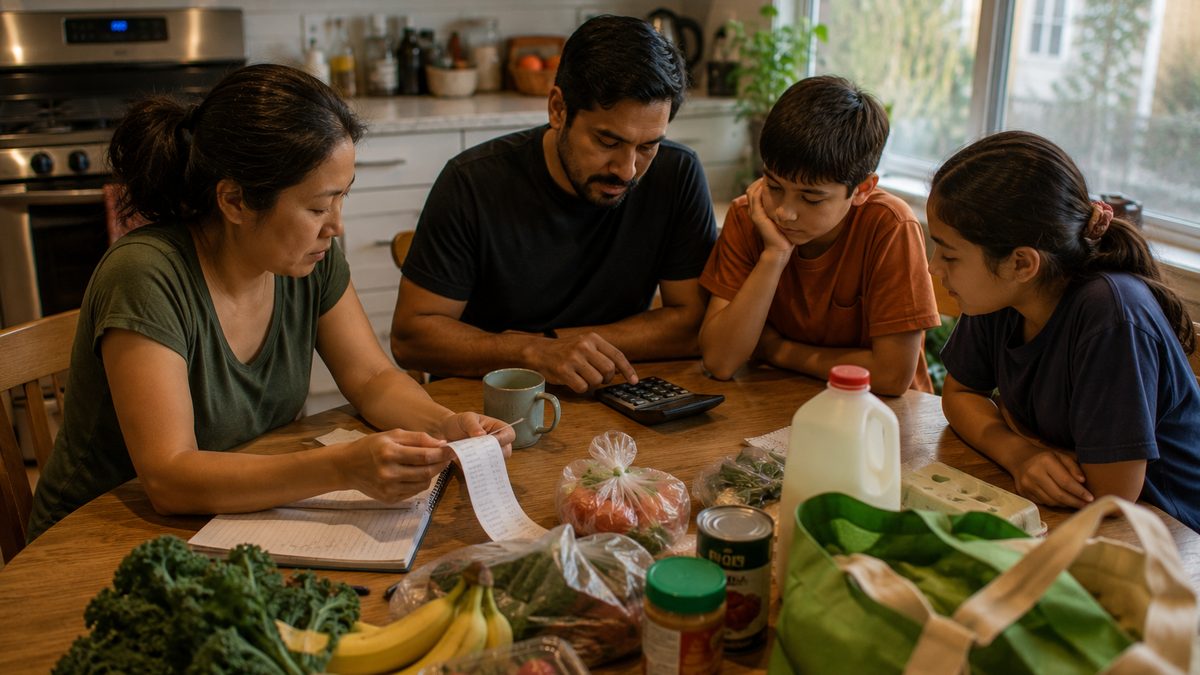
Millions of families manage caregiving alongside work, bills and daily responsibilities. Editorial illustration by TheDailyGlobe.
It often starts at the kitchen table.
A laptop is open. Bills are stacked nearby. Someone is trying to answer work emails while also checking a parent’s medication, confirming a doctor’s appointment, arranging a ride, calling the pharmacy, and wondering whether they can leave work early again without becoming the problem employee.
America tends to describe this as family responsibility. That is not wrong. Many people want to care for their parents, spouses, relatives and loved ones. Care is one of the most human things people do for one another.
But that description is incomplete. When millions of people are holding together aging care, disability care, illness care, child care, work schedules and household finances at the same time, this is not only a private family matter. It is infrastructure.
The Work Is Already Happening
The Bureau of Labor Statistics reported that 14 percent of the U.S. population, or 38.2 million people, provided unpaid eldercare in 2023–24. On days when eldercare providers performed care activities, they spent an average of 3.9 hours doing so.
That is not a small side chore. That is a major daily commitment for many households. It can mean bathing, meals, rides, paperwork, phone calls, medication, supervision, money management, emotional support and the quiet vigilance of being the person everyone calls when something goes wrong.
A National Partnership for Women & Families analysis estimated the value of unpaid caregiving in the United States at more than $1.1 trillion. That number should not be treated as a perfect price tag for love. It is better understood as a warning: the country is depending on work it often does not count, pay for, schedule around or plan for honestly.
Calling It Love Does Not Make It Free
Families do not need a spreadsheet to know caregiving has a cost. The cost shows up in missed shifts, used vacation days, lower savings, delayed promotions, frayed marriages, tired siblings, postponed doctor visits, and the guilt of feeling like no amount of help is enough.
The U.S. Surgeon General has warned that parents and caregivers face stressors that affect mental health and family well-being. That matters because caregiving is not only about the person receiving help. It also affects the person providing it, the household around them, the employer depending on them, and the community that may or may not have support nearby.
This is where public language becomes dishonest. We praise caregivers as selfless. We call them heroes. We say family comes first. Then many workers are left to negotiate care in the margins of jobs, school calendars, medical systems and bills that were not built around the real shape of family life.
Families Should Not Be Replaced
There is a fair counterpoint here. Many families do not want government replacing family bonds, and they are right to resist any cold system that treats care as a transaction. Not every caregiving burden can or should become a public program. Some care is intimate. Some responsibility belongs close to home.
But that does not mean the country should pretend the current arrangement is working simply because families keep making it work. Love can be real, and the burden can still be too heavy. Duty can be honorable, and the system around it can still be weak.
The question is not whether families matter. They do. The question is whether public life should keep relying on unpaid family labor while treating the strain as background noise.
Caregiving Belongs in the Main Conversation
Caregiving should be discussed as a workforce issue because people cannot always separate care from employment. It should be discussed as a health issue because stress does not stay neatly contained. It should be discussed as an aging issue because more families will face eldercare questions as parents and relatives grow older. It should be discussed as a household-finance issue because unpaid time is still time, and time has consequences.
Employers should stop acting surprised when good workers have real family obligations. Communities should take local caregiver support seriously. Policymakers should be clearer about what help is realistic, what tradeoffs come with it, and what families are already providing without pay.
That does not require turning every family challenge into a federal program. It does require a more honest starting point: unpaid caregiving is part of how the country functions.
The Question Ahead
What remains unsettled is how much support should come from employers, communities, families and government. That debate should be practical, not sentimental. It should ask what workers need, what aging adults need, what families can reasonably carry, and where the current system quietly shifts too much pressure onto people who are already exhausted.
Readers should watch workplace flexibility, caregiver support policies, aging services and local community resources. Those may sound like separate issues, but for millions of households they are the same issue viewed from different angles.
Caregiving is not a side note to American life. It is one of the hidden systems keeping it from falling apart. The least the country can do is stop pretending that because families do the work for free, the work has no cost.
Reporting note: Reporting draws on official labor data, public health materials, advocacy-backed economic analysis, and reviewed background materials used to ground the argument. This article was produced with AI-assisted research and reviewed by an editor before publication.