Project Hail Mary Is Still the Big-Hearted Sci-Fi Adventure Readers Need
Andy Weir’s space-survival novel gets a fresh moment from its film adaptation, but the book still shines on its own as a funny, brainy, hopeful science fiction adventure.
Save Article
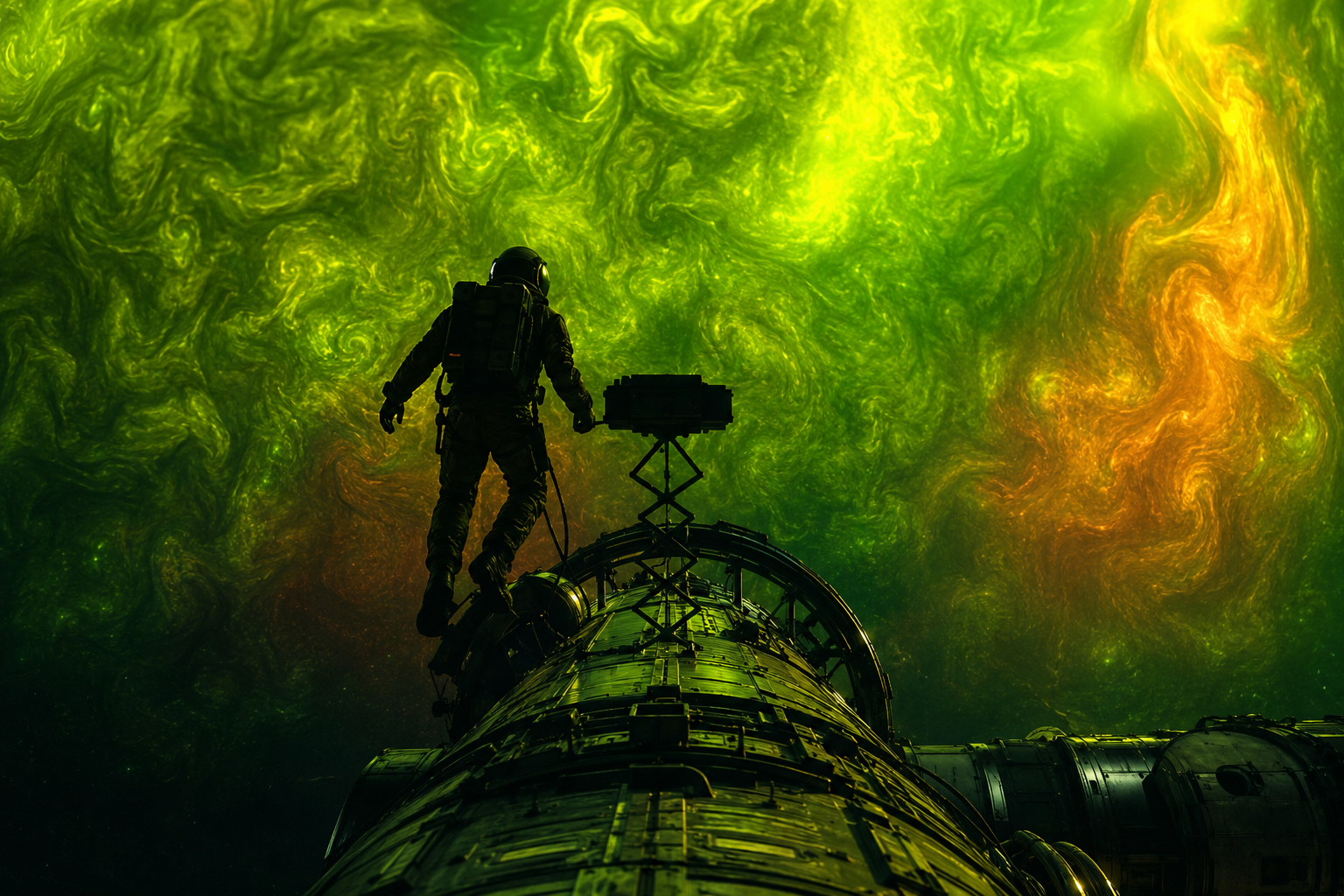
Andy Weir’s space-survival novel gets a fresh moment from its film adaptation, but the book still shines on its own as a funny, brainy, hopeful science fiction adventure. Editorial illustration by TheDailyGlobe.
Project Hail Mary is the kind of science fiction novel that makes being curious feel heroic.
Andy Weir’s 2021 novel has a fresh burst of attention because of its 2026 film adaptation, but the book does not need the movie to justify a reread. It already had the goods: a huge cosmic problem, an impossible mission, a stranded scientist, a mystery unfolding in pieces, and one of the most lovable unlikely friendships in recent popular science fiction.
For readers who love science fiction because it makes the universe feel dangerous and wonderful at the same time, Project Hail Mary still hits beautifully. It is funny without undercutting the stakes, technical without becoming cold, and optimistic without pretending survival is easy.
A Disaster Story That Refuses to Be Grim
The setup is classic Weir: Ryland Grace wakes up alone on a spacecraft with no memory of who he is, why he is there, or why two crewmates are dead nearby. As his memory returns, the scale of the mission becomes clear. Earth is in danger from astrophage, a mysterious organism affecting the sun, and Grace may be the last person with a chance to help save humanity.
That could have turned into a bleak end-of-the-world novel. Instead, Weir turns catastrophe into a puzzle. Grace survives by asking questions, testing assumptions, making mistakes, measuring results, and trying again. The pleasure of the book is not just waiting to see whether he lives. It is watching him think.
That is where Project Hail Mary feels closest to The Martian, Weir’s breakout novel. Both books understand that problem-solving can be dramatic. A broken system, a bad assumption, or an experiment that goes sideways can carry as much suspense as a chase scene when the reader understands what is at risk.
The Science Is the Adventure
Project Hail Mary is hard science fiction, but it is not homework. The book is packed with biology, physics, engineering, chemistry, orbital mechanics, and improvised experimentation. Yet the science usually enters the story because Grace needs it right now. He is not explaining the universe to show off. He is explaining it because a wrong answer could kill him or doom Earth.
That gives the technical passages momentum. Even when the explanations get dense, they have a purpose. Weir’s great trick is making readers feel like they are inside the experiment. You are not simply told that Grace is smart. You get to follow the steps, see the failed attempts, and feel the tiny thrill when a pattern finally clicks.
For science fiction fans, that is catnip. The book respects the joy of figuring things out. It makes intelligence feel active, messy, funny, and human.
Rocky Gives the Book Its Heart
The real magic, though, is Rocky.
The less spoiled for new readers, the better. But any honest review has to say that Rocky is not just a memorable alien character. Rocky is the emotional engine of the novel. The relationship between Grace and Rocky turns Project Hail Mary from a clever survival thriller into something warmer and stranger and far more lasting.
Their friendship works because Weir earns it through communication. Language becomes a scientific problem. Trust becomes a practical necessity. Affection grows out of shared competence and shared danger. Two beings who should have almost nothing in common learn to understand each other because the alternative is failure.
That is a deeply science-fiction idea, but it is also a deeply human one. Project Hail Mary believes that intelligence matters, but it believes cooperation matters more.
Why the Book Still Feels Fresh
The film adaptation has made Project Hail Mary feel current again, but the book’s appeal is not just timing. It feels fresh because it is so openly sincere. It is not embarrassed by hope. It does not treat competence as corny. It does not confuse darkness with depth.
There are flaws. Grace’s voice can be extremely quippy. Some emotional beats arrive with visible engineering. Readers who prefer quiet literary restraint may find Weir’s style too direct. But for this story, that directness mostly works. The book is built like a mission plan: move fast, solve the next problem, keep the heart visible, and never let the reader forget what is at stake.
The result is a rare modern sci-fi adventure that feels big without feeling cynical. It has cosmic danger, alien contact, humor, sacrifice, and a friendship that sneaks up on you. It is a page-turner, but it is also a reminder that wonder is not just about stars and ships. Sometimes wonder is two minds meeting across the impossible and deciding to help each other anyway.
The Verdict
Project Hail Mary is easy to recommend, especially for readers who want science fiction with brains, pace, and heart. It has the structure of a mystery, the urgency of a survival thriller, and the emotional payoff of a friendship story.
It is also a great gateway book for people who think hard science fiction might not be for them. Yes, there is math. Yes, there is physics. Yes, Grace spends a lot of time turning panic into procedure. But Weir keeps the story moving and lets the emotional stakes grow alongside the technical ones.
The book’s best quality is its belief that problems are worth solving. In a culture full of apocalypse stories, Project Hail Mary stands out because it is not only about disaster. It is about response. It is about curiosity under pressure. It is about refusing to be alone in the universe, even when the universe seems determined to make you feel that way.
For science fiction fans, that is more than enough reason to celebrate it again.
Reporting note: Review analysis draws on Penguin Random House publisher materials, Publishers Weekly book information, Amazon MGM Studios film materials, People reporting on the film adaptation, and reviewed background materials. This article was produced with AI-assisted research and reviewed by an editor before publication.