David Attenborough Turns 100 After Seven Decades of Bringing Nature to Viewers
As Sir David Attenborough reaches 100, audiences around the world are reflecting on how his calm voice and decades of nature programming changed the way people see the natural world.
Save Article
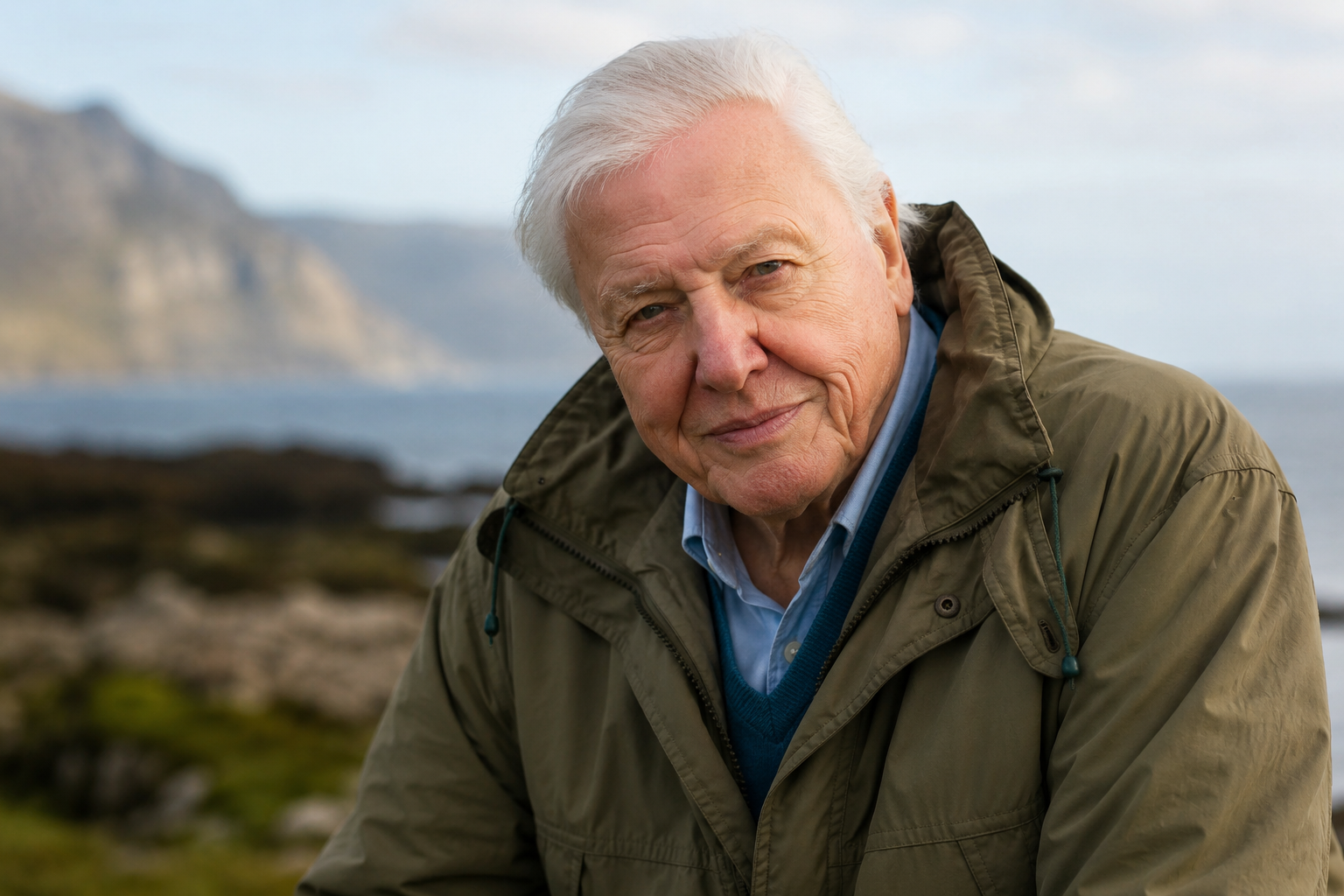
As Sir David Attenborough reaches 100, audiences around the world are reflecting on how his calm voice and decades of nature programming changed the way people see the natural world. Editorial illustration by TheDailyGlobe.
Key Facts
- Sir David Attenborough turned 100 on May 8, 2026.
- The BBC hosted a celebration at London’s Royal Albert Hall.
- Cinemas screened Attenborough nature films for audiences marking the occasion.
- Attenborough has spent more than seven decades making nature programming.
- Associated Press reporting noted his shift from neutral narrator to conservation advocate.
- His documentaries helped bring wildlife and environmental science to mainstream television audiences.
Sir David Attenborough turned 100 on May 8, marking a milestone few broadcasters ever reach and even fewer sustain with the same level of public trust. Across Britain and beyond, audiences celebrated not just a birthday but a career that shaped how generations learned about wildlife, science, and the planet itself.
The BBC marked the occasion with a celebration at London’s Royal Albert Hall, while cinemas screened selections from Attenborough’s nature documentaries. Public figures, scientists, broadcasters, and longtime viewers shared messages reflecting on the influence of a voice that became closely tied to modern nature storytelling.
For more than 70 years, Attenborough has guided audiences through rainforests, deserts, oceans, and polar regions. His work helped turn natural history television from a niche educational format into a global cultural experience watched by millions.
A Familiar Voice Across Generations
Attenborough’s documentaries reached viewers during major changes in both television and science communication. He began working in broadcasting during the early years of modern television and remained active through the streaming era, adapting to new formats while keeping the same steady, conversational style.
Many viewers grew up hearing Attenborough narrate scenes from places they would never visit themselves. His programs introduced audiences to deep ocean ecosystems, remote jungles, migrating wildlife, and fragile environments with a tone that felt curious rather than theatrical.
That approach helped build broad public trust. Attenborough rarely centered himself in his films. Instead, the focus stayed on the animals, landscapes, and scientific discoveries being shown on screen. Over time, his voice became associated with patience, clarity, and credibility.
Changing Alongside the Climate Debate
Associated Press reporting noted that Attenborough’s role evolved over the decades. Earlier in his career, he was often viewed mainly as a narrator and presenter of natural history. In more recent years, his films and public comments became more direct about climate change, biodiversity loss, and environmental decline.
That shift reflected broader changes in public conversation around conservation. Scientists and environmental groups increasingly warned that wildlife loss and climate pressures were becoming harder to separate from everyday life. Attenborough responded by using his platform to speak more openly about those concerns.
Even with that stronger message, his style remained measured. Rather than relying on alarmist language, his documentaries often focused on showing visible changes in ecosystems and explaining scientific findings in plain terms. Supporters argue that approach helped environmental issues reach audiences who might otherwise tune out political debates.
Why Nature Television Became So Influential
Part of Attenborough’s lasting influence comes from timing. His career grew alongside advances in film technology that allowed wildlife crews to capture images that earlier generations could barely imagine. High-definition cameras, underwater filming systems, drones, and remote sensors changed what nature documentaries could show.
But technology alone did not explain the popularity of the programs. Attenborough’s documentaries often combined scientific detail with storytelling that felt accessible to ordinary viewers. Episodes were structured around animal behavior, survival, migration, or changing seasons rather than academic lectures.
That balance made the programs appealing to families, schools, and viewers who might not normally seek out science programming. His work also influenced later generations of filmmakers and broadcasters who adopted similar styles for educational and environmental storytelling.
A Rare Kind of Public Figure
At a time when public trust in institutions and media often feels fractured, Attenborough remains one of the few widely recognized broadcasters who draws admiration across political and generational lines. Part of that may come from the fact that his work focused less on opinion and more on observation.
His documentaries gave viewers a shared experience that felt separate from the constant pace of modern news cycles. For many audiences, watching wildlife programs narrated by Attenborough became associated with curiosity, calm, and a sense of perspective larger than daily political arguments.
As celebrations marked his 100th birthday, the response reflected more than nostalgia. It showed how one broadcaster helped make science and the natural world feel personal to millions of viewers over several generations.
Attenborough’s career also stands as a reminder that educational programming can still reach mass audiences when it is grounded in clear storytelling and public trust. In an increasingly fragmented media environment, that may be part of why his work continues to resonate.
Reporting note: Reporting draws on Associated Press reporting, PBS/AP republication materials, Reuters-based coverage, and reviewed background context on David Attenborough’s career. All claims This article was produced with AI-assisted research and reviewed by an editor before publication.