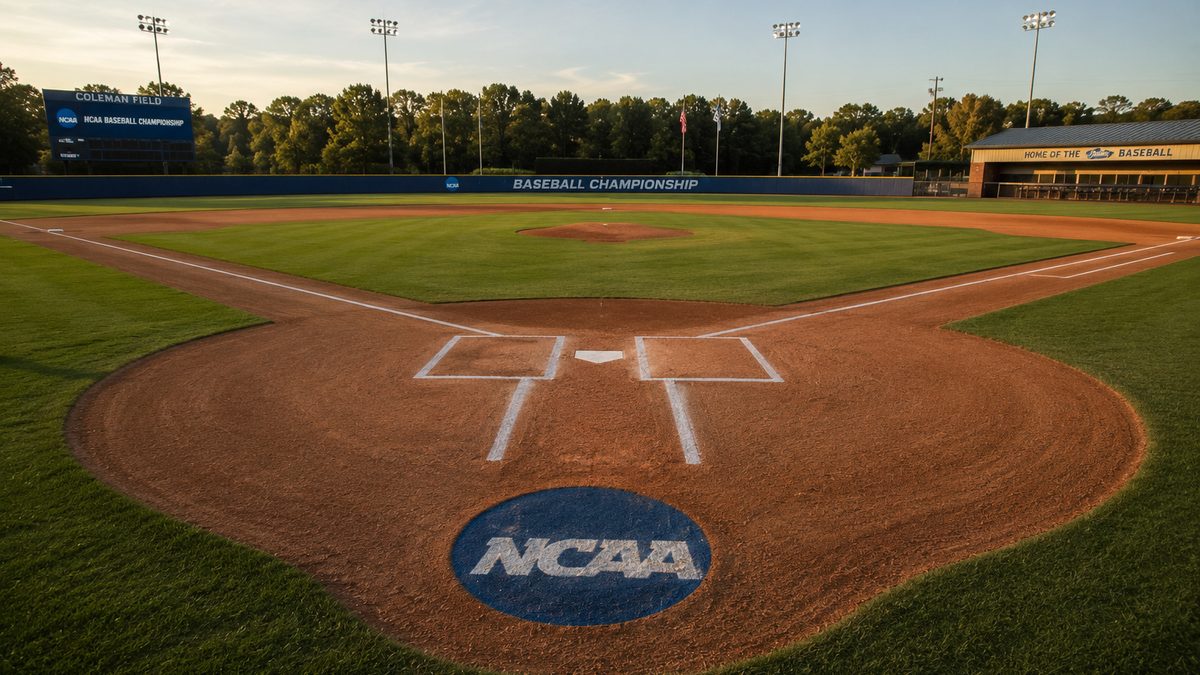
College World Series Reaches Elimination Day With Two Seasons on the Line
The Men's College World Series has reached the stage where every pitch carries extra weight. Two teams will keep their championship hopes alive, and two teams will see their seasons end.
Save Article

In Omaha, elimination games turn a long tournament into a simple question of survival. Editorial illustration by TheDailyGlobe.
Key Facts
- The Men's College World Series is being played in Omaha under a double-elimination format.
- Troy and West Virginia entered June 16 in an elimination game.
- Georgia and Texas also entered June 16 facing elimination.
- North Carolina and Oklahoma remained on the winners' side of the bracket entering the next stage.
- Teams that lose an elimination game are removed from championship contention.
Omaha gets simpler when the bracket reaches this point. For four teams still chasing a national championship, the equation is no longer complicated: win and keep playing, lose and start the trip home.
The Men's College World Series entered its elimination phase on June 16, with Troy facing West Virginia and Georgia meeting Texas. The tournament's double-elimination format gives teams a chance to recover from an early loss, but that margin for error disappears once elimination games arrive.
For casual fans, this is often when the tournament becomes easiest to follow. The bracket narrows, the stakes become obvious, and every game directly affects who remains alive in the chase for a national title.
How the Double-Elimination Format Works
Unlike a single-elimination tournament, the College World Series gives teams some room to recover from a loss. Every team enters the event with the same objective: avoid a second defeat before reaching the championship series.
That structure creates two sides of the bracket. Teams that continue winning stay on the winners' side and move closer to the championship without using additional pitching resources. Teams that lose once drop into the elimination side, where every remaining game becomes a must-win situation.
By June 16, the tournament had reached the point where the safety net was gone for Troy, West Virginia, Georgia, and Texas. Each entered the day knowing that one more loss would end the season.
Why Today's Games Matter
College baseball seasons are long. Teams spend months moving through conference play, postseason tournaments, regionals, super regionals, and finally the College World Series. Once a team reaches Omaha, every victory feels valuable because so few programs make it this far.
That reality gives elimination games a different atmosphere than earlier rounds. Players are not simply trying to improve their position in the bracket. They are trying to extend their season by at least one more game.
For fans, the appeal is straightforward. The stakes are visible without needing to study advanced statistics or tournament scenarios. One team survives. One team sees its championship hopes end.
The Advantage on the Winners' Side
While four teams fought to stay alive, North Carolina and Oklahoma entered the next bracket stage from a stronger position. Remaining on the winners' side does not guarantee a trip to the championship series, but it creates a clearer path forward.
Teams that avoid the elimination bracket often benefit from greater flexibility with their pitching staff. They can manage workloads differently and avoid some of the pressure that comes with playing consecutive must-win games.
That advantage is one reason early tournament victories can matter so much. A single win may not seem dramatic in isolation, but it can influence the options available several days later.
What Remains Unclear
Several important questions remained unanswered as play continued. The most obvious was which two teams would survive the day's elimination contests and continue their championship pursuit.
Pitching availability also remained a major unknown. Tournament baseball often forces coaches to balance immediate survival against future needs. The decisions made during elimination games can shape what happens in later rounds.
Because schedules, game situations, and pitching plans can change quickly, fans following the tournament should check official score and bracket updates for the latest results.
What Fans Should Watch Next
The immediate focus remains on Troy versus West Virginia and Georgia versus Texas. By the end of those games, two programs will still have a path to the national championship and two seasons will be finished.
After that, attention shifts back to the bracket itself. The surviving teams will face the challenge of continuing through the elimination side while North Carolina and Oklahoma try to convert their position into a place in the championship series.
That is what makes this stage of the College World Series compelling. The tournament no longer feels like a long postseason spread across multiple weeks. It becomes a series of direct survival tests, where every inning can determine whether a season continues or comes to an end.
Reporting note: Reporting draws on NCAA tournament materials, established sports reporting, live bracket coverage, and reviewed background materials. This article was produced with AI-assisted research and reviewed by an editor before publication.