Why Tesla Ended the Model S and Model X, and What It Says About the Company’s Future
Tesla’s decision to stop building the Model S and Model X closes a major chapter in EV history and shows how sharply the company is shifting toward autonomy, robots, and higher-volume products.
Save Article
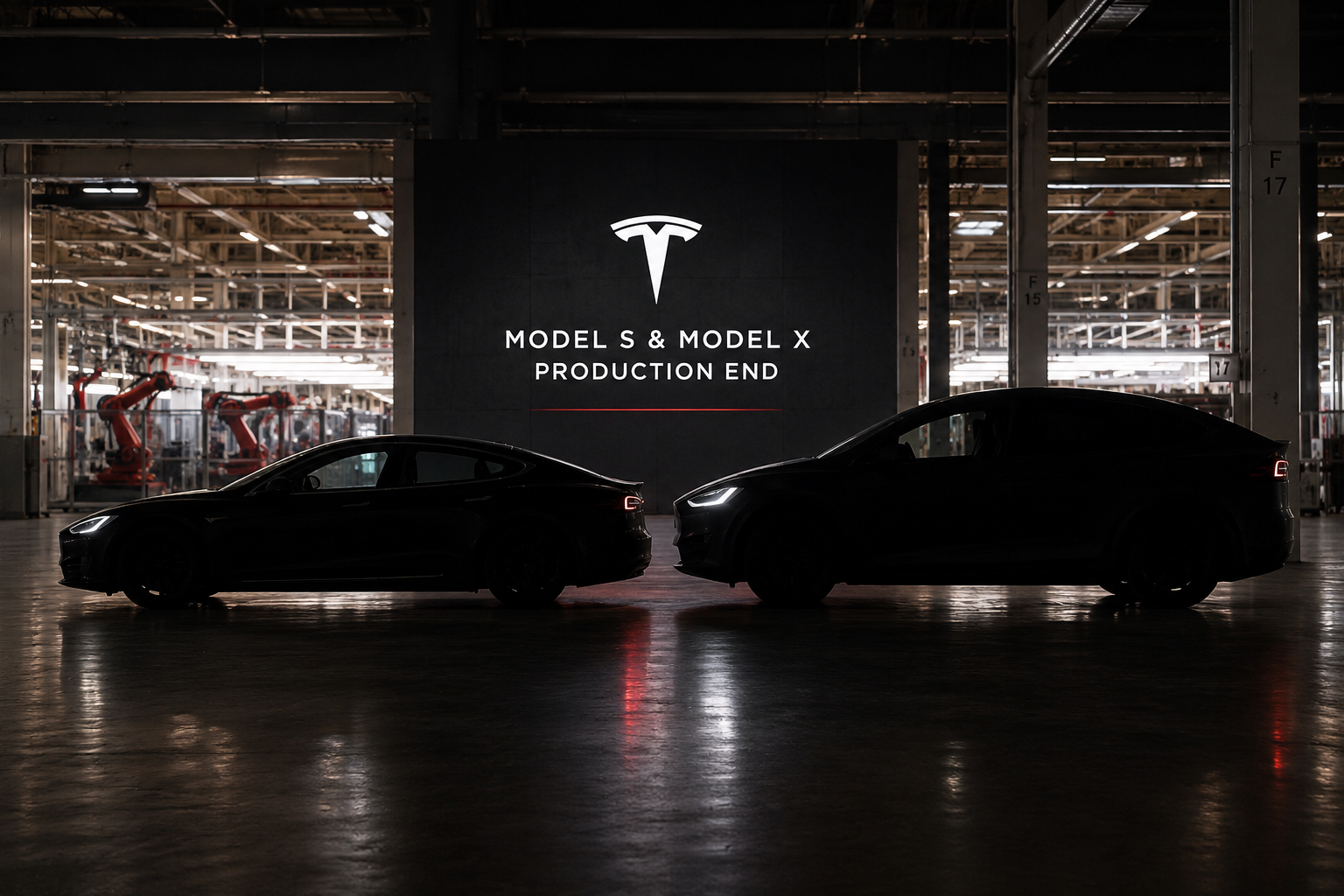
Tesla’s decision to stop building the Model S and Model X closes a major chapter in EV history and shows how sharply the company is shifting toward autonomy, robots, and higher-volume products. Editorial illustration by TheDailyGlobe.
Tesla’s decision to stop making the Model S and Model X is more than a normal product change. It is the end of the vehicles that helped make Tesla feel like the future.
The Model S, introduced in 2012, helped prove that an electric car could be fast, desirable, long-range, and technologically exciting. The Model X, introduced later as a luxury SUV, added Tesla’s signature mix of ambition and spectacle, including its falcon-wing doors. For years, the two vehicles served as proof that electric cars did not have to be small, slow, or boring.
Now that chapter is closing. Reports from Business Insider, TechCrunch, Electrek, The Verge, Kelley Blue Book, and other automotive outlets describe Tesla ending production of the Model S and Model X as the company shifts attention and factory capacity toward newer priorities, including autonomy and its Optimus humanoid robot program.
The Simple Reason: The Market Moved On
The Model S and Model X were once central to Tesla’s identity. They were also expensive, lower-volume vehicles in a company that increasingly depends on higher-volume products.
The Model 3 and Model Y changed Tesla’s business. They reached far more buyers, became easier to understand for ordinary consumers, and helped Tesla move from luxury disruptor to mass-market EV leader. For many families, the Model Y became the practical Tesla: a crossover with more accessible pricing, familiar utility, and broad appeal.
That left the Model S and Model X in a difficult place. They were historically important, but no longer central to Tesla’s sales story. The luxury EV market also became much more crowded, with Mercedes, BMW, Lucid, Rivian, Hyundai, Kia, Ford, Porsche, and Chinese automakers all competing for attention in different parts of the electric market.
The Cars Were Aging
The Model S was groundbreaking when it arrived. It helped reset expectations for electric range, acceleration, software updates, and interior technology. But a car that once felt radically new eventually becomes an older platform.
The Model X faced a different challenge. It was bold and memorable, but also complex. Its falcon-wing doors became one of Tesla’s most recognizable design choices, but they also symbolized the kind of engineering ambition that can be expensive and difficult to scale.
For buyers, the question became practical: why pay a premium for older flagship models when Tesla’s newer and more affordable vehicles handled the needs of most households? That question became harder for Tesla to answer as the rest of the EV market improved.
Tesla Wants the Space for Something Else
The most important part of the decision may not be what Tesla stopped making. It may be what Tesla wants to make instead.
Multiple reports have pointed to Tesla repurposing space at its Fremont, California, factory for the Optimus humanoid robot program. That fits the larger story Tesla has been telling investors. The company increasingly frames its future around artificial intelligence, autonomy, robotaxis, and robotics, not only around selling more traditional cars.
For an average American trying to understand the move, the basic idea is this: Tesla appears to believe its next big growth story will come less from expensive luxury sedans and SUVs, and more from software, autonomous driving, lower-cost vehicles, robotaxis, and robots.
Why This Matters for Tesla
Ending the Model S and Model X makes Tesla’s lineup thinner. That can be good or bad depending on what comes next.
On one hand, simplifying a lineup can help a company focus resources. Fewer low-volume vehicles can mean less manufacturing complexity and more attention on the products that matter most to buyers. If Tesla successfully ramps new products, autonomous services, or robotics, the move may look disciplined in hindsight.
On the other hand, removing flagship vehicles can make Tesla feel less expansive as an automaker. The Model S and Model X gave Tesla prestige. They showed what the company could do at the high end. Without them, Tesla depends even more heavily on the Model 3, Model Y, Cybertruck, and future promises.
That is a real risk. Tesla’s brand has long been built on the idea that the future is almost here. But the future still has to arrive on time, at scale, and in a form customers actually want.
What It Means for Buyers
For consumers, the practical effect is straightforward. New custom orders for the Model S and Model X are gone or limited depending on remaining inventory and market availability. Buyers who wanted one of Tesla’s original flagship models may have to choose from remaining stock, the used market, or competitors.
That may benefit other luxury EV makers. Automakers such as Mercedes, BMW, Lucid, Porsche, and others can now argue that buyers looking for a premium electric sedan or SUV should look beyond Tesla. Some will. Others may simply choose the Model Y or wait for whatever Tesla does next.
The used market may also become more interesting. The Model S and Model X are no longer just older Teslas. They are now closed chapters in Tesla history, which could make well-kept examples more meaningful to enthusiasts even as practical buyers weigh repair costs, battery condition, and newer technology.
The Bigger Business Story
The end of the Model S and Model X says something larger about Tesla’s identity. The company is not trying to be a traditional automaker with a full lineup for every buyer. It is trying to be an AI, autonomy, energy, robotics, and transportation company that also sells cars.
That strategy could pay off enormously if Tesla delivers. It could also disappoint if the company’s future bets take longer than expected or fail to match the impact of its earlier vehicle breakthroughs.
What is clear is that the Model S and Model X did their job. They changed the conversation around electric vehicles. They made EVs aspirational. They forced legacy automakers to respond. They gave Tesla credibility when many people still treated electric cars as niche products.
Now Tesla is betting that the next chapter will not be defined by the cars that made it famous. That is bold, risky, and very Tesla.
Reporting note: Reporting draws on Business Insider, TechCrunch, Electrek, The Verge, Kelley Blue Book, Autoblog, Tesla-related public materials, and reviewed automotive-industry reporting. This article was produced with AI-assisted research and reviewed by an editor before publication.