Amazon Pushes Prime Day Toward Groceries and Everyday Essentials
Prime Day is becoming less about one-time gadget deals and more about Amazon's push into routine household spending.
Save Article
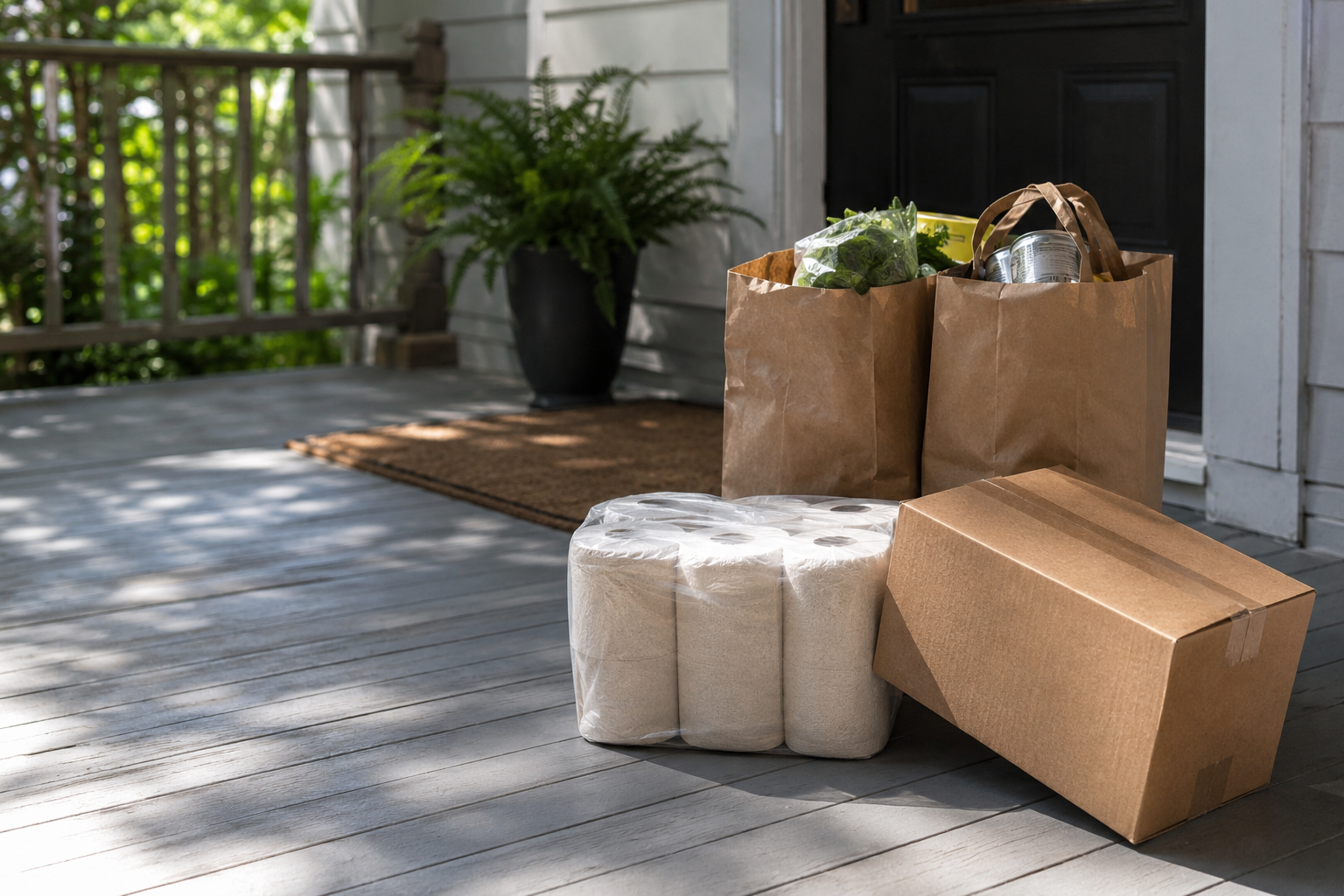
Amazon is putting more emphasis on groceries and everyday essentials as it competes for routine household spending. Editorial illustration by TheDailyGlobe.
Key Facts
- Amazon says Prime Day 2026 runs June 23 through June 26.
- Amazon says the event includes discounts across categories including fresh groceries.
- Amazon says U.S. Prime members received more than 8 billion same- or next-day items in 2025.
- Amazon says groceries and everyday essentials made up half of U.S. same- or next-day Prime deliveries in 2025.
- Axios reported that Amazon is putting groceries at the center of Prime Day's consumer strategy.
For many households, delivery is no longer just for gifts, gadgets or last-minute purchases.
It may be diapers, pet food, paper towels, pantry items, cleaning supplies or groceries showing up on the porch because the week is busy and the list is ordinary. That is the kind of spending Amazon is leaning into as it prepares for Prime Day.
Amazon says Prime Day 2026 will run June 23 through June 26, with discounts across categories that include fresh groceries. The company is framing the shopping event around more than deal hunting. It is also trying to make Prime feel useful for everyday household needs.
Prime Day Moves Closer to the Grocery List
Prime Day has long been associated with electronics, devices, home goods and limited-time discounts. Those categories still matter. But groceries and household basics give Amazon a different kind of opportunity.
A laptop or television is an occasional purchase. Groceries, paper products, pet supplies and basic household items are repeat purchases. If Amazon can make Prime feel useful for those routines, it is competing for a larger and more regular share of the household budget.
That is why the grocery emphasis matters. It turns Prime Day from a shopping event built mostly around deals into a test of whether Amazon can make more customers think of the company when they are planning the week, not just when they are hunting for a discount.
Delivery Speed Is Part of the Pitch
Amazon's delivery numbers show why everyday essentials are becoming more central to the company's retail story. Amazon says U.S. Prime members received more than 8 billion same- or next-day items in 2025, and that groceries and everyday essentials made up half of those U.S. same- or next-day Prime deliveries.
Those are company-provided figures, and they should be read that way. They still show how Amazon wants customers to understand Prime: not only as a membership for faster packages, but as a service that can cover routine needs quickly.
For shoppers, the practical question is whether that convenience is worth the membership cost, delivery terms and prices compared with local grocery stores, warehouse clubs, Walmart, Target or traditional supermarkets.
Why Competitors Will Be Watching
Grocery spending is valuable because it repeats. A retailer that wins part of a family's weekly or monthly list can build habits that are harder to break than one-time deal shopping.
That puts Amazon in direct competition with companies that already depend on grocery and household basics. Walmart, Target, grocery chains, warehouse clubs and delivery platforms all have reasons to defend those purchases.
The competition is not only about price. It is also about trust, freshness, delivery windows, fees, substitutions, membership value, returns and whether shoppers believe the service makes their week easier.
What Remains Unclear
It is not yet clear whether Prime Day grocery deals will change where households shop in a lasting way. A shopper may try a discount once without turning Amazon into a regular grocery stop.
It is also unclear how deep the deals will be, how many shoppers will use them, whether delivery fees or minimums will limit the appeal, and how competitors will respond during the same period.
The company has confirmed the timing, the category emphasis and its delivery data. What remains to be seen is whether the event changes habits after the sale ends.
What Shoppers Should Watch
Prime members and nonmembers alike can watch the same practical details: grocery prices, delivery fees, minimum order rules, substitution policies, competitor sales and whether Prime Day discounts beat regular local prices.
For households already under pressure from food and household costs, the useful comparison is not whether a deal looks big on screen. It is whether the final cart total, delivery terms and membership value make sense.
Prime Day is still a sales event. But Amazon's grocery push shows the larger company strategy more clearly: the fight is not only for what shoppers buy once. It is for the ordinary items they buy again and again.
Reporting note: Reporting draws on Amazon company announcements, company-provided delivery data, established business reporting, and reviewed background materials. This article was produced with AI-assisted research and reviewed by an editor before publication.