West Coast Chemical Tank Emergencies Show Why Industrial Safety Oversight Matters
Two chemical tank emergencies in Washington and California put new attention on industrial safety, evacuation planning and the systems meant to protect nearby communities.
Save Article
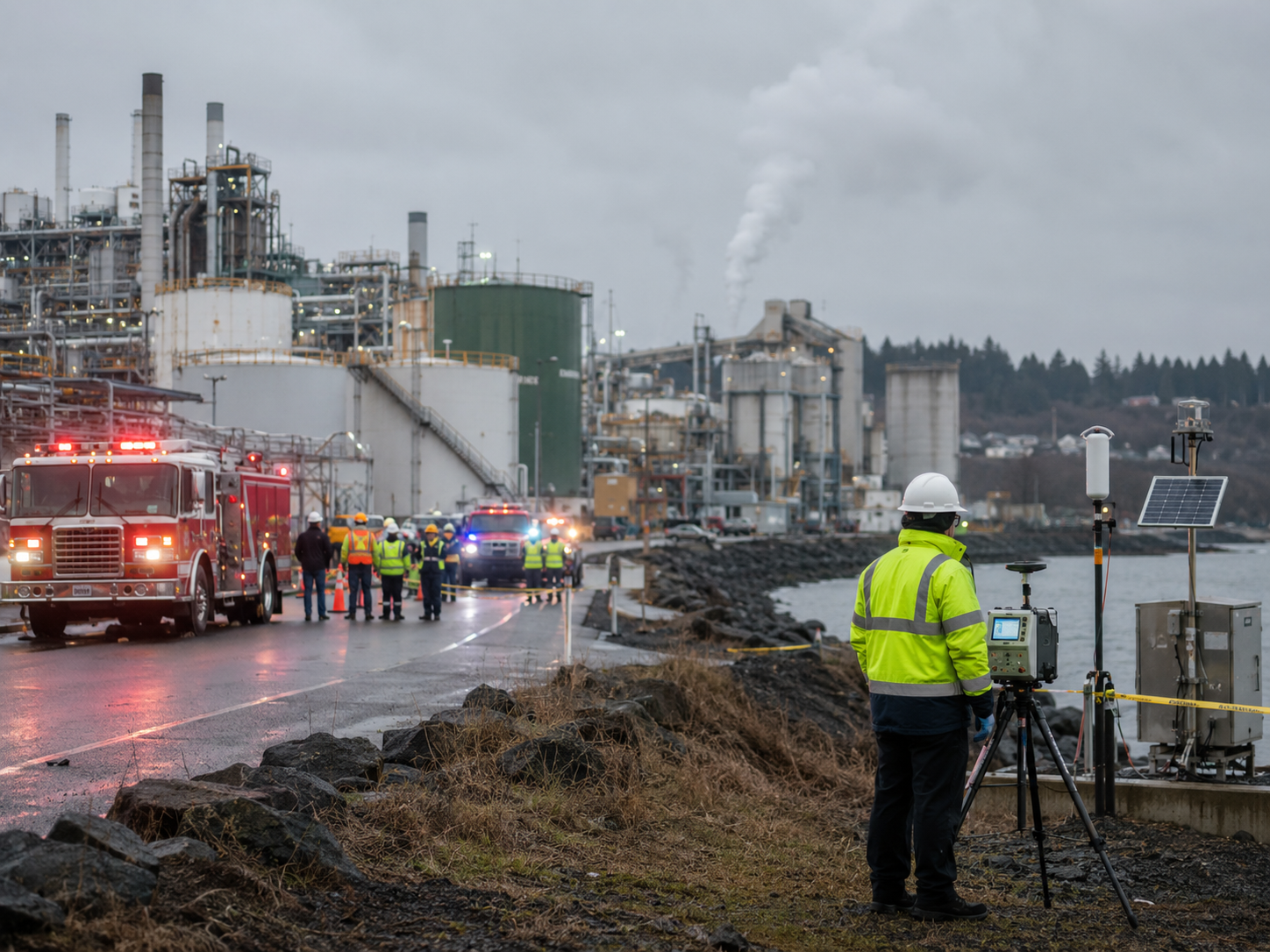
Industrial emergencies can move quickly from a workplace incident to a community safety concern. Editorial illustration by TheDailyGlobe.
Key Facts
- Associated Press reported two major West Coast chemical tank emergencies within a week.
- A tank rupture at a Longview, Washington paper mill killed at least two people, with nine others missing and presumed dead.
- The Longview incident involved a tank containing a caustic chemical mixture used in paper production.
- A separate overheated chemical tank in Garden Grove, California prompted evacuations affecting tens of thousands of residents before orders were lifted.
- Federal and state agencies are assessing safety, environmental and investigative questions tied to the incidents.
Industrial safety often stays out of public view until something breaks. Then the questions become immediate: who was near the tank, what was inside it, whether neighbors need to leave, whether responders can get close and whether the air or water is safe.
Two West Coast chemical tank emergencies within a week have put those questions back in front of workers, residents and regulators. In Longview, Washington, a chemical tank rupture at a paper mill killed at least two people, with nine others missing and presumed dead. In Garden Grove, California, an overheated chemical tank prompted mass evacuations before officials allowed residents to return.
What Happened In Washington
The Longview emergency occurred at a paper mill operated by Nippon Dynawave Packaging Co. Reporting described a large industrial tank rupture involving white liquor, a caustic chemical mixture used in the paper-making process.
Officials have confirmed at least two deaths, with nine people missing and presumed dead. Others were injured, and recovery work has been slowed by structural danger and chemical hazards at the site.
The cause of the rupture has not been determined. That is an important limit. Until investigators finish their work, it would be premature to blame maintenance, inspection failures, design problems or any specific decision by the company or regulators.
What Happened In California
In Garden Grove, California, a separate emergency involved an overheated chemical tank at a GKN Aerospace facility. Officials ordered large evacuations because of concern about the tank’s condition and the risk tied to the chemical inside.
Residents were later allowed to return after officials said the immediate threat had eased. But AP reporting also described lingering concern among residents, which is common after an industrial emergency: people want to know not only whether they can go home, but whether the company, local officials and regulators have fully explained what happened.
The California incident did not produce the same confirmed death toll as the Washington rupture, but it showed how quickly a facility problem can become a neighborhood emergency when a chemical tank is close enough to homes, schools, roads and public services.
Why Tank Oversight Matters
Industrial tanks can hold large amounts of chemicals, fuel, wastewater, gases or other materials that are safe only when storage systems work as designed. That means safety depends on engineering, inspection, maintenance, worker training, emergency planning and clear communication with local responders.
When a tank fails, the effects can move beyond the property line. Workers may be hurt first, but nearby residents may also face evacuations, shelter orders, road closures, health concerns or questions about drinking water and local waterways.
That is why these incidents are not just company problems. They are public-safety tests. Local fire departments, environmental agencies, state regulators and federal investigators all become part of the response when hazardous materials are involved.
What Investigators Still Need To Answer
The biggest unanswered question in Washington is what caused the tank to rupture. Investigators will need to examine the tank’s condition, operations before the incident, inspection history, maintenance records and any warning signs that may have appeared before the failure.
In California, the key questions include why the tank overheated, whether emergency systems worked as intended and whether residents received clear and timely information. Reporting has also raised questions about the facility’s past regulatory history, but any connection to the latest incident would need to be established by investigators.
Environmental questions also remain. Agencies are assessing whether chemicals affected waterways, soil, air or other nearby areas. Early monitoring can change as crews gain access, samples are tested and damaged equipment is stabilized.
What Communities Should Watch Next
The next important updates will come from safety investigators, environmental agencies and local officials. The U.S. Chemical Safety Board’s work in Washington will be especially important because its findings can explain not only what failed, but what might prevent a similar failure elsewhere.
Residents near industrial sites should also watch for local accountability steps: public briefings, environmental test results, evacuation-review reports, enforcement actions, inspection findings and any proposed changes to emergency planning.
For now, the lesson is clear but not sensational: industrial tanks are part of everyday infrastructure, and when they fail, the consequences can reach workers, first responders and whole neighborhoods. The public deserves careful answers about what happened, what risks remain and whether the oversight system worked before the emergency began.
Reporting note: Reporting draws on wire reporting, local and national reporting, official investigation updates, environmental monitoring information, and reviewed public-safety context. This article was produced with AI-assisted research and reviewed by an editor before publication.