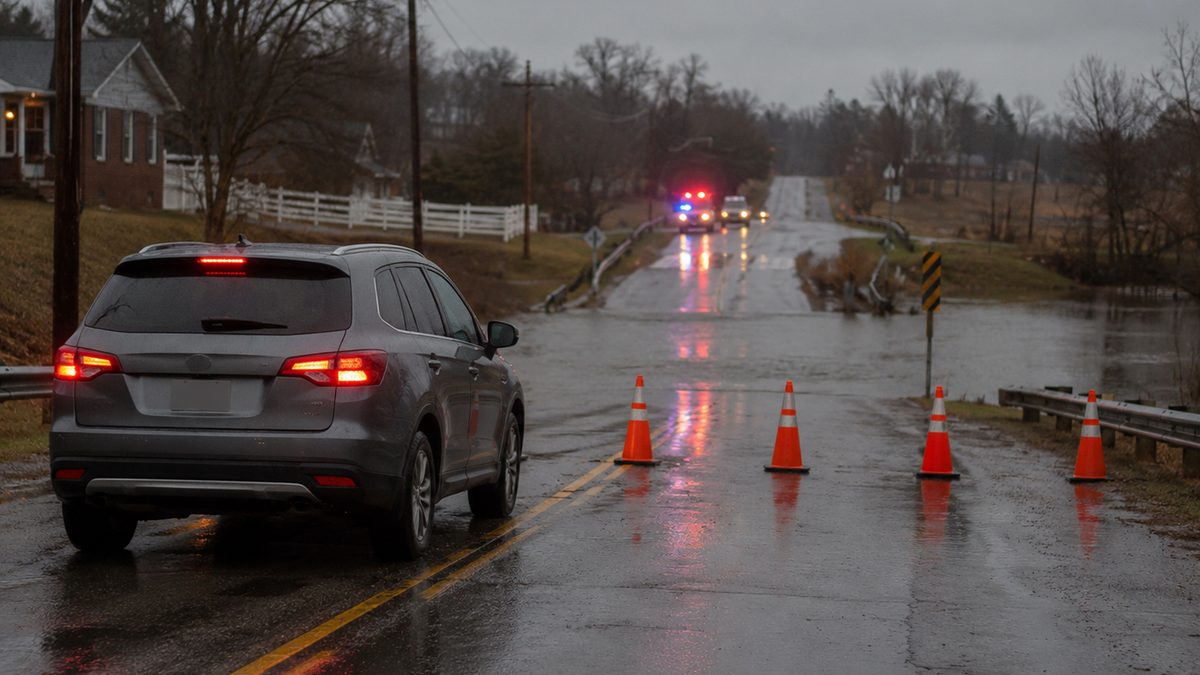
Thousands Still Displaced After California Chemical Tank Emergency
A chemical tank emergency in Garden Grove has kept thousands of residents away from home as officials continue monitoring risk near an industrial site.
Save Article
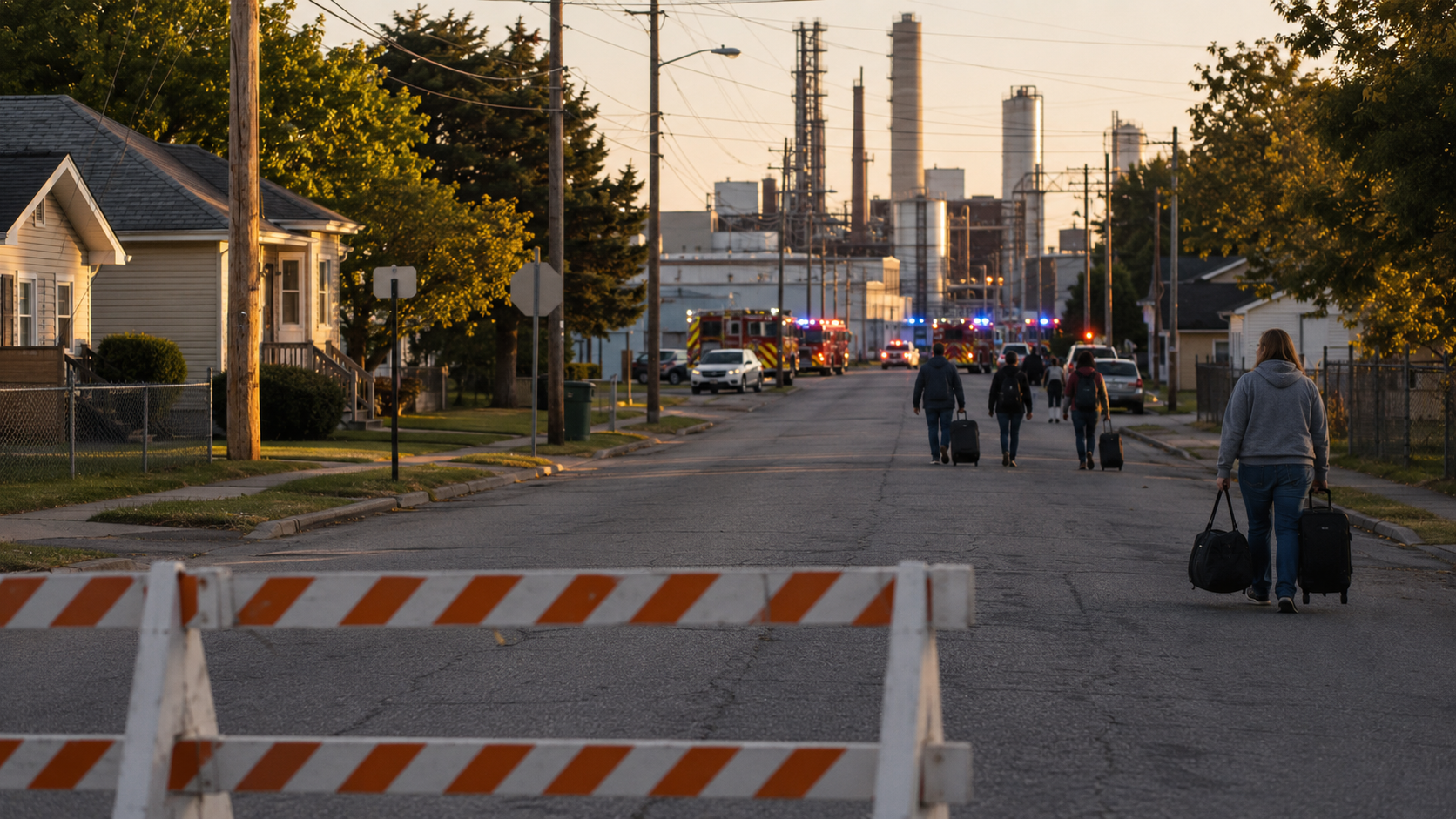
A chemical tank emergency in California left thousands of residents waiting for clearance to return home. Editorial illustration by TheDailyGlobe.
Key Facts
- Officials ordered evacuations in Garden Grove, California, after a chemical tank at an aerospace facility overheated.
- AP reported that about 16,000 residents remained under evacuation after roughly 50,000 had initially been displaced.
- The tank contained methyl methacrylate, a flammable chemical used in plastics and aerospace materials.
- Officials said the worst-case explosion risk had been reduced, but remaining risk kept some residents from returning home.
- Local and federal agencies continued environmental monitoring and emergency oversight.
Thousands of people in Garden Grove, California, remained away from their homes after a chemical tank emergency at an aerospace facility forced a large evacuation and left officials weighing when it would be safe for residents to return.
AP reported that about 16,000 residents were still under evacuation orders after roughly 50,000 people had initially been displaced. Officials said the tank contained methyl methacrylate, a flammable chemical used in plastics and aerospace materials.
The emergency is not only a local chemical incident. It is a public safety story about what happens when an industrial hazard reaches into ordinary neighborhoods: families leaving with little warning, shelters and hotels filling a temporary need, and residents waiting for officials to decide when the risk has fallen enough for daily life to resume.
Why Residents Were Still Waiting
The central question for residents is simple: when can they go home?
The answer depends on more than whether the most frightening scenario has passed. Officials said the worst-case explosion risk had been reduced, according to the source material, but remaining risk kept some residents under evacuation orders. That difference matters. Reduced risk does not automatically mean no risk.
In an emergency involving a flammable chemical, officials have to consider temperature, pressure, possible leaks, air monitoring, fire risk, nearby structures, weather conditions and whether responders can safely manage the scene. Those decisions can be frustrating for families waiting outside the evacuation zone, but they are also why return orders are often lifted in stages rather than all at once.
The available source material does not confirm when all residents will be cleared to return home.
A Chemical Name With Real-World Risk
Methyl methacrylate is not a household phrase, but it is used in materials tied to plastics and aerospace manufacturing. The confirmed concern in Garden Grove was that a tank containing the chemical had overheated.
That is enough to explain why officials treated the situation seriously without turning the article into a disaster script. The source material supports the evacuation, the flammable nature of the chemical, the initial displacement scale and the continuing monitoring. It does not support overstating health effects, contamination or facility fault beyond what officials have confirmed.
For residents, the technical details may matter less than the practical disruption. People had to leave homes, find a safe place to sleep, manage work and school obligations, care for pets or older relatives, and wait for updates that could determine whether they returned that day or stayed away longer.
How Industrial Emergencies Reach Neighborhoods
The Garden Grove emergency shows why industrial sites near residential areas require clear planning before a crisis begins.
Most people do not spend much time thinking about what chemicals are stored near their homes, schools, apartments or workplaces. That changes quickly when a tank overheats, streets are closed and emergency vehicles appear. A facility issue can become a neighborhood emergency in minutes.
That does not mean every industrial site is unsafe or that this facility violated rules. The source material provided for this draft does not establish that. The more careful point is that communities need emergency systems that can move quickly when industrial risk reaches public streets.
Those systems include evacuation maps, shelter planning, air and environmental monitoring, public alerts, local media updates, coordination among agencies and plain-language communication for residents who need to make decisions fast.
What Officials Have to Communicate
Emergency communication is part of the response, not a side issue.
Residents need to know whether they are inside the evacuation zone, where they can go, what they should bring, whether pets are allowed at shelters, what roads are closed and when the next reliable update will come. In a chemical emergency, they also need officials to separate confirmed risks from worst-case possibilities.
That balance is hard. If officials speak too softly, residents may not understand why they need to leave. If officials speak too dramatically, fear can outrun the facts. The Garden Grove case shows why calm, specific updates matter during a public safety emergency.
AP, ABC7 Los Angeles and NBC Los Angeles reported continuing updates around the evacuation and response. Local coverage was especially important because residents needed current information about boundaries, timing and official statements.
The Costs May Not End When People Go Home
Even after an evacuation order is lifted, the disruption does not always end neatly.
Families may face hotel costs, missed work, spoiled food, transportation problems, school interruptions or concerns about whether homes and neighborhoods are safe. Businesses inside or near an evacuation zone can lose customers or working hours. Renters and homeowners may have different options for reimbursement or insurance, depending on what happened and what authorities or courts later determine.
The source material does not confirm whether residents will face longer-term costs, cleanup concerns or legal claims. It also does not confirm whether the incident will trigger a broader review of chemical storage near residential neighborhoods.
Those questions are likely to matter after the emergency response phase. The first priority is safety. The second is accountability, cost and prevention.
What Remains Unclear
Several important questions remain unanswered in the available source material.
Officials had not cleared all residents to return home in the source material used for this draft. It was also unclear whether residents would face longer-term costs or cleanup concerns, and whether the emergency would lead to a broader review of chemical storage near neighborhoods.
Those unknowns should stay visible. A public safety emergency can move from immediate risk to long-term questions quickly: Who pays for displacement? What monitoring continues after people return? Were emergency plans adequate? Should nearby communities receive more information about industrial hazards before something goes wrong?
A Local Emergency With a Wider Lesson
Garden Grove’s emergency is specific: one overheated tank, one city, one evacuation zone, one group of residents waiting for clearance.
But the lesson is wider. Industrial hazards do not stay inside facility walls when something goes wrong. They can affect families who had no role in the work being done nearby and no practical way to assess the risk on their own.
That is why emergency readiness matters before the sirens, roadblocks and public alerts arrive. Residents need fast warnings, accurate information and a clear path back home when officials determine it is safe. Communities need to know that agencies are monitoring the air, the chemical risk and the conditions around the site.
The immediate story is that thousands of people were still displaced after a chemical tank emergency. The larger story is what that displacement reveals: for neighborhoods near industrial sites, public safety depends on planning, monitoring and communication that works when people are scared and time matters.
Reporting note: Reporting draws on reputable wire reporting, local emergency updates, public safety information, environmental monitoring updates, and reviewed background materials. This article was produced with AI-assisted research and reviewed by an editor before publication.