Theme Park Safety Worries Return as Families Head Into Peak Summer Travel
Amusement ride injuries are rare, but summer travel season brings renewed attention to how parks, regulators and families think about risk.
Save Article
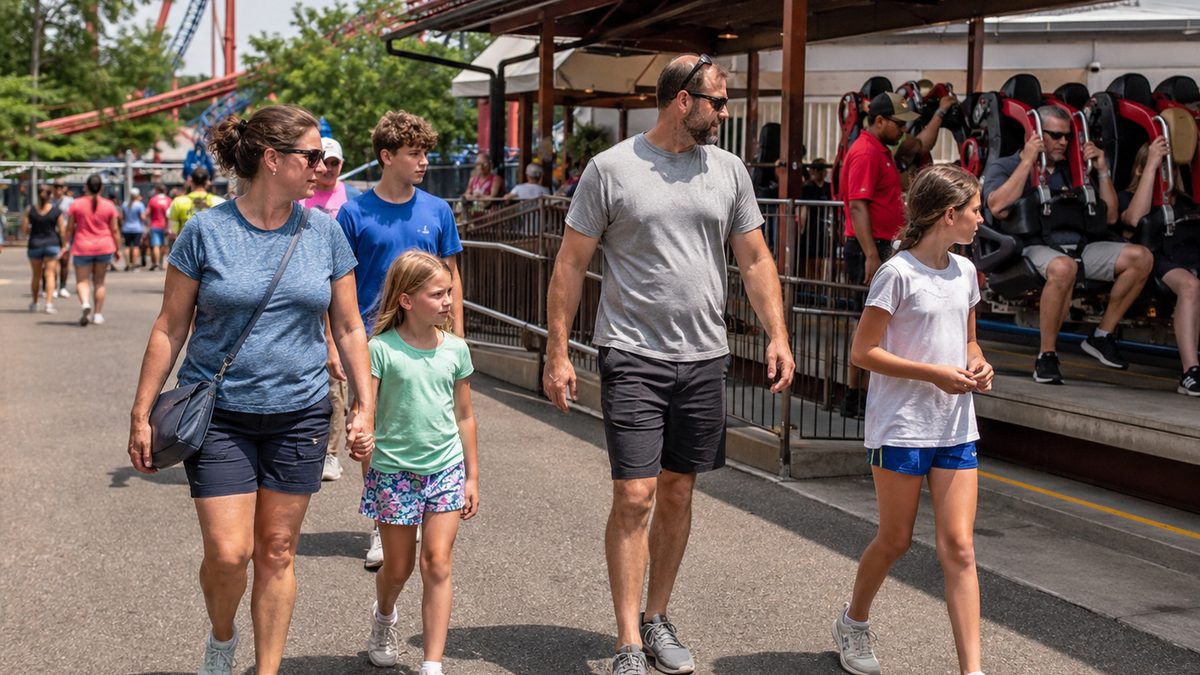
Theme park safety depends on inspections, trained operators and riders following restrictions. Editorial illustration by TheDailyGlobe.
Key Facts
- IAAPA says fixed-site ride safety reports analyze ride-related incident statistics and safety trends.
- The U.S. Consumer Product Safety Commission maintains an amusement rides resource area for safety and research materials.
- Recent reporting says serious injuries are rare, but high-profile incidents can shape public concern during summer travel season.
- Ride oversight varies by state and ride type.
- Isolated incidents should not be treated as proof of a broad national trend without supporting data.
A parent watching a child step into line for a roller coaster is balancing two thoughts at once. The ride is supposed to be fun. The height, speed and restraints also make the risk feel real.
That tension returns every summer as families head to amusement parks, fairs and vacation destinations. Serious ride injuries are rare, but high-profile incidents can make parents wonder how much they should worry and what they can actually check before letting a child ride.
The useful answer is not panic. It is understanding how ride safety is supposed to work: through standards, inspections, maintenance, trained operators and riders following posted restrictions.
Why Rare Risks Still Get Attention
Amusement rides are designed around controlled risk. The drop, spin or speed is the attraction, but the danger is supposed to be managed through engineering, maintenance and operating rules.
That is why even rare incidents draw attention. A serious injury on a ride can feel different from other travel risks because riders trust that the equipment, restraints and operators are all working as intended. When something goes wrong, families naturally question the system around the ride.
The caution is that one incident does not prove a national pattern. Current reporting can raise reasonable questions, but broader conclusions require reliable data, inspection records and careful comparison across ride types and locations.
How Ride Safety Is Supposed to Work
Theme park safety is built in layers. Manufacturers design rides with restraints, operating limits and maintenance requirements. Parks are responsible for running rides properly, training staff, inspecting equipment and following applicable rules.
Regulation can vary depending on where the ride is located and what kind of ride it is. Fixed-site theme park rides, traveling carnival rides and temporary attractions may fall under different oversight systems. That means families should not assume every ride is monitored in exactly the same way everywhere.
Industry safety reports and federal resources help explain the safety landscape, but local rules still matter. State inspection requirements, park procedures and posted ride restrictions are part of the real-world safety picture families encounter at the gate.
What Families Can Actually Check
Parents do not need to become ride engineers before a park visit. They can pay attention to practical signals: posted height and health restrictions, seatbelt or restraint instructions, operator directions and whether a child is mature enough to sit correctly for the full ride.
Restrictions matter even when a child badly wants to ride. Height rules, lap-bar positioning, loose-item warnings and medical cautions are not suggestions. They are part of how the ride is meant to operate safely.
Families can also watch how a ride is being run. If instructions are unclear, a restraint does not seem right, or a rider is unsure whether they fit safely, the safer choice is to ask an employee or skip the ride.
What Remains Unclear
The national risk picture is difficult to judge from isolated incidents alone. Ride oversight varies by state and ride type, and public information may not always make it easy for families to compare inspection systems across parks.
It is also unclear how much recent concern reflects a change in actual risk, greater attention to individual incidents, or the normal anxiety that comes with peak summer travel. The available information supports caution and awareness, not a claim that amusement parks have suddenly become broadly unsafe.
What to Watch Before a Park Visit
Families can watch park notices, state inspection information and official safety guidance before major trips. Local news can also be useful when a specific park or ride has reported problems.
The balanced view is simple: theme park rides are built for fun, and serious injuries are rare. But rare does not mean impossible. The safest summer habit is to follow restrictions, ask questions when something feels unclear, and treat ride rules as part of the day, not an interruption of it.
Reporting note: Reporting draws on IAAPA safety materials, U.S. Consumer Product Safety Commission amusement ride resources, current travel safety reporting, and reviewed background materials. This article was produced with AI-assisted research and reviewed by an editor before publication.