Texas Wildfires Show How Federal Fire Aid Reaches Communities Before Disaster Declarations
Federal fire management assistance for Texas Panhandle fires shows how wildfire response funding can reach local agencies before a major disaster declaration is made.
Save Article
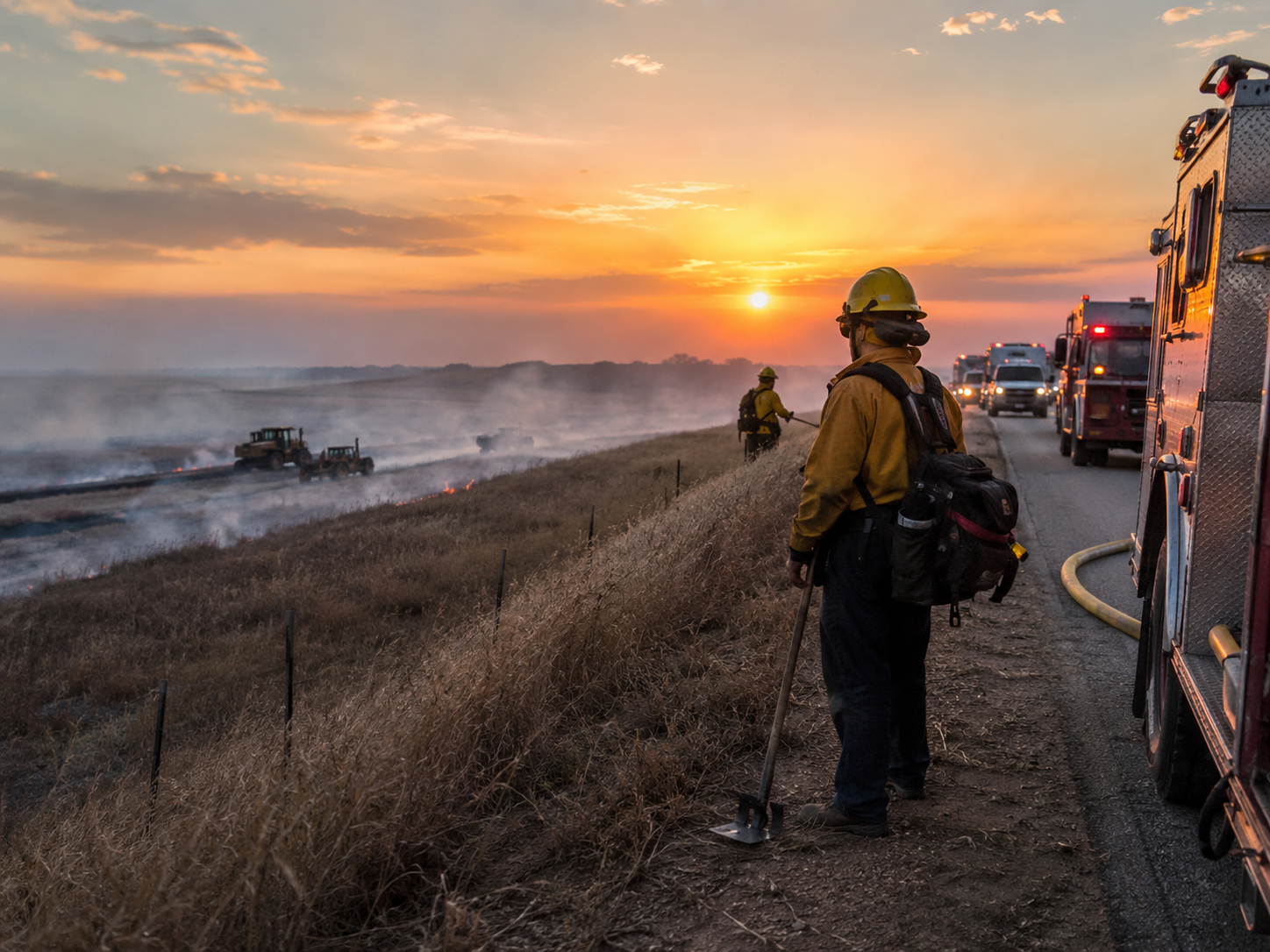
Federal fire management assistance for Texas Panhandle fires shows how wildfire response funding can reach local agencies before a major disaster declaration is made. Editorial illustration by TheDailyGlobe.
Key Facts
- FEMA lists the Texas Hunggate Fire as a Fire Management Assistance declaration beginning May 14, 2026.
- FEMA says fire management assistance helps state, local, tribal and territorial governments with mitigation, management and control of fires.
- Texas FEMA location data lists the Hunggate Fire as ongoing.
- Texas reporting said federal assistance was approved for Panhandle fires and described evacuations, acreage and containment updates.
- FEMA’s disaster-declarations page distinguishes fire management declarations from major disaster declarations.
Federal assistance for Texas Panhandle wildfires is offering a practical look at how wildfire aid can reach communities before a fire becomes part of a major disaster declaration.
FEMA lists the Texas Hunggate Fire as a Fire Management Assistance declaration beginning May 14, 2026. Texas reporting said federal assistance was approved for Panhandle fires, including the Hungate and Stinky fires, while local updates described evacuations, acreage and containment work.
For readers, the important point is timing. Fire management assistance is meant to support active response, not only long-term recovery after a disaster ends. That can matter for local fire departments, emergency managers and communities facing fast-moving wildfire conditions.
What Fire Management Assistance Does
FEMA’s Fire Management Assistance program is designed for dangerous fires that threaten to become major disasters. It helps eligible governments with the cost of mitigation, management and control while the fire response is still underway.
That can include support tied to firefighting, emergency work and efforts to control the spread of a fire. The source material does not support listing every cost covered in this specific Texas case, but FEMA’s own materials describe the program as a way to help governments respond before the damage picture is final.
That makes the assistance different from the kind of disaster aid many people hear about after hurricanes, floods or large wildfires. Fire management aid is about the active response phase, when officials are trying to keep a fire from growing worse.
How It Differs From a Major Disaster Declaration
FEMA’s disaster-declarations page distinguishes fire management declarations from major disaster declarations. That distinction matters because the two tools serve different purposes.
A major disaster declaration is usually tied to a broader recovery process after damage has been assessed and requested through formal channels. Fire management assistance can be approved while the fire is still active, giving public agencies help with response costs before long-term recovery questions are settled.
In plain terms, one is more about fighting the fire now. The other can involve wider recovery later. A community may need both kinds of help depending on how much damage occurs, but one does not automatically mean the other has been approved.
Why the Texas Fires Matter Beyond Texas
The Texas Panhandle fires are a state and local emergency, but the funding process has national relevance. Wildfire risk is not limited to one region, and many communities depend on a mix of local, state and federal support when fires move quickly.
Federal fire aid can help reduce the financial strain on local governments during the most expensive part of a response. Rural fire departments and county agencies may have to move people, staff roads, manage equipment, support firefighters and coordinate emergency information before anyone knows the final damage total.
That is why early assistance can matter. It does not erase the danger, and it does not answer every recovery question, but it can help local agencies keep working while conditions are still active.
What Remains Unclear
Final acreage, damage and cost totals remain unclear from the source basis and should not be overstated before official figures are available. It is also unclear whether additional federal assistance will be requested after suppression work.
Another open question is whether similar fire conditions will expand elsewhere as summer begins. The Texas case shows the process, but it should not be used to predict where the next major wildfire response will be needed.
For now, the clearest takeaway is that wildfire aid does not always begin after a disaster is over. In Texas, federal fire management assistance shows how emergency funding can reach response agencies while crews are still trying to control the fire.
Reporting note: Reporting draws on FEMA declaration records, FEMA wildfire assistance materials, Texas location data, local reporting, and reviewed emergency-management context. This article was produced with AI-assisted research and reviewed by an editor before publication.