Texas School Policing Investigation Shows the Safety and Discipline Tradeoff
A new investigation found at least 2,600 Texas school-police use-of-force incidents, raising questions about where campus safety ends and discipline begins.
Save Article
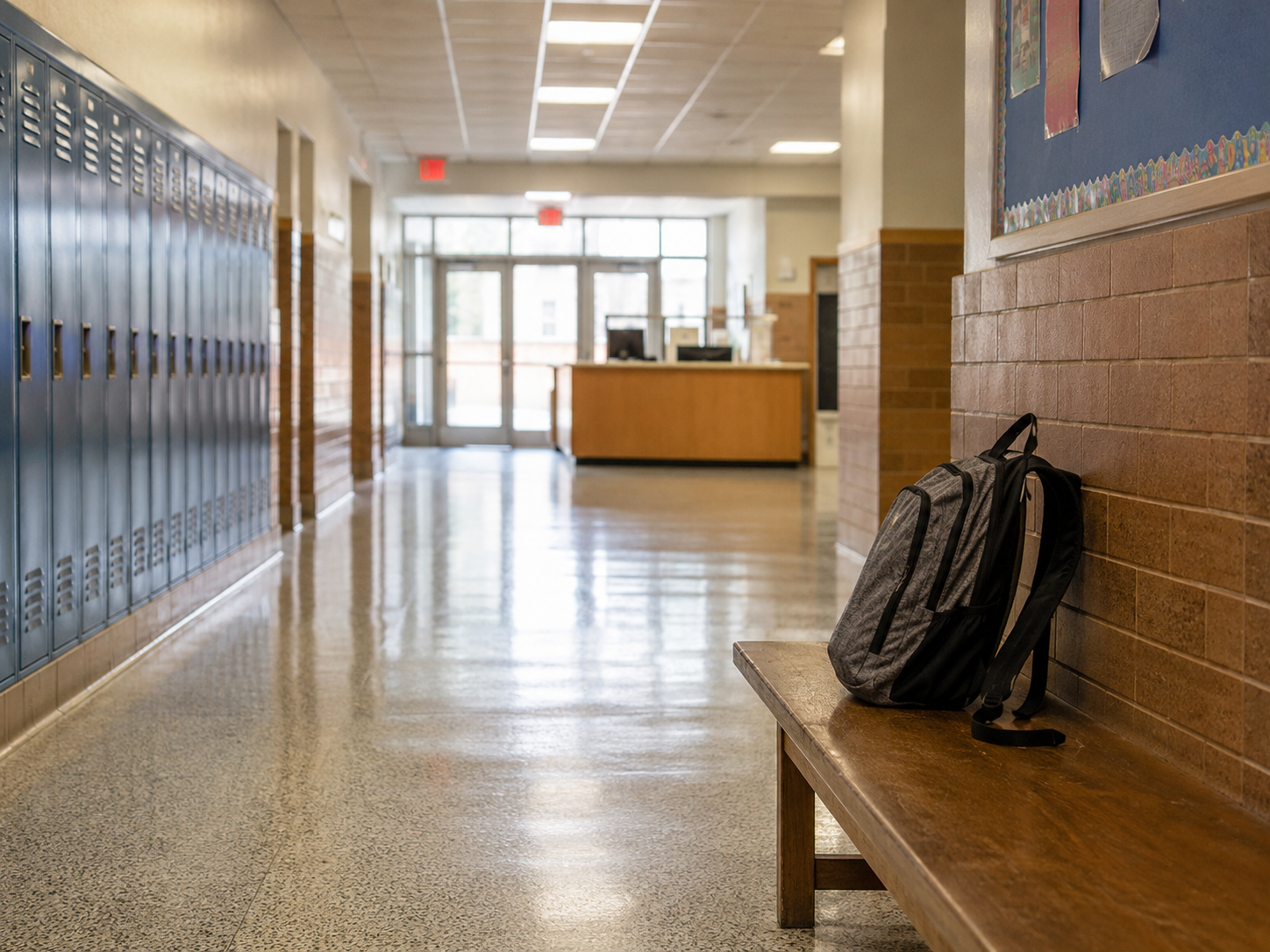
School safety policies can shape daily life for students long after the emergency drills are over. Editorial illustration by TheDailyGlobe.
Key Facts
- A joint investigation reported at least 2,600 school-police use-of-force incidents in Texas from 2022 to 2025.
- Texas has nearly 400 school district police departments, more than any other state, according to the reporting.
- The investigation found force was sometimes used during minor misconduct situations.
- Texas increased school security spending after the 2022 Uvalde shooting.
- The true number of incidents may be higher because reporting was incomplete.
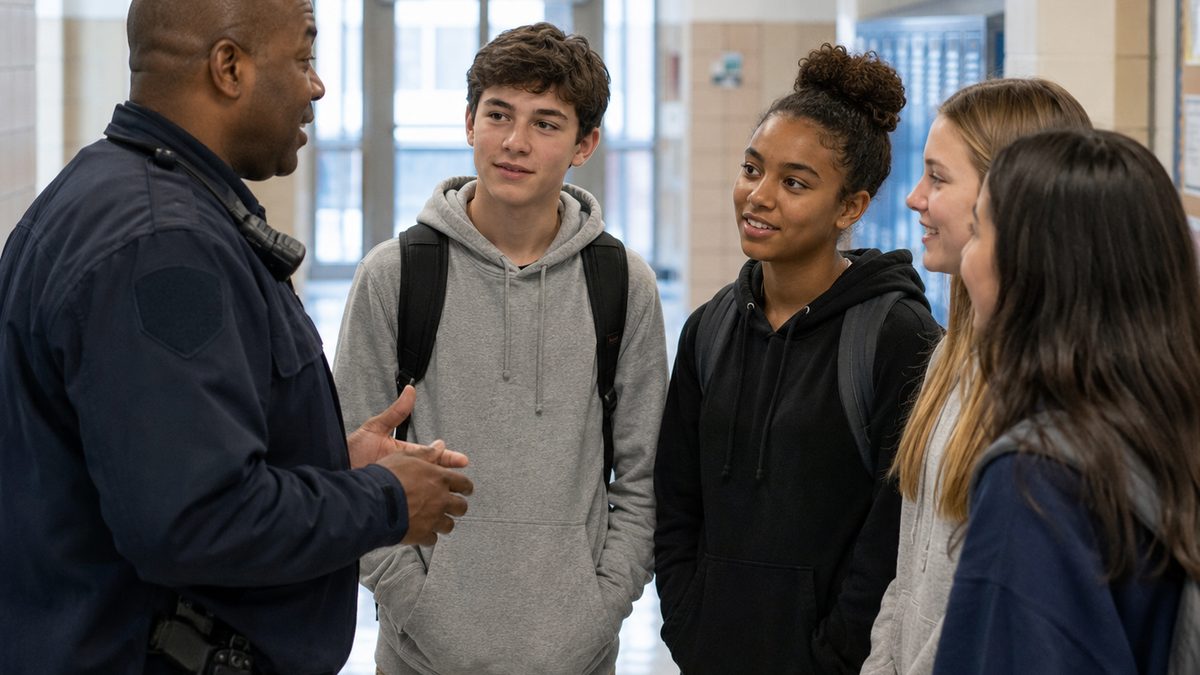
Parents want schools to be safe. They also want to know what happens when a school safety officer becomes involved in ordinary student behavior: a hallway argument, defiance, disruption, a student refusing to leave class.
That question is now at the center of a new investigation into school policing in Texas. A joint investigation by the Houston Chronicle, San Antonio Express-News and The New York Times reported at least 2,600 school-police use-of-force incidents in Texas from 2022 to 2025, including cases where force was used during minor misconduct situations.
What The Investigation Found
The investigation examined school-police tactics across Texas and found thousands of reported use-of-force incidents over a three-year period. The reporting described incidents involving pepper spray, tackling and Tasers, while also noting that the available data were incomplete.
That limitation matters. If reporting is incomplete, the confirmed number is not the full picture. It is the documented floor. The actual number of incidents could be higher, and different districts may track or report force in different ways.
The investigation also found that force was sometimes used in situations involving minor misconduct. That does not mean every use of force was unlawful or unjustified. It does raise a public question schools have to answer clearly: when should police be part of discipline, and when should educators handle student behavior without law enforcement?
The Post-Uvalde Safety Context
Texas expanded school security spending after the 2022 Uvalde shooting, when a gunman killed 19 children and two teachers at Robb Elementary School. The pressure to prevent another attack has shaped school safety decisions across the state.
That context is important because school policing is not a simple debate between safety and no safety. Many parents, teachers and administrators want trained officers nearby in case of a serious threat. Supporters argue that police can deter violence, respond quickly and help protect campuses.
Critics point to a different risk: once officers are embedded in schools, they may become involved in behavior that once would have been handled by teachers, counselors or administrators. That can change the daily experience of school for students, especially when force is used in discipline-related situations.
Where Safety Ends And Discipline Begins
The hard question is not whether schools should protect students. They should. The hard question is how to draw the line between emergency protection and routine discipline.
A school officer responding to a weapon threat is different from an officer responding to a student who is disruptive or refusing instructions. The more those situations blur, the more important oversight becomes.
That oversight can include clear rules on when officers may intervene, mandatory reporting of force, public data that parents can understand, training standards, limits on certain tactics and review of incidents involving younger students or students with disabilities. The investigation’s findings suggest that those questions are not theoretical in Texas.
What Remains Unclear
It remains unclear whether Texas lawmakers or state agencies will create stronger oversight after the investigation. It is also unclear how individual districts will respond, especially districts that already have their own police departments.
The incomplete data also leave a major gap. Without consistent statewide reporting, parents and policymakers may not be able to compare districts, identify patterns or understand whether use-of-force incidents are rising, falling or concentrated in particular places.
The national picture should also be handled carefully. Texas is a major example because of its size, its large number of school district police departments and its post-Uvalde security spending. But the investigation’s findings do not automatically prove the same pattern exists in every state.
What To Watch Next
The next developments to watch are district responses, state oversight proposals and whether Texas officials move toward more uniform reporting rules for school-police force incidents.
Other states may also look at their own practices. School safety remains a real concern, but the Texas investigation shows why the details matter. A campus can need protection from violence and still need clear limits on when police become part of ordinary discipline.
Reporting note: Reporting draws on investigative reporting, education data reporting, school discipline research, and reviewed education policy context. This article was produced with AI-assisted research and reviewed by an editor before publication.