Student-Loan Cap Lawsuit Puts Health-Care Training Costs Under Scrutiny
A lawsuit over federal graduate loan caps could shape how students pay for nursing, physical therapy, social work and other health-care training programs.
Save Article

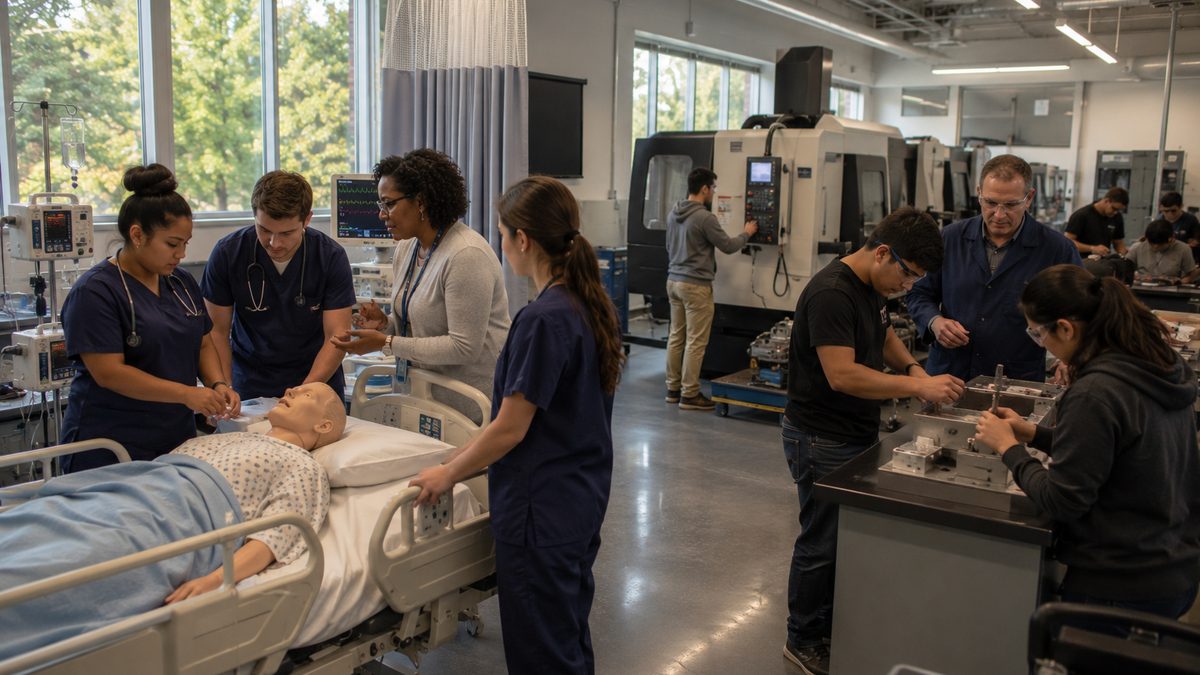
A lawsuit over federal graduate loan caps could shape how students pay for nursing, physical therapy, social work and other health-care training programs. Editorial illustration by TheDailyGlobe.
Key Facts
- Associated Press reported that Democratic-led states challenged new federal student-loan caps.
- New York's attorney general said the coalition challenged restrictions affecting students pursuing health-care fields.
- Coverage says the rule distinguishes between graduate and professional programs, with higher borrowing limits only for certain professional programs.
- The lawsuit has not been resolved.
- It remains unclear whether a court will pause the rule before July 1.
A lawsuit over new federal student-loan caps is putting a practical question in front of students and families: how will future nurses, physical therapists, social workers and other health-care professionals pay for graduate training if borrowing limits change?
Democratic-led states have challenged the new caps, according to Associated Press reporting. New York's attorney general said the coalition is trying to stop restrictions that it says would affect students pursuing health-care fields. The lawsuit has not been resolved.
The case is not only about student debt. It is also about how the country trains workers for jobs that often require advanced degrees, clinical hours and expensive programs before graduates can enter the field.
What the Lawsuit Challenges
The lawsuit challenges federal student-loan limits that draw a line between graduate programs and certain professional programs. Coverage of the case says higher borrowing limits would be available only for specific professional programs, while other graduate students would face lower caps.
That distinction matters because many health-care jobs do not fit neatly into the same public understanding of professional school as medicine or law. Fields such as nursing, physical therapy, social work and related health professions can require costly graduate education, even when graduates are entering jobs that serve patients, families and communities directly.
The states challenging the rule argue that the caps could make it harder for students in those fields to finance their education. That is their claim, not a court finding. The court has not yet resolved whether the rule can move forward as planned.
Why Health-Care Training Is Part of the Fight
The health-care angle is what gives the case broader reader value. Student-loan rules can look like paperwork until they affect who can afford training for jobs the public depends on.
A future nurse practitioner, physical therapist or social worker may already be weighing tuition, living costs, unpaid or lower-paid clinical requirements and the time it takes to finish a degree. A lower borrowing limit could change that calculation for some students, especially those without family savings or other ways to cover the gap.
The plaintiffs' concern is that the rule could make health-care training less accessible and, over time, affect the pipeline of workers entering certain fields. That outcome is not certain. It depends on how schools respond, whether students find other financing and what courts do with the rule.
The Borrowing Tradeoff
There is a real tradeoff at the center of graduate lending policy. Federal loans can open doors for students who cannot pay large tuition bills up front. But easier borrowing can also leave graduates with large debts, especially if program costs are high and earnings after graduation do not keep pace.
That is why loan caps can be framed in more than one way. Supporters of tighter borrowing limits may argue that caps reduce excessive debt and pressure schools to control costs. Opponents may argue that the same caps can block students from entering needed fields, particularly when programs are expensive for reasons students cannot easily control.
The available source material does not show how the Education Department will defend every part of the rule in court. What is clear is that the lawsuit puts the cost of graduate education, the structure of federal lending and the health-care workforce pipeline into the same legal fight.
What Students and Schools Are Waiting For
One immediate question is timing. It remains unclear whether a court will pause the rule before July 1. That date matters because students, financial aid offices and graduate programs need to know what borrowing limits will apply before the next academic year is fully underway.
If the caps take effect, schools may have to explain new financing limits to students quickly. Some students may look for private loans, scholarships, employer help or cheaper programs. Others may delay enrollment or change plans. Those are possible responses, not confirmed outcomes.
If the rule is paused, the lawsuit could still continue while current borrowing rules remain in place for a time. That would reduce the immediate pressure on students but would not settle the larger question of how much the federal government should lend for graduate training.
What Remains Unclear
The biggest unknown is how the court will handle the challenge. The lawsuit has not been resolved, and the source material provided does not establish whether the rule will be blocked, narrowed or allowed to take effect.
It is also unclear how schools and students would adjust if the caps take effect. Some programs may find ways to reduce costs or increase aid. Some students may find other financing. Others may decide the numbers no longer work.
For readers, the case is worth watching because it connects student debt to something larger than monthly payments. It asks who can afford the training required for health-care work, and whether federal loan policy will make that path wider, narrower or simply more uncertain.
Reporting note: Reporting draws on state attorney general materials, court-focused reporting, higher education reporting, health-care trade coverage, and Associated Press reporting. This article was produced with AI-assisted research and reviewed by an editor before publication.