Schools Are Rethinking How Much Screen Time Belongs in Classrooms
After years of expanding school-issued devices, some districts are setting new limits while families and teachers weigh access, attention and cost.
Save Article
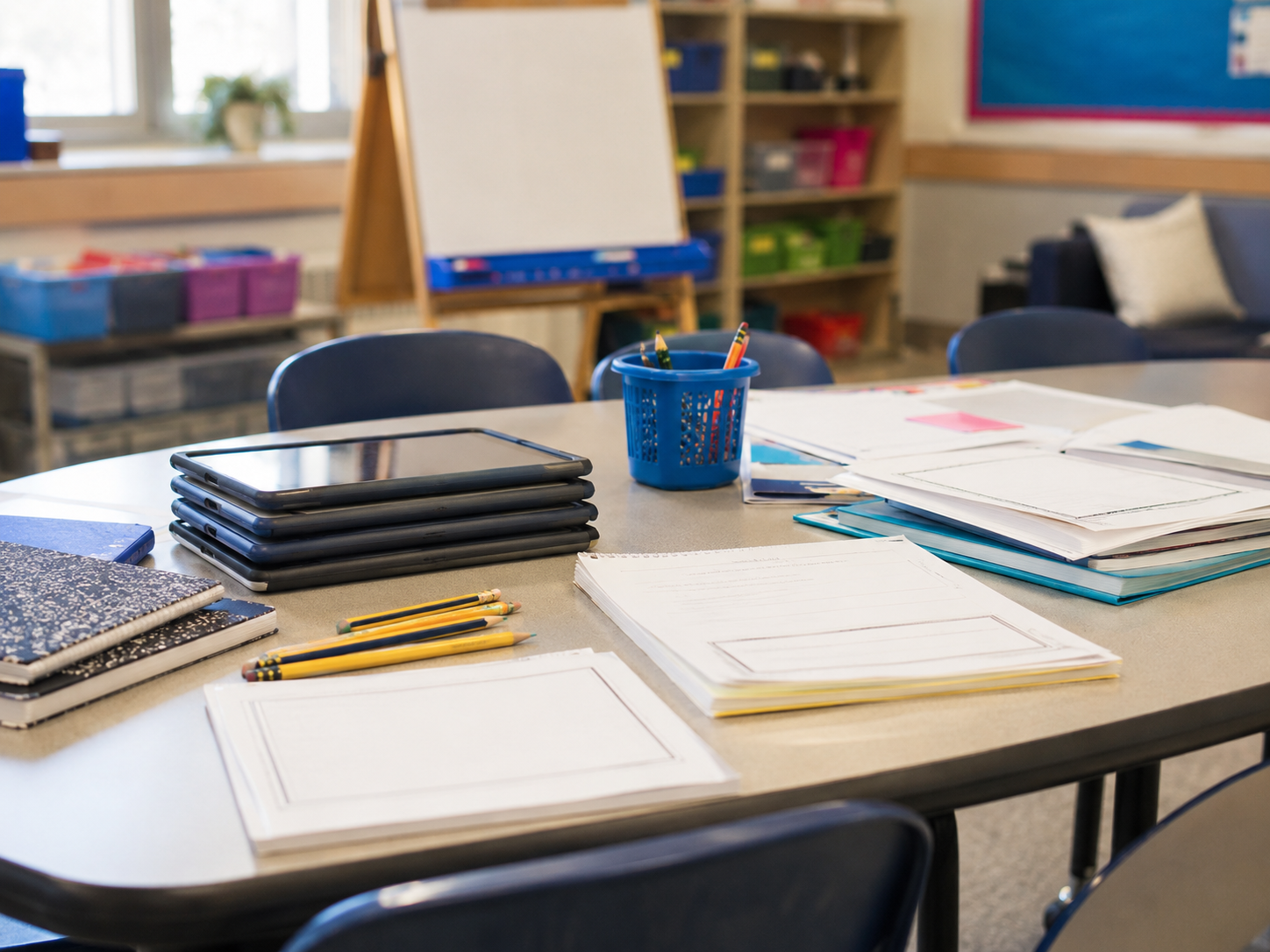
Schools are weighing when digital tools help students and when they get in the way. Editorial illustration by TheDailyGlobe.
Key Facts
- AP reported a growing backlash against school-assigned devices in U.S. classrooms.
- Los Angeles Unified approved a resolution to create screen-time limits by the 2026-27 school year.
- The LAUSD policy path includes grade-level limits and restrictions on district-issued devices for younger students.
- HHS issued a public health advisory in May 2026 about children, teens and excessive screen time.
- The debate includes learning access, distraction, mental health and school spending.
For many families, the school screen-time question no longer feels simple. A tablet can help a student complete an assignment, catch up on missed work or access lessons that were harder to reach a generation ago. The same device can also become one more screen in a day already crowded with apps, videos, games and homework portals.
That tension is now moving from kitchen tables into school board meetings. After years of expanding classroom technology, including school-issued laptops and tablets, some districts are reconsidering how much screen use belongs in the school day.
The debate is not about whether all classroom technology is good or bad. It is about where the line should be. Schools are trying to balance learning access with student attention, mental health concerns, teacher workload, family expectations and the cost of maintaining large device programs.
Why the Classroom Tech Debate Is Shifting
School technology expanded quickly during and after the pandemic, when devices helped keep classes connected and gave students a way to learn remotely. Many districts invested heavily in laptops, tablets, online platforms and digital assignments.
Now some parents, educators and district leaders are asking a different question: once students are back in classrooms, how much of the school day should still run through a screen?
AP reported a growing backlash against school-assigned devices, reflecting concerns that technology meant to support learning can also distract from it. The concern is not only about entertainment or off-task behavior. It also includes whether students are spending too much of the day moving from one digital system to another, even for ordinary classwork.
Los Angeles Offers One Policy Path
Los Angeles Unified has become one of the clearest examples of a major district moving toward formal limits. The district approved a resolution to create screen-time limits by the 2026-27 school year.
Reporting on the district’s plan says the policy path includes limits by grade level and restrictions on district-issued devices for younger students. That kind of approach shows how districts may try to avoid a one-size-fits-all rule. A high school student using a device for research or advanced coursework may have different needs than a young elementary student still building basic reading, writing and attention skills.
The Los Angeles example does not mean every district will follow the same model. Local schools face different budgets, staffing levels, technology contracts and student needs. But it gives other districts a concrete policy example to study as the national conversation grows.
The Tradeoffs for Students and Teachers
The case for classroom technology remains real. Digital tools can help students with disabilities, support language learning, organize assignments, provide access to materials and make it easier for teachers to share resources. For some students, school-issued devices may also help close gaps when families cannot afford reliable technology at home.
But the concerns are also real. Teachers may have to manage not only the lesson, but also the device. Parents may struggle to understand how much screen time is required by school and how much is optional. Students may move through a school day in which even simple tasks require logging in, opening an app or staring at a screen.
That is why the strongest version of the debate is not anti-technology. It is more practical: use screens when they clearly improve learning, and do not let them become the default for every classroom task.
Health Concerns Add Pressure
The education debate is also being shaped by public-health concerns. HHS issued a public health advisory in May 2026 about children and teens and excessive screen time, adding federal attention to a question many families were already trying to manage.
The advisory does not settle the school-policy debate by itself. Classroom screen use is not the same as recreational screen use, and schools use devices for many different reasons. But the timing adds pressure on districts to explain why screens are being used, how often, and whether younger students need more limits.
What Remains Unclear
Several important questions remain unresolved. It is not yet clear how many districts will adopt limits similar to Los Angeles. It is also unclear how schools will measure screen time without creating more paperwork for teachers and administrators.
The biggest question is whether reduced screen time will improve learning outcomes. Less screen use may help with attention or classroom routines, but districts will still have to show how new limits affect students, teachers and families in practice.
For now, the direction is clear enough to watch. The school technology conversation has moved past the emergency phase of getting devices into students’ hands. The next phase is deciding when those devices belong in the lesson, when they should stay closed, and how schools can make that decision without leaving students behind.
Reporting note: Reporting draws on education reporting, district-policy reporting, public-health advisory reporting, and reviewed background materials. This article was produced with AI-assisted research and reviewed by an editor before publication.