School Bus Safety Push Highlights Costs Behind State Seat Belt Mandates
Houston ISD’s request for relief from a Texas school bus seat belt law shows the practical budget questions behind safety mandates.
Save Article
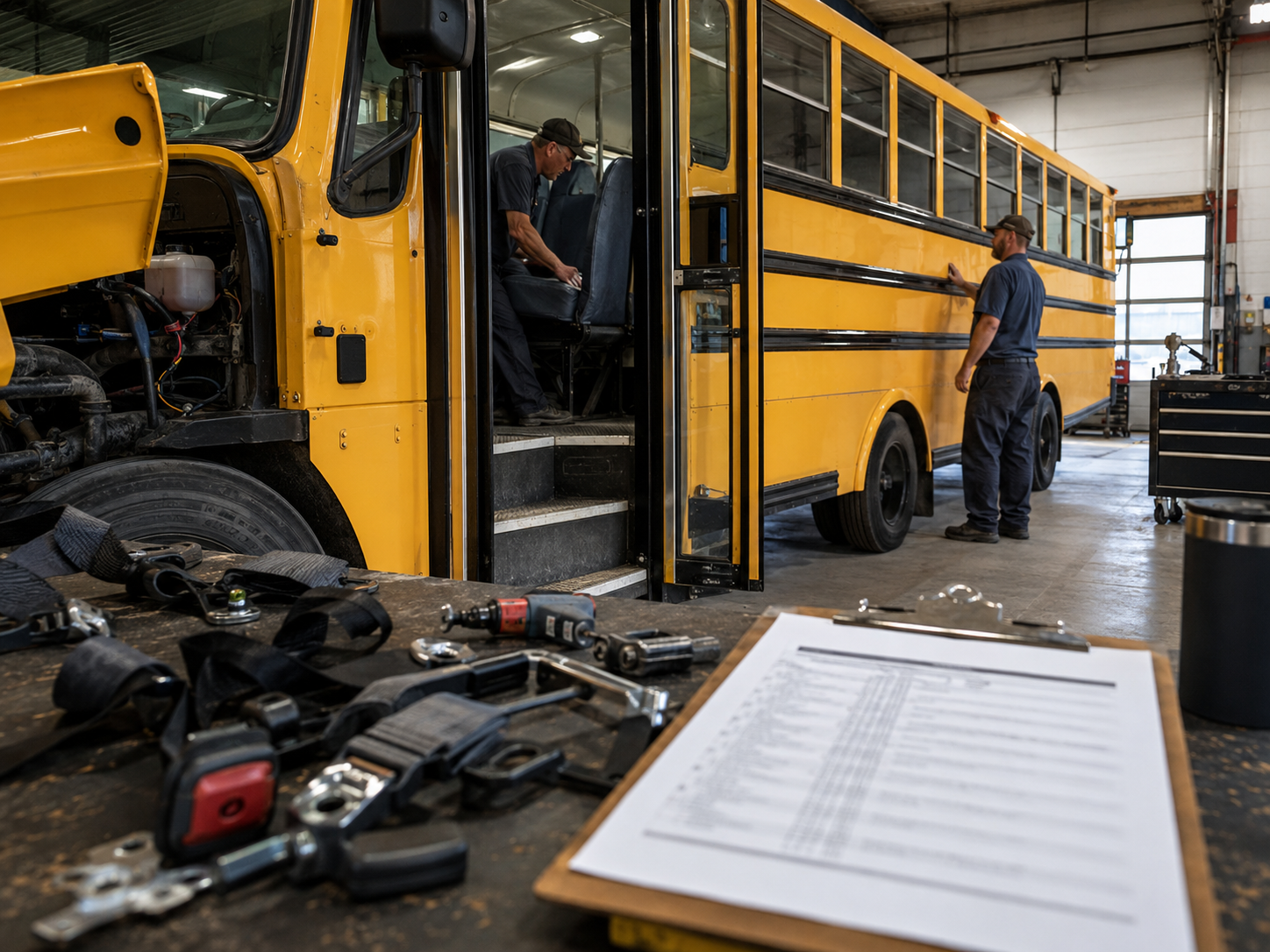
Houston ISD’s request for relief from a Texas school bus seat belt law shows the practical budget questions behind safety mandates. Editorial illustration by TheDailyGlobe.
Key Facts
- Houston ISD sought an exemption from a new Texas law requiring three-point seat belts on school buses.
- Local reporting said full compliance could cost HISD about $29.1 million.
- Community Impact reported HISD’s board approved a resolution to request an exemption.
- GHSA and BusPatrol released a national action plan on illegal school-bus passing.
- NHTSA maintains school-bus regulation guidance.
Houston ISD’s request for an exemption from a new Texas school bus seat belt law is turning a local budget problem into a larger public-safety question: how do states require safer buses without leaving districts to absorb costs they may not be ready to carry?
Local reporting said Houston ISD sought an exemption from a new Texas law requiring three-point seat belts on school buses. Community Impact reported that full compliance could cost the district about $29.1 million and that the district’s board approved a resolution to request an exemption.
For parents and taxpayers, the issue is not whether student safety matters. It does. The harder question is how safety rules are funded, how quickly buses can be upgraded, and what happens when a mandate reaches a large district with a large fleet and limited transportation dollars.
Why One District’s Request Matters
Houston ISD is the case study, but the question is not limited to Houston. When states add transportation safety requirements, school districts have to figure out how to buy, retrofit, inspect or replace equipment while still running daily routes.
That work can be expensive and slow. Buses are not replaced overnight, and retrofitting a fleet can require parts, labor, scheduling, inspections and time out of service. A large district may face a different challenge than a smaller district, even under the same state rule.
The exemption request should not be read as a statement that seat belts are unimportant. It is a sign that safety policy often has a second layer: who pays, how fast the work happens, and whether the state gives districts enough help to meet the rule.
The Safety Case and the Cost Problem
School bus safety is already a national issue. GHSA and BusPatrol released a national action plan focused on illegal school-bus passing, and NHTSA maintains school-bus regulation guidance.
That broader safety context matters because seat belts are only one part of school transportation. Student safety also depends on driver training, bus design, route planning, traffic enforcement, loading and unloading rules, and whether other drivers stop when buses are picking up or dropping off children.
Still, equipment mandates carry visible price tags. Local reporting put Houston ISD’s compliance cost at about $29.1 million. For a school district, that kind of money competes with other needs, including staffing, classroom support, maintenance, fuel, special education transportation and replacement buses.
What States Have to Balance
A state can decide that three-point seat belts should be required on school buses. That is a policy choice about safety standards. But once the rule is passed, implementation moves from the statehouse to garages, transportation offices and district budgets.
If a mandate arrives without enough funding, districts may seek exemptions, delays or other relief. If exemptions are granted too freely, the safety goal can weaken. If exemptions are denied without support, districts may have to cut elsewhere or struggle to comply on time.
That is the tradeoff behind the Houston case. The debate is not simply safety versus cost. It is safety, cost, timing and responsibility all at once.
What Remains Unclear
It remains unclear whether Texas will grant Houston ISD’s exemption request. It is also unclear whether other large districts will seek similar relief as they review fleet costs and implementation timelines.
Another open question is how states will balance school-bus safety mandates with transportation funding. A rule can set the standard, but money and logistics determine how quickly that standard reaches students.
For now, Houston ISD’s request shows why school bus safety policy is more complicated than a single yes-or-no question. Most families want children transported safely. The public challenge is making sure the safety upgrades lawmakers require can actually be paid for and put in place.
Reporting note: Reporting draws on Houston-area local reporting, GHSA school-bus safety materials, NHTSA guidance, and reviewed transportation-safety context. This article was produced with AI-assisted research and reviewed by an editor before publication.