Minnesota Medicaid Fraud Charges Put Federal Oversight Push in Focus
Federal charges tied to alleged Medicaid fraud in Minnesota are being framed by the Justice Department as part of a wider push to protect taxpayer-funded health programs.
Save Article
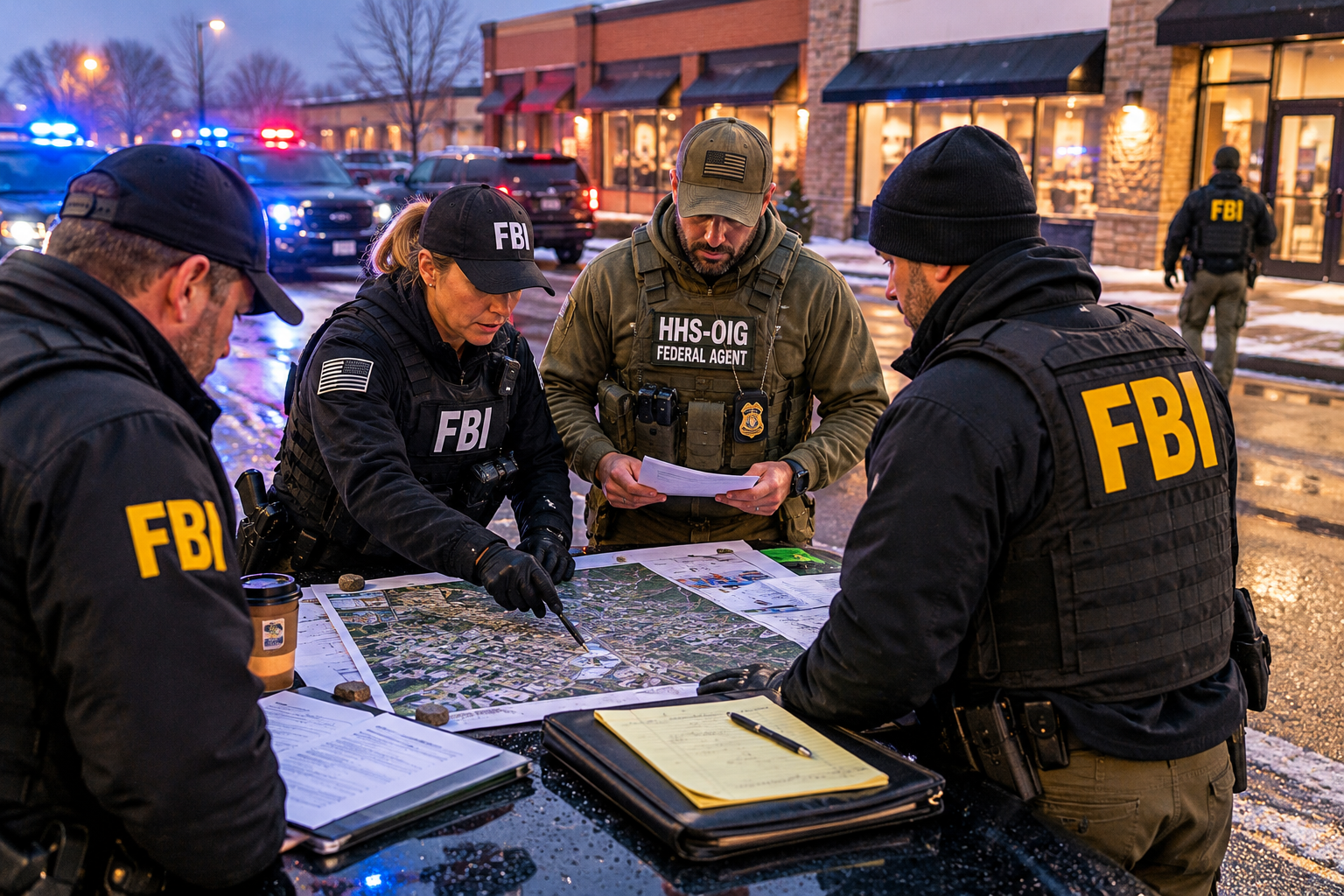
Federal officials announced charges tied to alleged Medicaid fraud schemes in Minnesota. Editorial illustration by TheDailyGlobe.
Key Facts
- The Justice Department announced charges against 15 defendants in Minnesota.
- DOJ said the alleged schemes involved more than $90 million in intended loss.
- The defendants included owners of child care centers and Medicaid providers, according to DOJ.
- HHS Office of Inspector General republished the enforcement action.
- DOJ also announced funding for 15 new trial attorney positions in its Health Care Fraud Section.
Federal prosecutors have charged 15 defendants in Minnesota in alleged health care fraud schemes that the Justice Department says involved more than $90 million in intended loss, turning a state-based case into a national signal about how Washington is approaching fraud in taxpayer-funded health programs.
The Justice Department announced the charges on May 21, saying the defendants included owners of child care centers and Medicaid providers. The allegations center on programs that are funded through Medicaid but administered at the state level, a structure that can make oversight both essential and difficult.
The case matters beyond Minnesota because Medicaid is one of the country’s largest public benefit programs. When federal officials allege fraud in a state-run program, the issue is not only whether individual defendants broke the law. It is also whether the systems meant to pay legitimate providers, protect patients, and guard public money are catching abuse quickly enough.
What Federal Officials Announced
The Minnesota charges are allegations, not convictions. That distinction matters. Prosecutors must prove the charges in court, and defendants are presumed innocent unless found guilty.
According to the Justice Department, the case involved multiple alleged schemes connected to Medicaid-funded services. DOJ described the defendants as including owners of child care centers and various Medicaid providers, and said the alleged conduct produced more than $90 million in intended loss.
HHS Office of Inspector General also carried the enforcement action, placing the case within the federal government’s broader fraud-enforcement record. That matters because HHS OIG is one of the federal offices involved in investigating fraud, waste, and abuse in health care programs.
Why a Minnesota Case Has National Weight
Medicaid is jointly funded by the federal government and states. States run their own programs within federal rules, while federal money helps pay the bills. That shared structure means problems inside one state’s Medicaid system can raise questions for federal taxpayers as well as state residents.
For ordinary readers, the issue is straightforward: Medicaid dollars are supposed to pay for eligible health care and support services. When prosecutors allege that providers billed for services improperly or participated in fraud schemes, the public question becomes whether money meant for care was diverted away from patients and legitimate providers.
That does not mean the Minnesota allegations prove a wider national pattern by themselves. One case cannot show how well every state is policing Medicaid claims. But DOJ’s decision to pair the Minnesota announcement with a broader enforcement expansion shows that federal officials want the case understood as part of a larger oversight push.
The Enforcement Push Behind the Case
Alongside the Minnesota charges, the Justice Department announced an expansion of its Health Care Fraud Section with funding for 15 new trial attorney positions. DOJ said the expansion is aimed at investigating Medicaid fraud nationwide.
That is the clearest national development in the announcement. The charges are tied to Minnesota, but the staffing move points toward more federal attention on Medicaid fraud cases outside one state.
More prosecutors do not automatically mean more convictions. It means the Justice Department is putting additional legal staff behind these cases. Whether that leads to faster investigations, more charges, better recoveries, or changes in how states monitor Medicaid payments remains to be seen.
What Is Still Unclear
Several important questions remain open. The first is legal: it is not yet known how many of the allegations will result in convictions, plea agreements, acquittals, dismissals, or other outcomes. Criminal charges begin the court process; they do not settle the facts.
The second question is administrative. DOJ has made clear that it is expanding federal health care fraud enforcement, but the available source material does not show whether the Minnesota case will change state-level Medicaid oversight practices. States may face pressure to review provider screening, billing checks, audits, or program design, but any specific changes would need to be confirmed by state or federal officials.
The third question is practical: how public agencies can prevent fraud without slowing down payment to legitimate providers or making services harder to access for people who qualify. Strong oversight protects public money, but poorly designed oversight can create delays or confusion for providers and patients who are following the rules.
What Readers Should Take From It
The Minnesota case is not a verdict on every Medicaid provider, every state program, or every person who receives benefits. It is a federal criminal case built around specific allegations against specific defendants.
At the same time, DOJ is using the case to emphasize a broader enforcement message: fraud in public health programs is not only a local billing problem. It can affect federal taxpayers, state budgets, legitimate care providers, and people who depend on services working as intended.
The next steps will come through the courts and through any additional federal or state enforcement actions. For now, the confirmed facts are narrower but still important: 15 defendants have been charged, the alleged intended loss is more than $90 million, and federal officials are adding prosecutors to pursue Medicaid fraud cases nationwide.
Reporting note: Reporting draws on Justice Department materials, HHS Office of Inspector General enforcement records, wire reporting, Minnesota reporting, and reviewed background materials. This article was produced with AI-assisted research and reviewed by an editor before publication.