Memorial Day Weather Tests Public Safety During a Heavy Travel Window
Showers, thunderstorms, flash-flooding risk and fire-weather concerns are overlapping with one of the busiest travel periods of the year.
Save Article
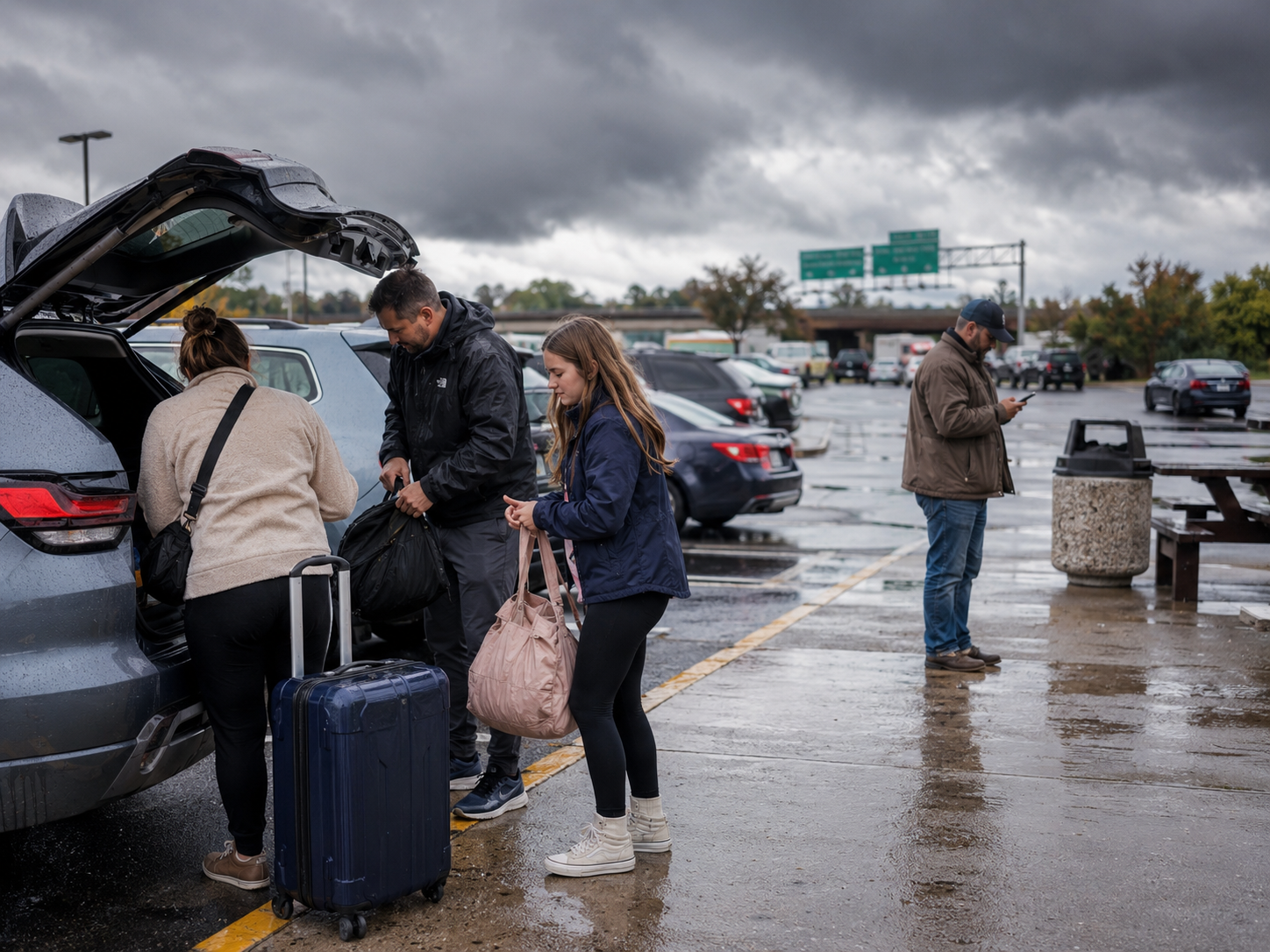
Showers, thunderstorms, flash-flooding risk and fire-weather concerns are overlapping with one of the busiest travel periods of the year. Editorial illustration by TheDailyGlobe.
Key Facts
- The National Weather Service said showers and thunderstorms were expected from Texas to the Northeast through Tuesday.
- NWS said heavy rain could create localized flash-flooding risk from the central Gulf Coast into the Appalachians.
- NWS flagged elevated to critical fire-weather conditions from gusty winds and low humidity in parts of Oregon and Nevada.
- AAA projected 45 million Americans would travel at least 50 miles from home for Memorial Day weekend.
- NWS Fort Worth/Dallas warned locally heavy rainfall could increase flash-flooding risk in parts of North and Central Texas.
Memorial Day weather is testing public safety across parts of the United States as storms, flooding risk, fire-weather concerns and heavy travel all overlap during one of the year’s busiest holiday windows.
The National Weather Service said showers and thunderstorms were expected from Texas to the Northeast through Tuesday. The agency also said heavy rain could create localized flash-flooding risk from the central Gulf Coast into the Appalachians.
The timing matters because AAA projected 45 million Americans would travel at least 50 miles from home for Memorial Day weekend. Bad weather is disruptive on any day. During a major travel period, it can affect highways, airports, outdoor events, emergency response and local planning all at once.
Why Today’s Weather Is a Public-Safety Story
Holiday weather coverage can easily sound routine: rain here, sun there, travel delays somewhere else. This is different because several risks are lining up at the same time. Millions of people are on roads or returning home. Families are gathering outdoors. Local officials are watching for heavy rain. Fire-weather conditions are also a concern in parts of the West.
None of that means every traveler is facing danger. It does mean local conditions matter more than usual. A thunderstorm that would normally inconvenience a commute can become more complicated when highways are crowded, rest stops are busy, and outdoor events are underway.
For local emergency managers, the challenge is not just the weather forecast. It is the number of people moving through communities, visiting unfamiliar areas or spending the day outside. That can make warnings, road conditions and local instructions more important than broad national summaries.
Flooding Risk Is the Main Concern in the Rain Zone
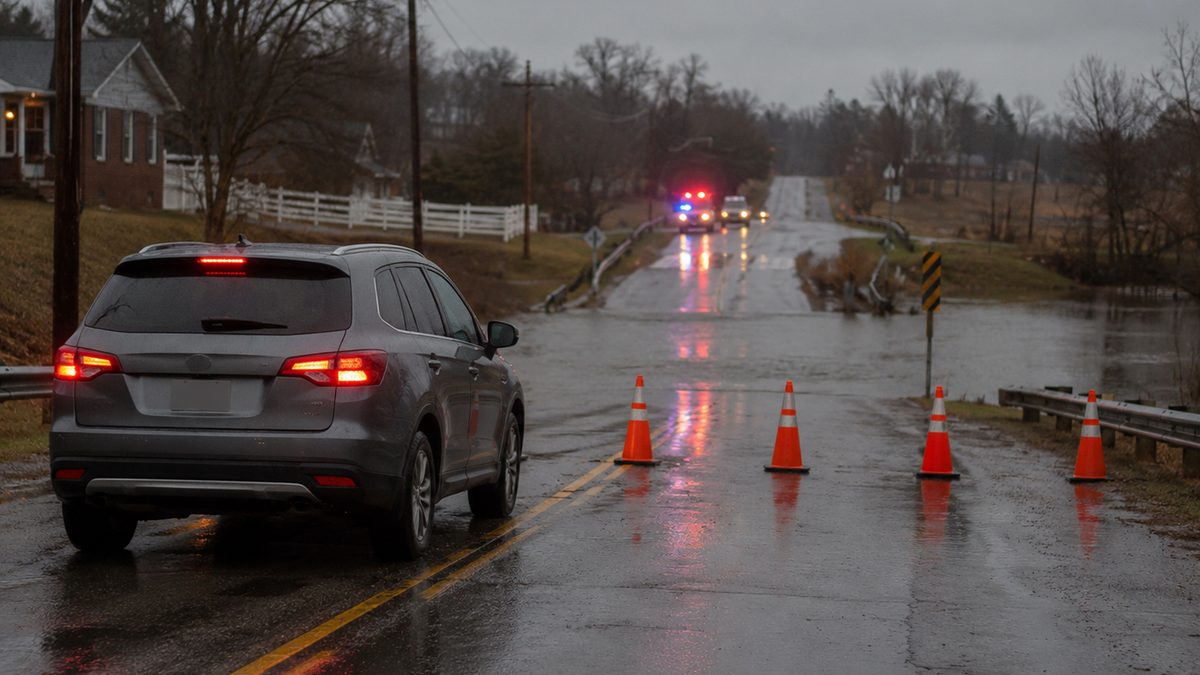
The National Weather Service identified heavy rain and localized flash-flooding risk from the central Gulf Coast into the Appalachians. Localized is the key word. Flash flooding does not have to cover an entire state to become dangerous. A small area can see enough rain in a short period to overwhelm roads, low-water crossings, drainage systems or creeks.
NWS Fort Worth/Dallas warned locally heavy rainfall could increase flash-flooding risk in parts of North and Central Texas. That regional warning fits the larger national pattern: storms may not affect every community in the same way, but where heavier rainfall repeats or stalls, public-safety risk can rise quickly.
The exact outcome remains uncertain. The source material does not show how many flooding incidents will be confirmed by the end of the day, or whether the heaviest rainfall will repeatedly move over the same areas. Those are the details that often determine whether a wet holiday becomes a more serious local emergency.
Fire Weather Adds a Different Risk in the West
The weather concern is not limited to rain. The National Weather Service also flagged elevated to critical fire-weather conditions from gusty winds and low humidity in parts of Oregon and Nevada.
That is a different kind of public-safety problem. In fire-weather areas, the concern is not flooded roads or storm delays. It is whether dry air and wind can make fires easier to start, spread or control.
For readers, the national picture is split. Some communities are watching heavy rain. Others are watching dry, windy conditions. Both can affect holiday plans, outdoor activity and emergency readiness, but they require different local responses.
Travel Volume Raises the Stakes
AAA’s Memorial Day travel projection gives the weather story its wider public impact. With 45 million Americans expected to travel at least 50 miles from home, even ordinary disruptions can reach more people.
Heavy travel can make weather problems feel larger. A flooded road can back up traffic longer. A storm delay can ripple through airport schedules. A local closure can confuse visitors who do not know alternate routes. A crowded highway can give drivers less margin when rain reduces visibility.
That is why the public-safety message is less about panic and more about attention. National forecasts can describe broad risk areas, but travelers still need current local information from official weather offices, transportation agencies and local authorities.
What Remains Unclear as the Day Unfolds
Several important details will not be clear until the holiday travel window is over. It remains unknown how many severe-weather incidents, delays, cancellations or local flooding reports will be confirmed.
It is also unclear how many travelers changed plans because of weather compared with normal Memorial Day disruptions. Travel delays happen every holiday weekend, but weather can make them harder to separate from ordinary congestion.
The safest conclusion is narrow and practical: Memorial Day weather is creating real public-safety concerns in several regions, but not every part of the country faces the same risk. Heavy rain, possible localized flash flooding, fire-weather conditions and crowded travel routes all deserve attention without turning the forecast into alarm.
For now, the day’s public-safety story is the overlap. Storms are moving across a heavily traveled holiday map. Some areas are watching water. Others are watching fire conditions. Millions of people are moving through both.
Reporting note: Reporting draws on National Weather Service materials, NOAA travel-weather resources, AAA travel projections, local NWS forecast updates, national reporting, and reviewed public-safety context. This article was produced with AI-assisted research and reviewed by an editor before publication.