Federal Tick-Borne Disease Push Puts Summer Prevention Back in Focus
HHS announced new Lyme disease and tick-borne illness initiatives as families, outdoor workers and local health agencies head into summer tick season.
Save Article
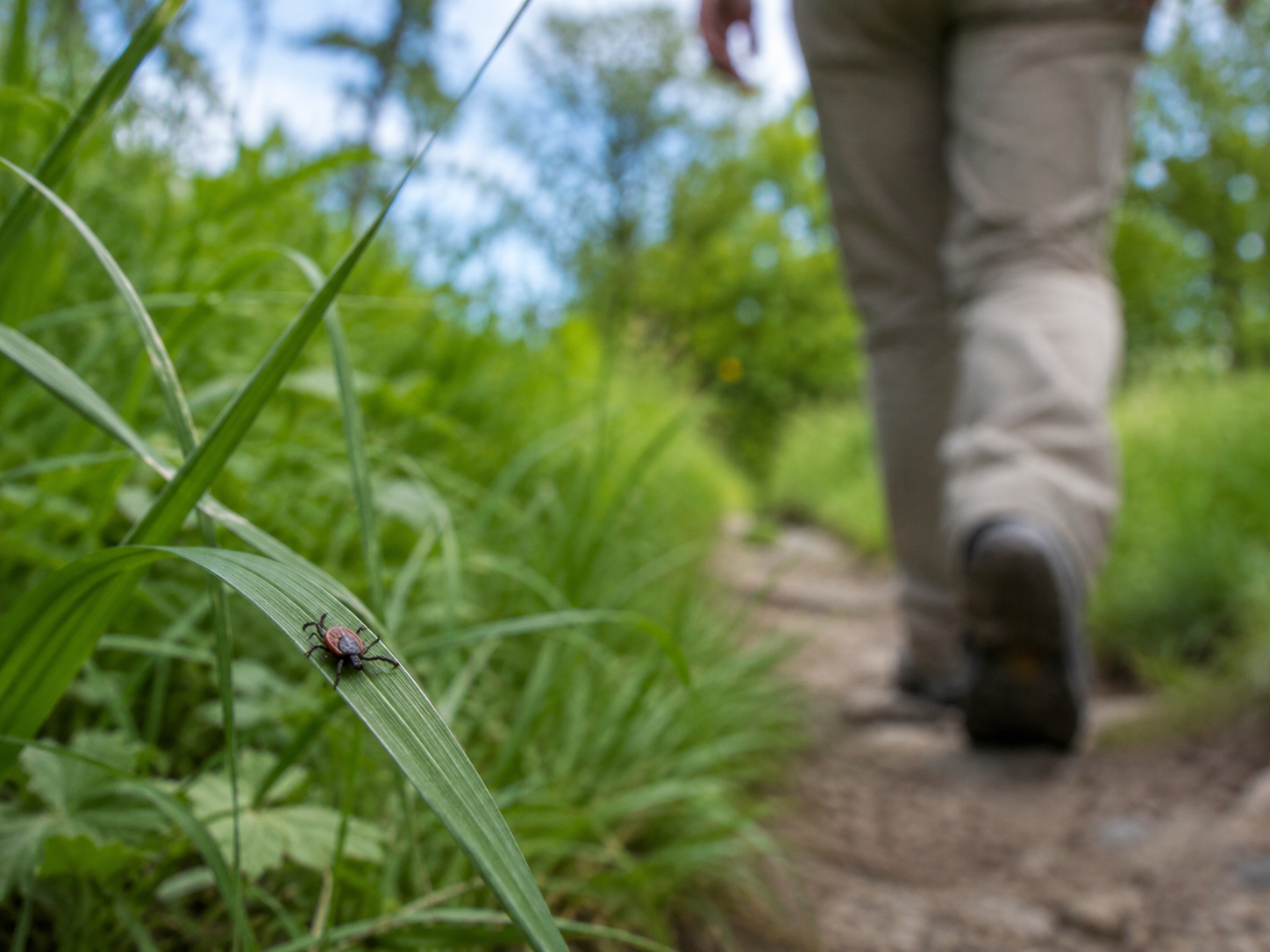
Tick-borne illness prevention often begins with ordinary outdoor routines. Editorial illustration by TheDailyGlobe.
Key Facts
- HHS announced initiatives to strengthen the national response to Lyme disease and other tick-borne illnesses.
- The announced actions include a tick-control pilot program, innovation challenges, NIH research funding related to Alpha-gal syndrome and a public-private care connection effort.
- Health.gov describes LymeX as an effort to advance tick-borne-disease solutions with patients, advocates, researchers, nonprofits, industry and government.
- The effectiveness of the new initiatives remains to be demonstrated.
- Details such as pilot locations, implementation schedules and measures of success remain unclear.
For families, outdoor workers, pet owners and communities heading into summer, tick-borne illness is not an abstract public-health topic. It can begin with a walk through tall grass, a day at work outdoors or a child playing near a wooded edge.
The U.S. Department of Health and Human Services announced new initiatives on May 29 to strengthen the national response to Lyme disease and other tick-borne illnesses. The effort includes tick-control work, innovation challenges, research funding related to Alpha-gal syndrome and a public-private effort meant to connect patients with care.
The announcement does not mean prevention, diagnosis or treatment problems are solved. It does mean federal health officials are putting new attention on a group of diseases that can affect households, local health departments and clinicians during the warmer months.
What HHS Announced
HHS framed the new effort as a stronger federal response to Lyme disease and other tick-borne illnesses. The department described several parts of the plan, including a pilot program focused on tick control and innovation challenges intended to encourage new tools or approaches.
The announcement also included National Institutes of Health research funding related to Alpha-gal syndrome, a condition associated with tick bites, and a public-private effort aimed at helping connect patients with care.
Those are announced goals and program steps, not proof of results. For patients and local communities, the practical question is whether the federal push eventually improves prevention, diagnosis, care access or tick-control outcomes.
Why LymeX Matters
Health.gov describes LymeX as an effort to advance tick-borne-disease solutions with patients, advocates, researchers, nonprofits, industry and government. That structure matters because tick-borne illness problems are not limited to one agency or one part of the health system.
Patients may face questions about symptoms, diagnosis, access to knowledgeable clinicians and how to navigate care. Local governments and public-health agencies may face questions about surveillance, public awareness and tick-control efforts.
A program that brings patients, researchers and government together can help identify practical gaps. But its impact will depend on what is built, where it is tested, how quickly it reaches communities and whether people affected by tick-borne illness see meaningful improvements.
The Summer Public-Health Lens
The timing matters because tick exposure often becomes a more visible concern as people spend more time outdoors. Parks, yards, trails, camps, farms and outdoor worksites can all be part of the seasonal risk picture.
That does not mean every outdoor activity should be treated with fear. The public-service value of the federal announcement is that it puts prevention, local readiness and patient access back in front of health officials during a season when many people may be thinking about ticks only after a bite occurs.
For families and communities, the larger issue is whether public-health systems can make tick-borne illness easier to prevent, recognize and address without leaving patients to sort through confusing information on their own.
What Remains Unproven
The biggest unknown is whether the initiatives will produce measurable improvements. HHS has described a plan, but pilot programs and challenges still have to move from announcement to implementation.
It is also unclear which communities will receive pilot-program support first, how quickly new funding or partnerships will affect diagnosis and care, and how federal or local agencies will measure success.
That caution matters because public-health announcements can sound bigger than their immediate effect. The better test is whether local agencies, clinicians and patients can point to concrete improvements over time.
What to Watch Next
The next useful details will be pilot locations, implementation timelines, follow-up guidance from HHS or CDC, research funding decisions and any public reporting on early results.
For now, the federal push gives tick-borne disease prevention renewed attention at the start of a season when many households and communities are already spending more time outdoors.
Reporting note: Reporting draws on U.S. Department of Health and Human Services materials, Health.gov LymeX program information, recent public-health reporting, and reviewed background materials. This article was produced with AI-assisted research and reviewed by an editor before publication.