The Fake Grandchild Phone Call Is Getting Harder to Spot
Federal warnings about grandparent scams show why families may need a simple verification plan before a panicked phone call turns into a wire transfer.
Save Article
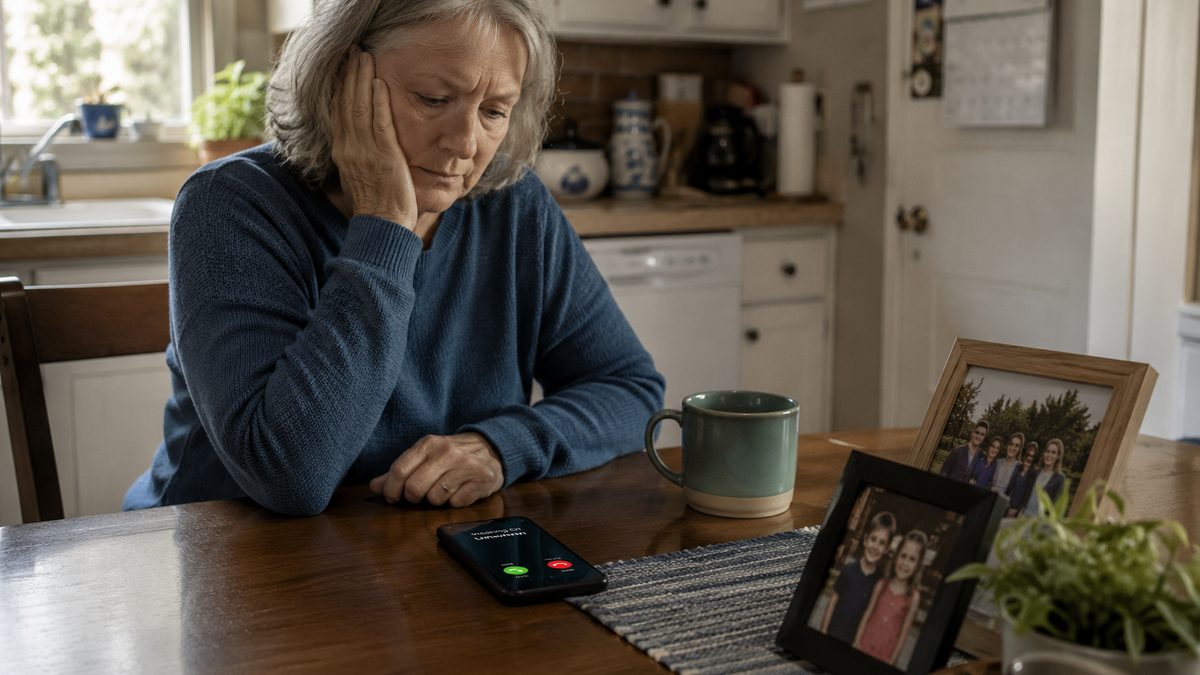
Families may need verification habits before an urgent phone call turns into a scam. Editorial illustration by TheDailyGlobe.
Key Facts
- The FCC warned that grandparent scams are becoming more sophisticated.
- The FCC describes the scam pattern as an urgent call from someone pretending to be a grandchild or someone helping the grandchild.
- Consumer fraud groups and federal agencies advise families to verify emergency claims before sending money.
- It remains unclear how often AI voice cloning is used in every reported grandparent scam.
- Victims may not always be able to recover money once it has been sent.
The call usually starts with panic. A grandparent hears a frightened voice claiming to be a grandchild in trouble, or someone claiming to be helping that grandchild. The caller needs money fast. The pressure is the point.
Federal warnings about grandparent scams show why families may need a plan before that call ever comes. The Federal Communications Commission has warned that these scams are becoming more sophisticated, and the safest response may no longer be simply asking whether the caller sounds like a grandchild.
The practical lesson is not that every strange phone call involves artificial intelligence. It is that families should build verification habits that work even when a voice sounds familiar, emotional or convincing.
How the Scam Works
Grandparent scams rely on speed, emotion and confusion. The caller may claim there has been an accident, arrest, medical emergency or travel problem. Sometimes the person on the phone pretends to be the grandchild. Sometimes the caller claims to be a lawyer, police officer, doctor or friend calling on the grandchild's behalf.
The goal is to keep the victim from slowing down. A scammer may ask for a wire transfer, gift cards, cash, cryptocurrency or another payment method that is hard to reverse. The caller may also tell the grandparent not to contact the child's parents because the situation is embarrassing or urgent.
That secrecy request should be treated as a warning sign. Real emergencies can be stressful, but families still have ways to verify them. Scammers want the target isolated, rushed and afraid to double-check.
Why Recognizing a Voice May Not Be Enough
For years, many people trusted their ears. If the caller sounded like a loved one, the request felt real. That is becoming a weaker safety test.
Research on synthetic voice generation has examined how voice technology can be misused, but the public record does not establish that every grandparent scam uses AI voice cloning. The more careful conclusion is that voice-based deception is a growing concern, and families should not depend only on recognizing a voice during a stressful call.
Even without advanced technology, panic can distort judgment. A bad phone connection, crying, background noise or a short conversation can make a stranger sound more familiar than they are. That is why the best family rule is not to listen harder. It is to verify another way.
A Simple Family Safety Plan
Families can reduce risk with a few plain rules. The first is a callback rule: if someone calls claiming an emergency, hang up and call the family member directly using a number already saved in your contacts. Do not call back a number provided by the caller.
A second option is a family code word. It should be simple enough to remember but not something a stranger could guess from social media. If someone claims to be a child or grandchild in trouble, the family can ask for the code word before discussing money or travel details.
A third rule is to involve another trusted person before sending money. That could be a parent, sibling, adult child, neighbor or bank employee. Scammers thrive when one person feels alone with an urgent decision.
What Remains Unclear
There are still important unknowns. It is difficult to measure how often AI voice cloning is used in reported grandparent scams. It is also unclear in many cases whether victims can recover money once it has moved through wire transfers, gift cards or layered accounts.
Law enforcement may also face a tracing problem. Scam operations can move across jurisdictions, use false identities and route money quickly. That makes prevention especially important, because getting the money back may be much harder than stopping the transfer in the first place.
What Families Should Watch Next
The next useful updates will come from the FCC, FTC, state attorneys general and local law enforcement agencies as fraud patterns change. Families should also pay attention to warnings from banks and consumer-protection groups about payment methods scammers are using.
The best response is not panic. It is a short conversation before the call comes: who to call, what code word to use, and what rule everyone follows before money leaves the account. A few minutes at the kitchen table may be the difference between a frightening phone call and a costly scam.
Reporting note: Reporting draws on Federal Communications Commission consumer warnings, synthetic voice risk research, federal consumer-fraud guidance, and reviewed background materials. This article was produced with AI-assisted research and reviewed by an editor before publication.