Education Report Offers a Wider Look at Schools Beyond the Daily Debate
The Condition of Education 2026 gives families, educators and policymakers a national data source for understanding schools beyond daily political fights.
Save Article
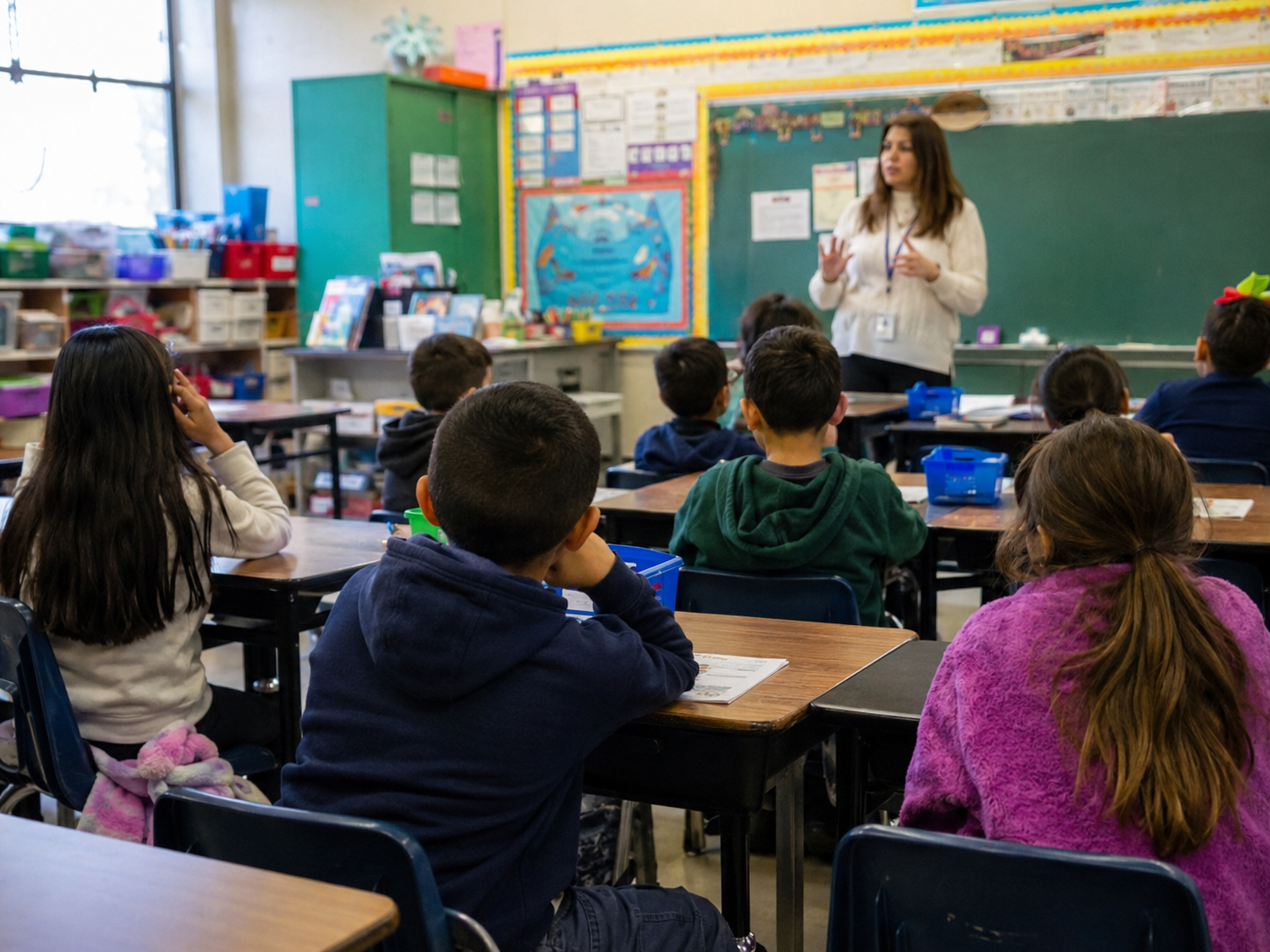
National education data can help readers separate long-term school trends from daily debate. Editorial illustration by TheDailyGlobe.
Key Facts
- The Condition of Education 2026 is an annual report mandated by Congress.
- The report is produced by the National Center for Education Statistics.
- The report is designed to help policymakers and the public monitor the condition and progress of education in the United States.
- The report covers topics from prekindergarten through postsecondary education and labor force outcomes.
- Specific trend claims should be read directly from the report because broad education data can be misunderstood without context.
Parents, students and teachers hear a lot about schools through arguments: test scores, classroom rules, college costs, attendance, discipline, technology and whether schools are preparing students for work and life.
Those debates matter, but they can also make it hard to see the larger picture. The Condition of Education 2026, produced by the National Center for Education Statistics, is meant to give policymakers and the public a broader way to monitor education in the United States.
The report does not answer every local question a family may have about a school, teacher, district or college. Its value is different: it gives readers a national frame for understanding where education stands across many parts of the system.
What the Report Is
The Condition of Education is not a single-issue study. It is an annual federal statistical report that brings together national education indicators across a wide range of topics.
That matters because education is not one story. A family's experience with school may involve early childhood access, classroom support, attendance, achievement, safety, college affordability, career preparation or whether a young adult can move from school into the labor force.
By covering prekindergarten through postsecondary education and labor force outcomes, the report gives readers a way to see education as a connected system instead of a set of separate headlines.
Why National Indicators Matter
National indicators can help readers slow down and ask better questions. Instead of reacting only to the latest school controversy, the data can show where issues fit into a longer pattern.
For policymakers, the report can help frame decisions about funding, accountability, access and student support. For families, it can offer context for questions they may already be asking: whether students are recovering academically, whether college remains affordable, whether schools are serving different groups fairly and how education connects to work after graduation.
The report is also useful because it comes from NCES, the federal statistical center for education. That does not mean every interpretation of the data is automatic or uncontested. It means readers have a public source to check before accepting claims made in political arguments, advocacy campaigns or social media posts.
What Broad Data Cannot Tell You
A national report cannot tell a parent everything about a child's school. It cannot replace local attendance records, district budgets, classroom-level information, school climate surveys or conversations with educators.
Broad data can also flatten important differences. A national indicator may show a pattern across the country while hiding large differences by state, district, community, income level, disability status, race, language background or school type.
That is why the report should be treated as a starting point, not the final word. It can tell readers where to look. It cannot automatically explain every cause, every local problem or every solution.
How Readers Can Use It
The most useful way to read a report like this is to start with a focused question. A family may want to understand college costs. A teacher may be watching attendance or school climate. A local reporter may be looking at achievement, staffing or student access.
From there, readers can compare the national picture with what is happening locally. If a national indicator points to a concern, the next step is to ask how that issue looks in a specific state, district or school system.
That approach keeps the report useful without turning it into a political shortcut. Data can clarify a debate, but only if readers avoid using one broad number to explain every school in the country.
What to Watch Next
The next useful step is narrower analysis. The report can support deeper articles on attendance, achievement, school climate, college costs, postsecondary pathways or labor force outcomes, but each topic should be handled with the exact indicators and context from the report.
For now, the Condition of Education 2026 gives readers a calmer place to begin. It does not remove disagreement from education policy, but it can help move the conversation from slogans toward evidence.
Reporting note: Reporting draws on Institute of Education Sciences and National Center for Education Statistics report materials, Education Department context, federal education data resources, and reviewed background materials. This article was produced with AI-assisted research and reviewed by an editor before publication.