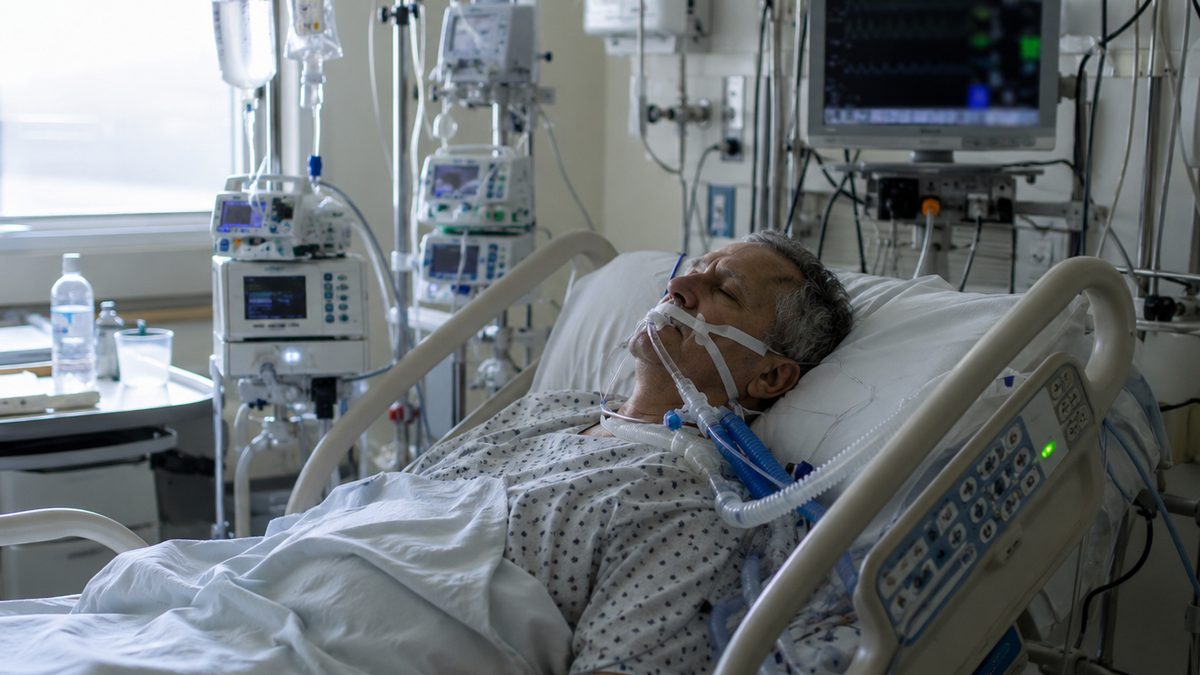
Ebola Travel Rules Make Dulles the Key U.S. Entry Point for Some Travelers
Federal officials have ordered some U.S.-bound travelers recently present in Congo, Uganda or South Sudan to enter through Washington Dulles for enhanced Ebola screening.
Save Article
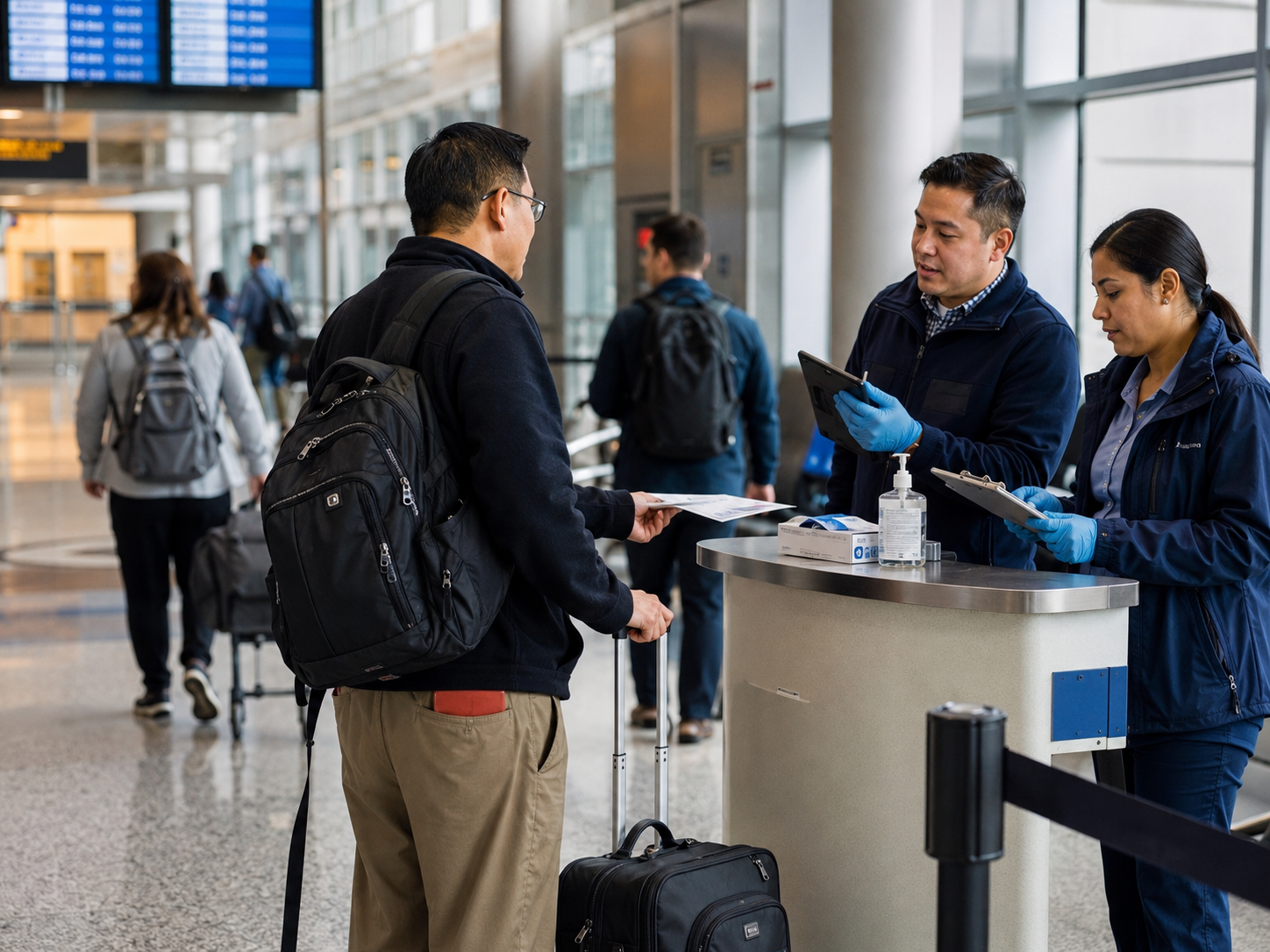
Federal officials have ordered some U.S.-bound travelers recently present in Congo, Uganda or South Sudan to enter through Washington Dulles for enhanced Ebola screening. Editorial illustration by TheDailyGlobe.
Key Facts
- CDC said federal agencies implemented enhanced travel screening, entry restrictions and public health measures tied to Ebola outbreaks in East and Central Africa.
- A Federal Register notice says flights carrying travelers recently present in the Democratic Republic of the Congo, Uganda or South Sudan must land at Washington Dulles International Airport after 11:59 p.m. Eastern on May 20, 2026, unless the rule is canceled or modified.
- For this order, recently present means a traveler was in one of the affected countries within 21 days of entry or attempted entry into the United States.
- Crew and cargo-only flights are excluded from the Federal Register arrival restriction.
- AP reported that an Air France flight bound for Detroit was diverted to Montreal after a passenger from Congo boarded amid the new restrictions.
Washington Dulles International Airport has become the main U.S. arrival point for certain travelers under new federal Ebola-related travel rules, putting a familiar airport into the center of a targeted public health response.
The rules do not mean Ebola is spreading in the United States. They do mean federal officials are routing a narrow group of travelers through one airport so screening, monitoring and public health resources can be concentrated in one place.
The Centers for Disease Control and Prevention said CDC, the Department of Homeland Security and other federal agencies implemented enhanced screening, entry restrictions and public health measures on May 18 in response to Ebola outbreaks in East and Central Africa. CDC said the immediate risk to the general U.S. public remains low, while also saying the measures may be adjusted as more information becomes available.
What the Rule Does
The Federal Register notice directs aircraft operators to ensure that flights carrying people recently present in the Democratic Republic of the Congo, Uganda or South Sudan land at Washington Dulles International Airport. The rule applies to flights departing after 11:59 p.m. Eastern on Wednesday, May 20, 2026, and remains in place until it is canceled or modified by the Homeland Security secretary and notice is published in the Federal Register.
The order defines recent travel as being in one of those countries within 21 days of entering, or attempting to enter, the United States. That 21-day window matters because federal health screening often uses recent travel history to identify people who may need monitoring after possible exposure.
The rule is targeted. It does not apply to all international travelers, and it does not close U.S. borders generally. It also excludes crew and cargo-only flights. Department of War flights, including military aircraft and contract flights, are handled separately under federal health guidance.
Why Dulles Is Central
Dulles is central because the federal government designated it as the airport where public health resources would be focused for these arrivals. Instead of spreading screening across many airports, the order channels affected flights through one site.
That makes the rule easier for federal agencies to administer, but it can also affect airlines, passengers and connecting travel. A traveler who otherwise expected to arrive through another U.S. airport may need to enter through Dulles first if the rule applies to them.
For regular travelers, the practical point is simple: the rule is based on recent presence in specific countries, not on nationality alone and not on general concern about international travel. People who have recently been in the listed countries should check current federal guidance before flying to the United States.
The Flight Diversion Shows the Rule Has Teeth
The restrictions already affected a commercial flight. The Associated Press reported that an Air France flight bound for Detroit was diverted to Montreal after a passenger from Congo boarded in Paris amid the new rules.
According to AP, U.S. Customs and Border Protection said the passenger should not have boarded the plane because of the U.S. entry restrictions. Air France said the passenger was denied entry into the United States under new regulations that require certain travelers from affected countries to enter through Washington.
AP also reported that Canadian public health officials assessed the traveler as asymptomatic and that the traveler flew back to Paris. The flight later continued to Detroit with the other passengers, according to the report.
That episode does not show a U.S. outbreak. It does show that federal officials are willing to enforce the routing rules when a flight does not meet the new entry requirements.
What Officials Say About Public Risk
CDC said it assesses the immediate risk to the general U.S. public as low. That point is important because targeted travel screening can sound alarming if it is separated from the risk assessment.
Ebola is a severe disease, but it does not spread through casual airborne contact in the way many respiratory viruses do. Federal health materials describe transmission as occurring through direct contact with bodily fluids from a person who is sick, or through contact with contaminated objects.
The purpose of the travel measures is prevention. Screening and monitoring are meant to identify travelers who may need public health follow-up, not to suggest that ordinary airport passengers or the broader public face the same level of risk as people in affected outbreak areas.
For readers, the difference matters. A public health order can be serious without being a sign of panic. The government is responding to outbreaks overseas by managing a narrow travel pathway into the United States.
What Travelers Should Understand
The rule mainly matters for people who have recently traveled from, or were otherwise present in, the Democratic Republic of the Congo, Uganda or South Sudan. It may also matter for airlines and travel agents booking international routes for passengers who have been in those countries during the prior 21 days.
CDC has encouraged travelers who have been through affected countries to monitor CDC travel health notices and seek medical attention if they develop symptoms consistent with Ebola within 21 days of travel to affected areas. Symptoms listed by CDC include fever, weakness, vomiting, diarrhea or unexplained bleeding.
The public should avoid reading the order as a broad warning against ordinary domestic travel or general airport use. The confirmed federal action is narrower: affected international arrivals are being routed to Dulles for enhanced screening and public health measures.
What Remains Unclear
The rule remains in effect until it is canceled or modified, but it is not yet clear how long the restrictions will last. CDC said its measures may change as the situation evolves, and the Federal Register notice says cancellation or modification would be published there.
It is also unclear whether additional U.S. airports would be designated if travel patterns or outbreak conditions change. For now, the federal notice names Washington Dulles as the airport where these affected arrivals must be directed.
The central takeaway is not that Ebola is spreading in the United States. It is that federal agencies are using targeted travel rules to reduce the chance of importation while keeping the stated public risk in perspective.
Reporting note: Reporting draws on CDC statements, a Federal Register notice, State Department public health travel information, and Associated Press reporting. This article was produced with AI-assisted research and reviewed by an editor before publication.