FTC Tells Major Platforms to Prepare for Take It Down Act Compliance
The FTC has warned major technology companies to comply with new takedown rules for nonconsensual intimate imagery, including AI-generated deepfake content.
Save Article
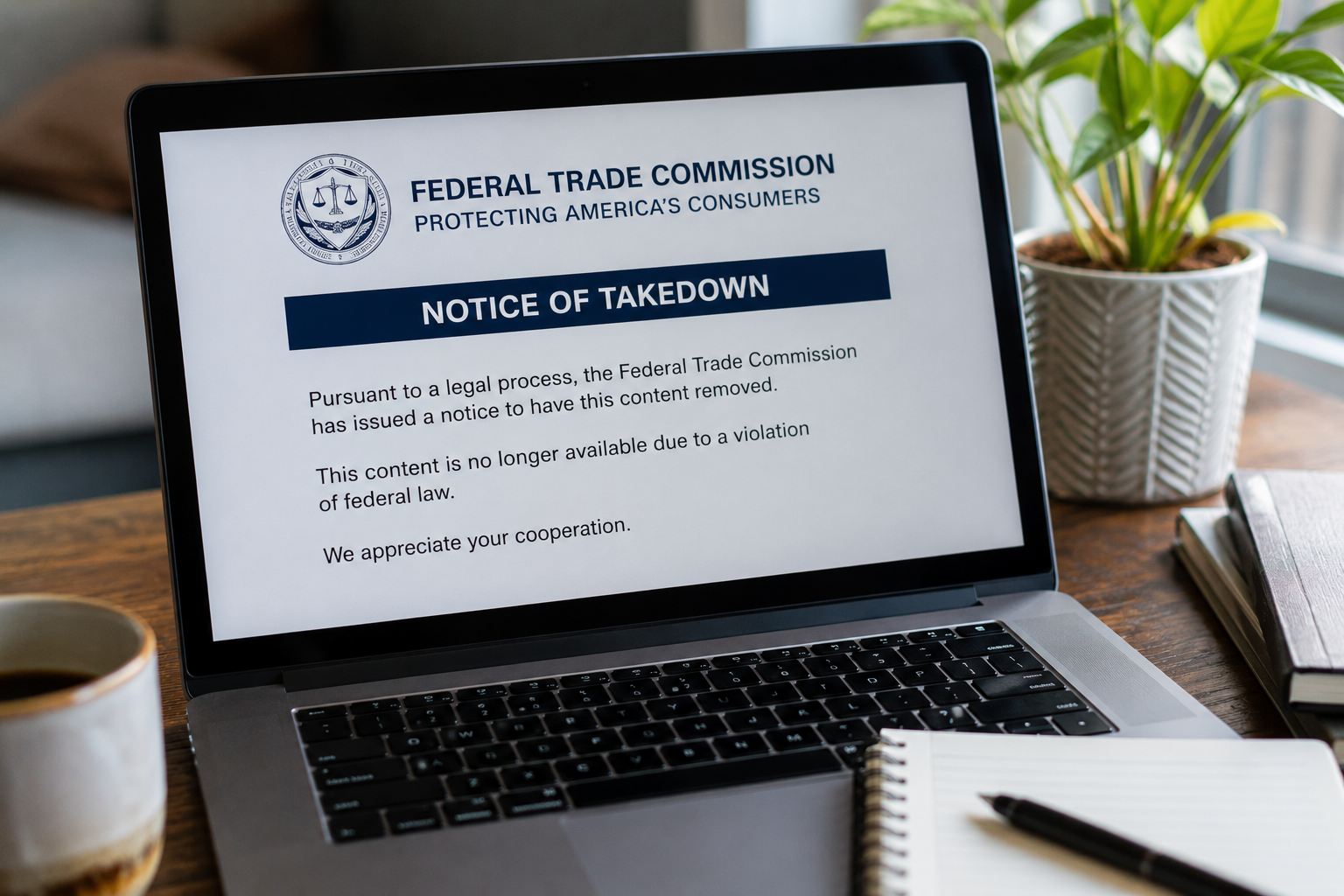
Editorial illustration by TheDailyGlobe.
Key Facts
- FTC Chairman Andrew Ferguson sent letters to more than a dozen technology companies reminding them to comply with the Take It Down Act by May 19.
- FTC said the law requires covered platforms to establish a process allowing victims, including children, to request removal of intimate photos or videos shared without consent.
- Reporting and legal analysis say the Act covers nonconsensual intimate imagery, including AI-generated deepfake content.
- CyberScoop reported that FTC enforcement may involve civil penalties for failure to remove content as required.
- The Verge reported concerns from critics that the law could create over-removal or speech risks even as it aims to address serious abuse.
The Federal Trade Commission has told major technology companies to prepare for compliance with the Take It Down Act, a new law aimed at helping victims remove nonconsensual intimate images and videos from covered online platforms.
FTC Chairman Andrew Ferguson sent letters to more than a dozen technology companies reminding them to comply by May 19, according to the agency. The law covers nonconsensual intimate imagery, including AI-generated deepfake content, according to reporting and legal analysis.
For readers, the issue is not only whether platforms can remove harmful content. It is whether they can build reporting systems that act quickly for victims while still avoiding sloppy takedowns, weak appeals and unnecessary removal of lawful speech.
What Platforms Are Being Told to Build
The FTC said the law requires covered platforms to establish a process that allows victims to request removal of intimate photos or videos shared without consent. That means companies need more than a general abuse inbox or a vague help-page promise.
In practice, platforms may need reporting forms, review teams, verification steps, escalation systems, recordkeeping, removal workflows and ways to handle repeat uploads. The handoff materials do not provide every technical requirement, so the exact design may vary by platform and by future enforcement guidance.
The FTC letters should not be read as proof that every company receiving one is currently violating the law. Warning letters can also function as a deadline reminder and a signal that regulators are watching compliance.
Why AI Deepfakes Changed the Pressure
The rise of generative AI has made the problem harder. A person no longer has to possess an original intimate image to create harmful content. AI tools can be used to fabricate or alter images in ways that create serious personal harm.
That is why the Take It Down Act is being discussed alongside deepfake abuse. Reporting and legal analysis say the law covers AI-generated nonconsensual intimate imagery, not only images or videos captured in the real world.
This article is intentionally not describing the imagery in graphic detail. The public issue is the platform obligation: how quickly companies respond, how victims request removal, and whether systems can handle abuse without becoming careless or easy to misuse.
The Enforcement Question
CyberScoop reported that FTC enforcement may involve civil penalties for failure to remove content as required. That gives the law a regulatory edge: platforms that do not comply may face consequences beyond public criticism.
Enforcement will depend on how the FTC interprets the law, how platforms respond to notices, and what evidence shows about company systems. The source material does not establish that penalties have been issued against the companies that received letters.
The harder test will be consistency. A takedown system that works for one high-profile case but fails for ordinary users will not solve the underlying problem. Victims need a process that is findable, understandable and fast enough to matter.
Why Critics Are Worried
The victim-protection goal is serious. So are the concerns about over-removal.
The Verge reported that critics worry the law could create speech risks or encourage platforms to remove content too broadly. That concern is not the same as dismissing the harm the law targets. It is a warning about how removal systems behave when companies face legal pressure and tight deadlines.
Platforms often respond to risk by removing first and asking questions later. That can help victims in urgent cases, but it can also create problems if lawful material is removed, if users have no meaningful appeal, or if bad actors abuse reporting tools to silence others.
A fair system needs both speed and safeguards. Victims should not have to fight a platform for basic removal. At the same time, platforms should have enough process to reduce mistaken takedowns and make corrections possible.
What This Means for Users
For regular users, the change may show up as new reporting options, updated safety policies, clearer takedown forms or stronger notices about nonconsensual intimate imagery. It may also affect social media, messaging, app stores, image platforms, search and AI-generated content systems.
For victims, the key question is whether the law produces a process that feels usable during a crisis. A buried form, confusing instructions or slow response can make a legal right feel hollow.
For platforms, the message is plain: online safety obligations are becoming more formal, and AI-generated abuse is now part of the compliance picture.
What Remains Unclear
It remains unclear how each platform will design its reporting and review systems, how quickly content will be removed in practice, and how appeals or mistaken removals will be handled.
It is also unclear how aggressively the FTC will enforce the law in early cases. Warning letters show regulatory attention, but the real standard will become clearer through company compliance, enforcement decisions and any future disputes.
The clean takeaway is that the Take It Down Act is pushing platforms to treat nonconsensual intimate imagery, including AI-generated abuse, as a compliance problem they must be ready to handle. The challenge is building systems that protect victims without turning takedown pressure into a blunt tool.
Reporting note: Reporting draws on FTC materials, technology reporting, cybersecurity reporting, legal analysis, and reviewed online-safety context. This article was produced with AI-assisted research and reviewed by an editor before publication.