Lions’ Jack Campbell Extension Shows How Teams Are Managing Young Core Contracts
Detroit’s extension with linebacker Jack Campbell shows how NFL teams try to lock in young core players before future contract costs climb higher.
Save Article
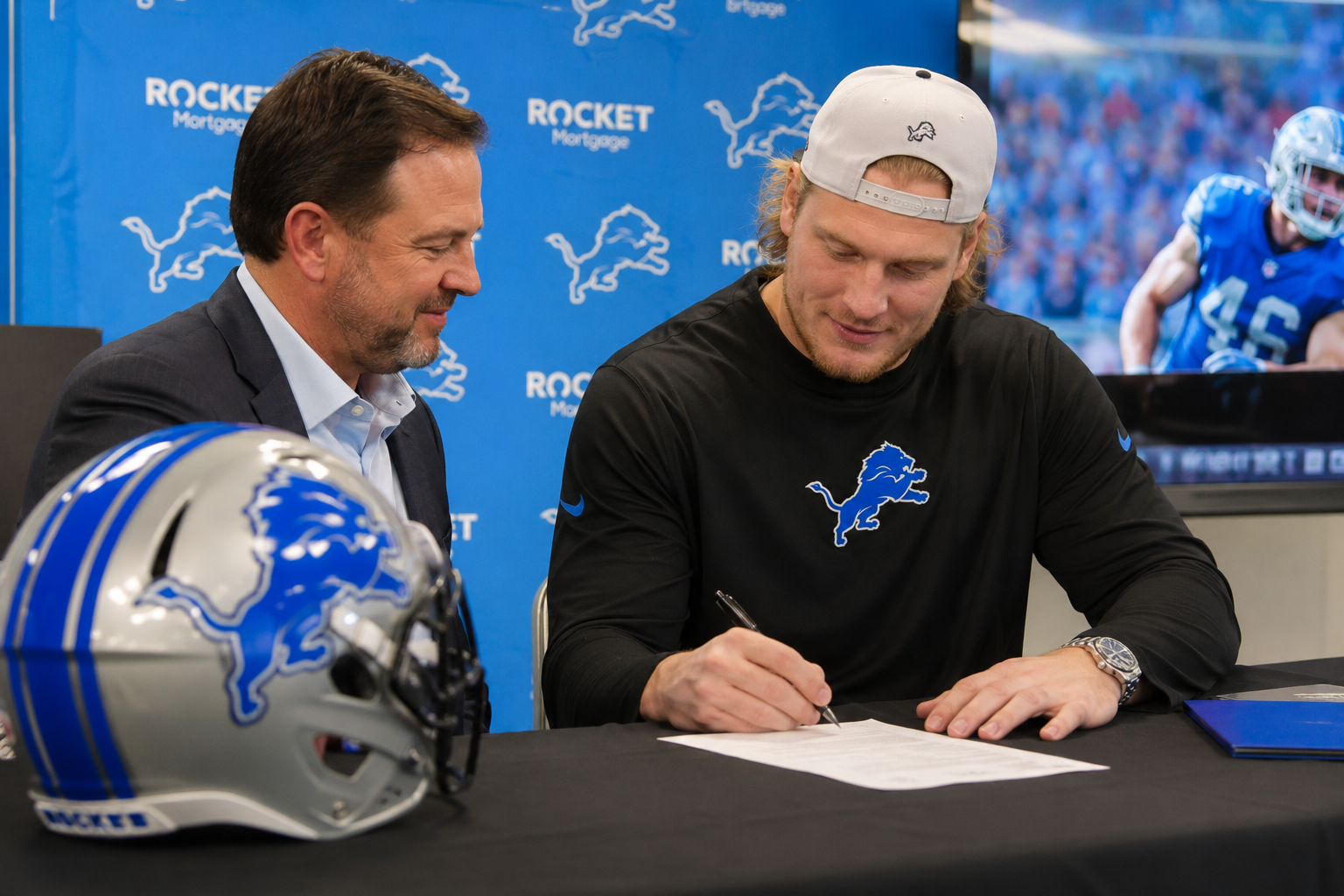
Detroit’s extension with linebacker Jack Campbell shows how NFL teams try to lock in young core players before future contract costs climb higher. Editorial illustration by TheDailyGlobe.
Key Facts
- The Detroit Lions announced that linebacker Jack Campbell signed a contract extension through the 2030 season.
- NFL.com reported the Lions signed Campbell after previously declining his fifth-year option.
- Spotrac lists the contract as a four-year, $81 million extension with $51.5 million guaranteed.
- Campbell was part of Detroit’s 2023 draft class.
- It remains unclear whether Detroit will extend other 2023 draft class players this offseason.
The Detroit Lions signed linebacker Jack Campbell to a contract extension through the 2030 season, a move that says as much about NFL roster planning as it does about one player’s future in Detroit.
The Lions announced the extension on May 21. NFL.com reported that Detroit signed Campbell after previously declining his fifth-year option, and Spotrac lists the deal as a four-year, $81 million extension with $51.5 million guaranteed.
For fans outside Detroit, the move is useful because it shows how NFL teams try to manage young core players before the most expensive contract windows arrive. A team can wait and risk a bigger market later, or it can move early and take on long-term money now for a player it believes is part of its foundation.
Why the Timing Matters
The timing is the interesting part. Campbell was not simply entering the final week of a deal with no options left. NFL.com reported that the Lions had previously declined his fifth-year option, then signed him to a longer extension.
That matters because first-round rookie contracts give teams a fifth-year option. Exercising it can buy one more year of control before a long-term deal. Declining it can create more urgency, but it can also clear the way for a different kind of contract structure.
In Campbell’s case, Detroit chose the long-term route. That does not automatically make the deal good or bad. It means the Lions decided the certainty of a multi-year extension was worth committing money now rather than letting the linebacker market, the salary cap, or Campbell’s leverage change later.
What This Says About Young-Core Deals
NFL teams spend years trying to find young players they can build around. Once they do, the next question is how quickly to pay them. Waiting can save money if a player stalls or gets hurt. Waiting can also cost more if the player improves and the market rises.
That is the tradeoff behind early extensions. Teams are not only paying for what a player has done. They are also making a bet on what he will be during the next version of the roster.
Campbell was part of Detroit’s 2023 draft class, which makes the extension part of a larger roster-building window. When several young players from the same draft class become eligible for major deals around the same time, teams have to decide who gets locked in first and how those contracts fit together.
The Cap Planning Side
Salary-cap planning is where these decisions become more complicated. A long-term extension can help a team spread money across future years, but it also creates commitments that affect later choices.
Spotrac lists Campbell’s extension at four years and $81 million, with $51.5 million guaranteed. Because those figures come from contract tracking and reporting rather than the Lions’ own announcement, they should be attributed until full filing details are reviewed.
The practical issue is not just Campbell’s number. It is how that number fits with future contracts, other young players, veteran decisions, and the cost of keeping a defense together. A team trying to contend cannot simply collect good players. It has to decide which good players can stay under the cap at the same time.
Why Linebacker Value Is Part of the Bet
Linebacker contracts can be tricky because the position sits in a shifting part of the modern NFL. Defenses need players who can tackle, communicate, cover space, handle run fits, and stay on the field against varied offenses.
For a team to make a long-term investment, it has to believe the player is not just productive, but central to how the defense is organized. That appears to be the broader message of Detroit’s move with Campbell: the Lions are treating him as a young defensive leader, not a replaceable short-term piece.
Still, the deal carries normal risk. Injuries, scheme changes, cap pressure, and future draft decisions can all change how a contract looks over time. That is why it is better to describe the move as a roster-building choice, not as a guaranteed win or mistake.
What Remains Unclear
The next question is whether Detroit will extend other players from its 2023 draft class this offseason. Campbell’s deal may be one piece of a larger plan, but the available source material does not confirm what comes next.
It is also unclear how the contract will affect future defensive roster construction. The Lions may gain stability at linebacker, but every long-term deal narrows some future choices.
The final terms may also need more review once full contract filing details are available. Reported guarantees, structure, bonuses, and cap charges can matter as much as the headline value.
For now, Campbell’s extension is a clear signal from Detroit. The Lions are willing to spend early on a young defender they see as part of their long-term core. Around the NFL, that is the same calculation every contender faces: pay the right young players before the price climbs, while leaving enough room to keep the rest of the roster competitive.
Reporting note: Reporting draws on Detroit Lions team materials, NFL.com reporting, Associated Press reporting through CBS News Detroit, Spotrac contract data, and reviewed sports business context. This article was produced with AI-assisted research and reviewed by an editor before publication.