A Quieter Hurricane Forecast Still Leaves Coastal Risk on the Table
NOAA expects a below-normal Atlantic hurricane season, but forecasters warn that even one landfalling storm can cause serious damage.
Save Article
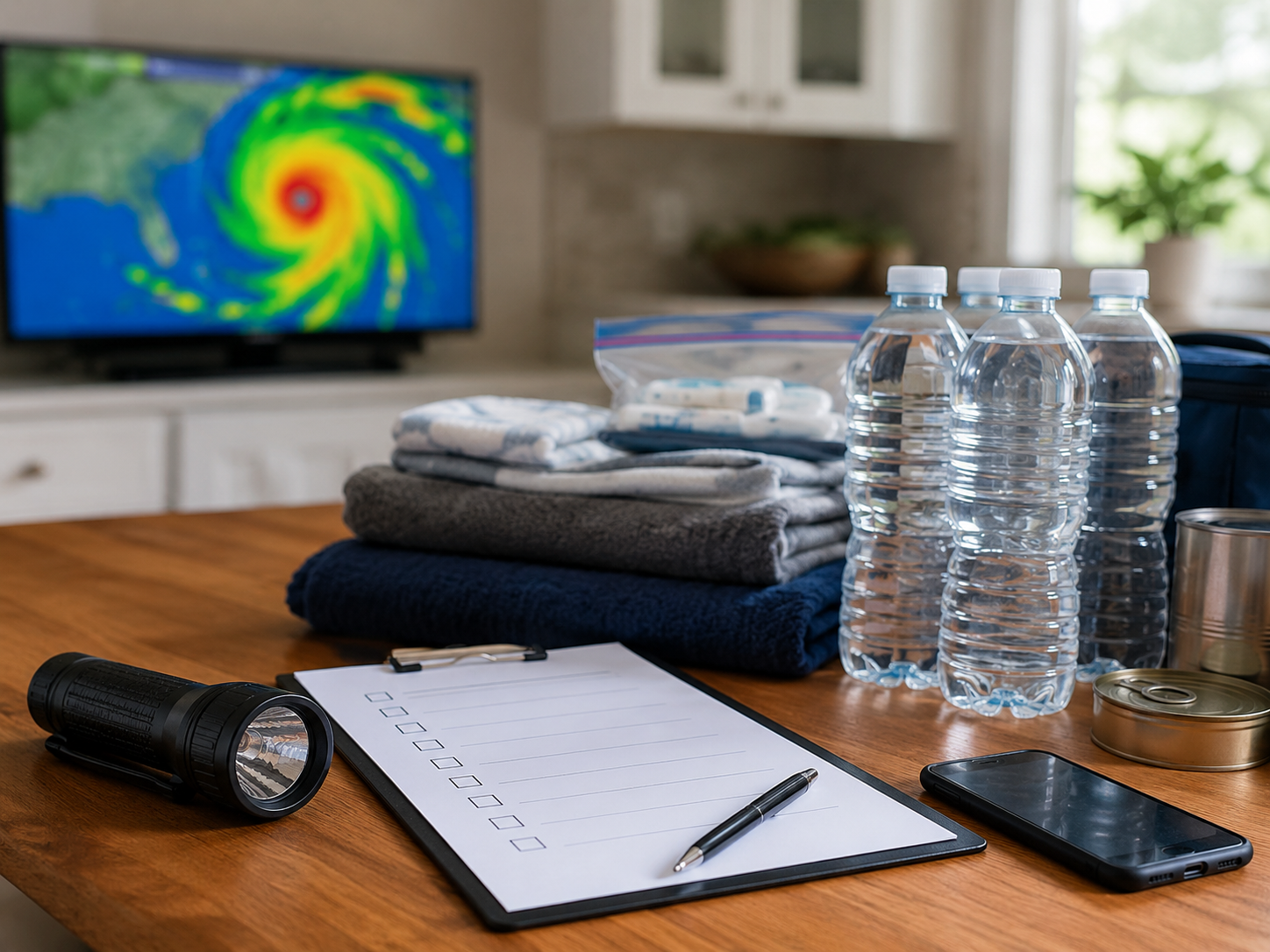
NOAA’s seasonal outlook points to a quieter Atlantic hurricane season, but forecasters still urge coastal households to prepare before storms develop. Editorial illustration by TheDailyGlobe.
Key Facts
- NOAA issued its 2026 North Atlantic Hurricane Season Outlook on May 21, 2026.
- NOAA says a below-normal season is most likely, with a 55% chance of below-normal activity, a 35% chance of near-normal activity, and a 10% chance of above-normal activity.
- NOAA forecasts 8 to 14 named storms, 3 to 6 hurricanes, and 1 to 3 major hurricanes within 70% probability ranges.
- NOAA states that seasonal outlooks do not predict hurricane landfalls.
- NOAA warns that hurricane-related disasters can occur even in years with low overall activity.
A quieter hurricane forecast can sound reassuring. For families along the Atlantic and Gulf coasts, it should not sound like permission to ignore the season.
NOAA’s 2026 Atlantic hurricane outlook, released May 21, says a below-normal season is the most likely outcome. That means forecasters expect fewer storms than usual overall, not that coastal communities are protected from a damaging landfall.
That distinction matters because hurricane risk is not felt evenly. A season with fewer storms can still produce one storm that hits the wrong place at the wrong time, floods homes, disrupts travel, strains insurance claims, and forces local emergency decisions.
What NOAA Is Forecasting
NOAA’s outlook gives a seasonal picture of the Atlantic basin. It is built around probabilities, not certainties. The agency says the most likely scenario is below-normal activity, but it also leaves room for a near-normal season and a smaller chance of above-normal activity.
The numbers are the clearest way to understand the forecast. NOAA expects 8 to 14 named storms, 3 to 6 hurricanes, and 1 to 3 major hurricanes. Those ranges are not promises. They are forecast bands that reflect the uncertainty built into seasonal weather and climate prediction.
For readers, the most useful takeaway is not just whether the season is expected to be busy. It is that the forecast describes activity across a wide ocean basin. It does not say whether a storm will approach Florida, Texas, Louisiana, the Carolinas, the Caribbean, or any other specific coastline.
Why a Below-Normal Season Can Still Be Dangerous
Hurricane season risk is personal and local. A household does not experience the season as a total storm count. It experiences the storm that comes close enough to damage a roof, flood a street, close a school, cancel a flight, knock out power, or trigger an evacuation order.
That is why NOAA’s caution matters. The agency warns that hurricane-related disasters can still happen during years with lower overall activity. A quieter basin can still produce a destructive storm, and the difference between a near miss and a direct hit is often not clear until much closer to landfall.
The forecast also matters beyond coastal homes. Businesses plan staffing and supply chains around weather risk. Travelers watch peak-season storm tracks. Local governments review evacuation routes and shelters. Insurers and homeowners pay attention because one storm can create a large wave of claims, even in a season that does not produce many named systems.
What the Outlook Does Not Tell Us
The biggest limitation is landfall. NOAA’s seasonal outlook does not predict where storms will form, where they will go, or whether they will hit land. Those questions depend on short-term weather patterns that cannot be known months in advance.
There is also uncertainty in the ocean and atmosphere heading into the peak months of August, September, and October. Spring forecasts must account for conditions that can shift later, including the development of El Niño or other patterns that influence storm formation and steering.
That does not make the outlook useless. It gives emergency managers, households, businesses, and coastal states a starting point for planning. But it should be read as a seasonal risk guide, not a local forecast.
What Families and Communities Should Watch
For most households, the practical response is simple: prepare before a storm exists. That can mean checking insurance documents, knowing whether a home is in an evacuation zone, storing basic supplies, making sure phones can receive alerts, and deciding where family members would go if local officials order people to leave.
Coastal residents should also separate seasonal headlines from real-time warnings. NOAA’s outlook may describe the season as below normal, but National Hurricane Center advisories and local emergency guidance become more important once a specific storm forms.
The next major checkpoint will be NOAA’s early August update, which usually comes closer to the heart of the season. By then, forecasters may have a clearer view of ocean temperatures, atmospheric conditions, and whether the early-season signals are holding.
Until then, the safest reading of the forecast is calm but not careless. A quieter season would be welcome. It still takes only one storm near one community to turn a low-count year into a costly one.
Reporting note: Reporting draws on NOAA seasonal outlook materials, National Hurricane Center updates, public weather and climate forecasts, and reviewed background materials. This article was produced with AI-assisted research and reviewed by an editor before publication.