New Food-Safety Review Puts High-Heat Cooking Risks in Context
Research on chemicals formed during grilling, frying and smoking shows why cooking method matters, but scientists caution against turning normal meals into panic.
Save Article
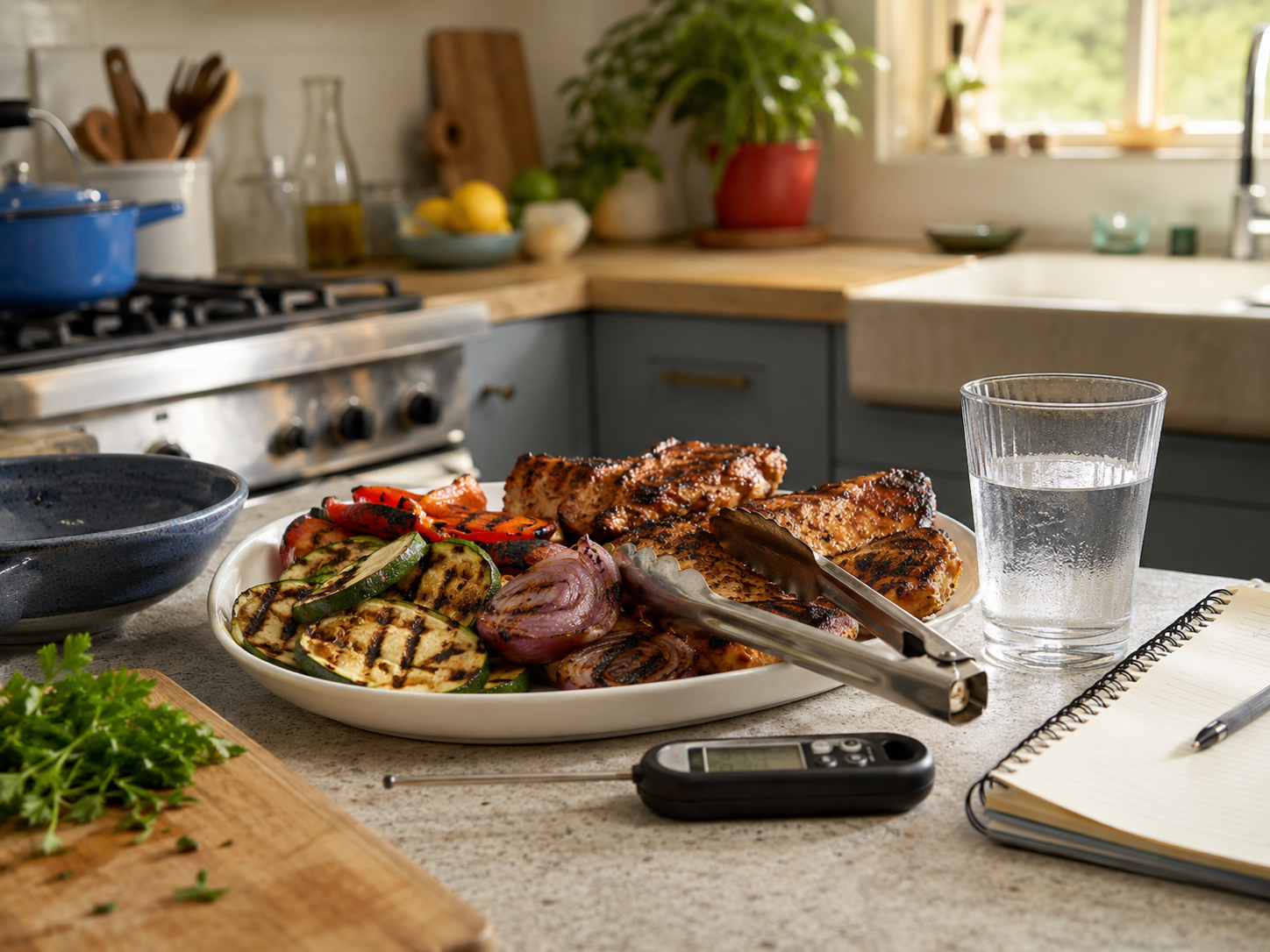
Research on chemicals formed during grilling, frying and smoking shows why cooking method matters, but scientists caution against turning normal meals into panic. Editorial illustration by TheDailyGlobe.
Key Facts
- ScienceDaily posted a May 22 release from Seoul National University of Science & Technology describing potentially carcinogenic PAHs in foods exposed to high-heat cooking or contamination.
- The National Cancer Institute says HCAs and PAHs can form when muscle meats are cooked by high-temperature methods such as pan frying or grilling over an open flame.
- The National Cancer Institute says research continues on the relationship between consumption of these compounds and cancer risk in humans.
- Review literature discusses food-safety concerns around heat-formed compounds and mitigation strategies.
- The available source material does not show that one meal or one cooking method by itself causes cancer.
A new food-safety review is drawing attention to chemicals that can form when food is grilled, fried, roasted or smoked, but the most useful takeaway is not that ordinary meals are suddenly dangerous.
The better takeaway is that cooking method, temperature, smoke exposure and overall eating patterns can shape long-term exposure to certain compounds researchers study for possible cancer risk.
ScienceDaily posted a May 22 release from Seoul National University of Science & Technology describing potentially carcinogenic polycyclic aromatic hydrocarbons, or PAHs, in foods exposed to high-heat cooking or contamination. Federal cancer-risk materials from the National Cancer Institute also explain that PAHs and another group of compounds, heterocyclic amines, or HCAs, can form when muscle meats are cooked at high temperatures.
What PAHs and HCAs Are
PAHs are a group of chemicals that can form when organic material burns. In food, they can be associated with smoke, charring or contamination. That is one reason smoked or heavily charred foods often come up in food-safety discussions.
HCAs are different compounds that can form in muscle meats cooked at high temperatures. The National Cancer Institute says these compounds can form during methods such as pan frying or grilling over an open flame.
The plain-English version is this: high heat and smoke can change food chemically. Scientists study some of those changes because certain compounds have raised safety concerns in laboratory and dietary research.
Why One Meal Is Not the Whole Story
The science should be handled carefully. The source material supports concern about heat-formed compounds and possible long-term exposure, but it does not support telling readers that one grilled dinner causes cancer.
Cancer risk is rarely about a single meal. It is shaped by many factors, including overall diet, frequency of exposure, cooking practices, genetics, smoking, alcohol use, physical activity, environmental exposures and other health conditions.
The National Cancer Institute says research continues on the relationship between consumption of HCAs and PAHs and cancer risk in humans. That wording matters. It means scientists are studying the issue, not that every real-world exposure has a simple one-to-one outcome.
Where Cooking Method Matters
Cooking method matters because temperature and smoke exposure can affect how much of these compounds form. High-temperature pan frying, grilling over an open flame, smoking and heavy charring can create different exposure conditions than lower-temperature cooking.
That does not mean people need to abandon favorite foods or treat a backyard grill as a health emergency. It does mean food-safety researchers pay attention to habits that are repeated over time, especially when meat is cooked at high heat or directly exposed to flame and smoke.
Review literature on dietary HCAs has also discussed mitigation strategies. In practical terms, that is the part most readers can use: food-safety research is not only about identifying a risk, but also about understanding how cooking choices may reduce exposure.
How Readers Can Use the Research
This article is not medical advice, and it should not be read as a personal diet plan. People with cancer-risk concerns, medical conditions or special dietary needs should talk with a qualified health professional.
For ordinary readers, the practical context is more modest. Avoiding heavy charring, reducing direct smoke exposure and varying cooking methods are common-sense ways to think about the issue without turning food into a source of fear.
The larger point is balance. Food safety is not helped by pretending the research does not matter. It is also not helped by turning early or complex risk evidence into scary advice about normal meals.
What Remains Unclear
Human cancer-risk evidence remains more complicated than laboratory findings about mutagenicity or chemical formation. A compound can raise concern in research settings without proving that a specific meal, recipe or occasional cooking method produces a clear real-world outcome.
It also remains difficult to separate cooking-related exposure from the many other factors that shape cancer risk over a lifetime. That is why federal materials describe ongoing research rather than a simple answer.
For readers, the clearest conclusion is that high-heat cooking research is worth knowing about, especially for repeated habits. It should inform choices in the kitchen, not make people afraid of dinner.
Reporting note: Reporting draws on a science release, federal cancer-risk materials, review literature, and reviewed food-safety background. This article was produced with AI-assisted research and reviewed by an editor before publication.