Supreme Court Voting Rights Ruling Sets Off New Redistricting Fight Across Southern States
A recent Supreme Court decision weakening part of the Voting Rights Act has reopened redistricting battles in several Southern states, creating new legal and logistical questions ahead of future elections.
Save Article
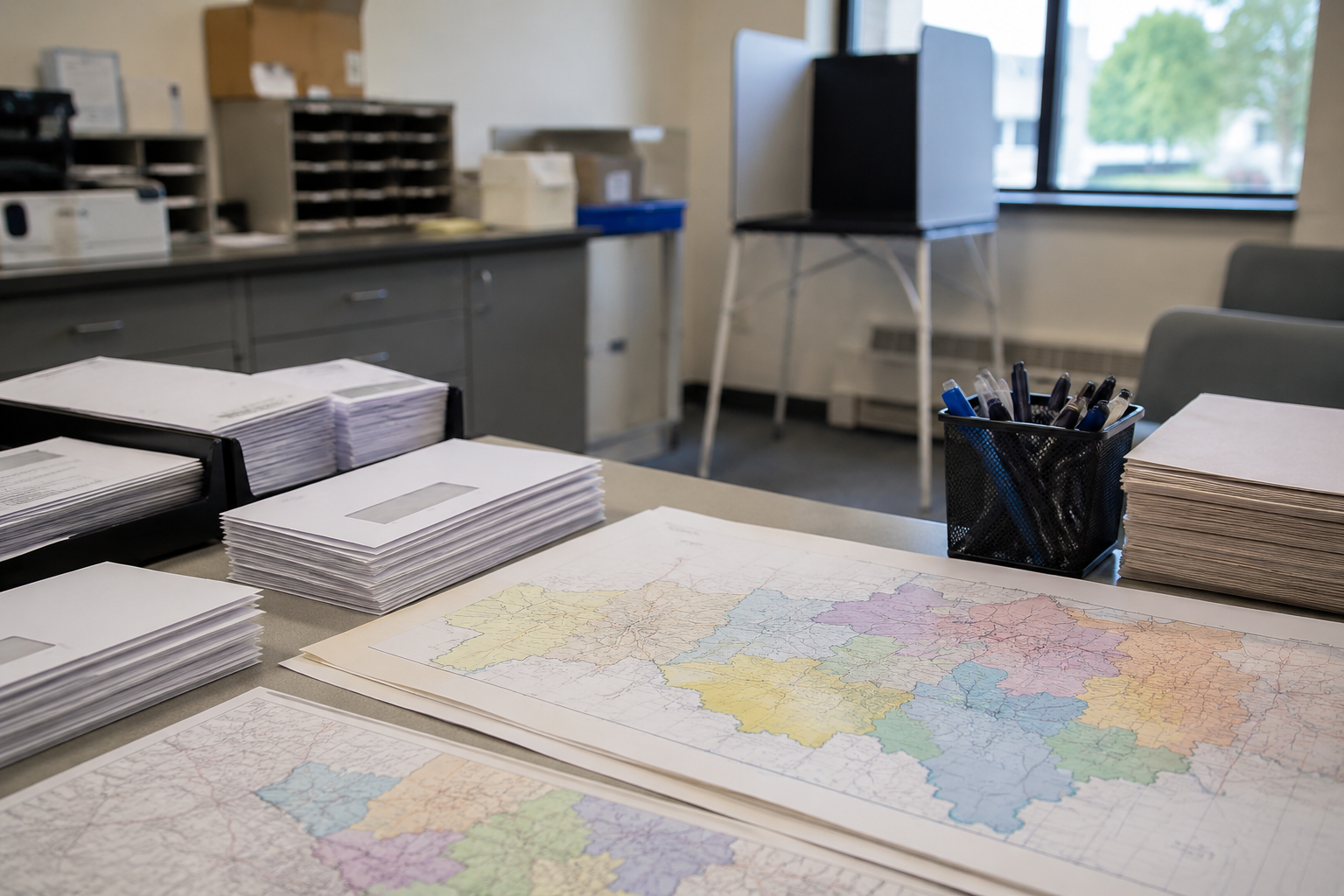
A recent Supreme Court decision weakening part of the Voting Rights Act has reopened redistricting battles in several Southern states, creating new legal and logistical questions ahead of future elections. Editorial illustration by TheDailyGlobe.
Key Facts
- The Supreme Court weakened a major Voting Rights Act enforcement tool tied to redistricting disputes.
- Section 2 of the Voting Rights Act has long been used to challenge voting maps in court.
- States including Alabama, Tennessee and Louisiana quickly moved toward new map efforts after the ruling.
- Election officials have warned rushed district changes can confuse voters and strain local offices.
- The Voting Rights Act was signed into law on August 6, 1965.
- The dispute could affect congressional boundaries ahead of future elections.
A recent Supreme Court ruling tied to the Voting Rights Act is already reshaping political map fights across several Southern states, with lawmakers and election officials now facing renewed pressure to redraw congressional districts before future elections.
The decision weakened a key legal tool that had long been used to challenge voting maps viewed as discriminatory under Section 2 of the Voting Rights Act. That section of the law has historically allowed voters and civil rights groups to sue when district boundaries were believed to dilute the voting power of racial minorities.
Within days of the ruling, Republican-led states including Alabama, Tennessee and Louisiana moved toward new redistricting efforts or renewed legal arguments tied to existing maps. The rapid changes have created uncertainty for local election offices that may now need to update districts, voter information and ballot planning on shorter timelines.
Election administrators in several states have warned that rushed mid-cycle map changes can create confusion for voters who may suddenly find themselves assigned to different congressional districts or polling locations before upcoming elections.
What Changed Legally
The legal dispute centers on Section 2 of the Voting Rights Act, one of the most important federal voting protections created during the civil rights era. According to the Justice Department, Section 2 prohibits voting practices or procedures that discriminate based on race, color or membership in certain language minority groups.
For decades, courts have used Section 2 challenges to review congressional and legislative district maps, especially in states with long histories of racial discrimination in voting. Civil rights organizations and affected voters have often argued that some district boundaries weaken minority voting strength by dividing communities across multiple districts or concentrating them into a small number of seats.
The Supreme Court ruling did not erase Section 2 entirely. However, it narrowed how the law can be used in some redistricting disputes and made certain legal challenges more difficult to pursue. Legal experts say the ruling may encourage states to test more aggressive district boundaries while courts continue to sort out how the decision will apply in future cases.
The decision is part of a broader trend in recent years in which the Supreme Court has reduced some federal oversight tools tied to election law and voting rights. At the same time, the Court has generally left the primary responsibility for drawing congressional districts to state governments and legislatures.
States Move Quickly
The ruling immediately reopened political and legal debates across the South, where redistricting battles have been especially intense since the 2020 Census.
In Alabama and Louisiana, lawmakers have already faced repeated court fights over maps challenged under the Voting Rights Act. Tennessee has also seen disputes tied to congressional district boundaries and representation in rapidly growing urban areas.
State officials and legislative leaders in several Republican-controlled states have argued that the new ruling gives them more flexibility to defend district maps that had previously faced legal pressure. Opponents of those maps argue the ruling could weaken protections for minority voters and reduce opportunities for court intervention before elections take place.
Because redistricting usually happens once every decade after the national census, mid-cycle changes can create unusual political and administrative challenges. Some states may attempt targeted adjustments to existing maps, while others could face fresh lawsuits over whether revised districts comply with federal law.
Why Election Officials Are Concerned
Local election administrators are often the first people forced to deal with the practical effects of map changes. Congressional district lines determine not only which candidates appear on a ballot, but also how voter records, precinct assignments and election materials are organized.
According to Associated Press reporting, some election officials worry that rapidly changing district maps could create confusion among voters who may not realize their district has changed until close to an election. In some cases, voters may receive new polling assignments or find themselves represented by different congressional candidates than before.
Election offices also face logistical pressure when maps change on short notice. Updating voting databases, testing ballot systems and communicating new district information can require months of preparation, especially in larger counties.
Officials have warned that compressed timelines increase the risk of administrative mistakes, even when local offices work to adapt quickly. Some election administrators have called for clearer timelines from legislatures and courts so that changes do not arrive too close to voting deadlines.
The Long History Behind Section 2
The Voting Rights Act was signed into law by President Lyndon B. Johnson on August 6, 1965, during the height of the civil rights movement. The law was designed to address barriers that had prevented many Black Americans from voting, particularly in Southern states.
Section 2 became one of the law's most important enforcement tools because it allowed legal challenges against voting systems or district maps that produced discriminatory effects. Over time, courts used the provision in cases involving congressional districts, local elections and statewide voting rules.
Supporters of Section 2 protections argue the law remains necessary because racial disparities in political representation and voting access still exist in parts of the country. Critics of aggressive redistricting lawsuits argue courts should not become overly involved in political mapmaking and that states should have greater authority to draw their own districts.
The latest Supreme Court decision does not end those debates. Instead, it is likely to trigger a new phase of legal and political battles over how far federal protections can go in shaping election maps.
What Happens Next
More lawsuits and legislative fights are expected as states continue adjusting congressional maps ahead of future elections. Courts may still block some district plans, while state lawmakers could attempt additional revisions in response to ongoing legal challenges.
For voters, the biggest immediate impact may simply be uncertainty. District boundaries determine which representatives appear on ballots and which communities are grouped together politically. When those lines shift quickly, it can become harder for voters to track changes and understand how they affect local representation.
Election officials are expected to continue urging states and courts to finalize district maps early enough for counties and municipalities to prepare for upcoming elections without last-minute disruptions.
The broader political fight over voting rights and redistricting is unlikely to fade soon. With control of Congress often decided by a small number of competitive districts, even relatively narrow legal rulings can have nationwide consequences for representation, election administration and public confidence in the voting process.
Reporting note: Reporting draws on Associated Press coverage, National Archives materials on the Voting Rights Act, Justice Department guidance on Section 2 of the Voting Rights Act, and reviewed legal background context. All claims This article was produced with AI-assisted research and reviewed by an editor before publication.