Supreme Court Temporarily Restores Nationwide Mail Access to Abortion Pill
A temporary Supreme Court order has restored nationwide mail access to mifepristone while a broader legal fight over federal authority and abortion access continues.
Save Article
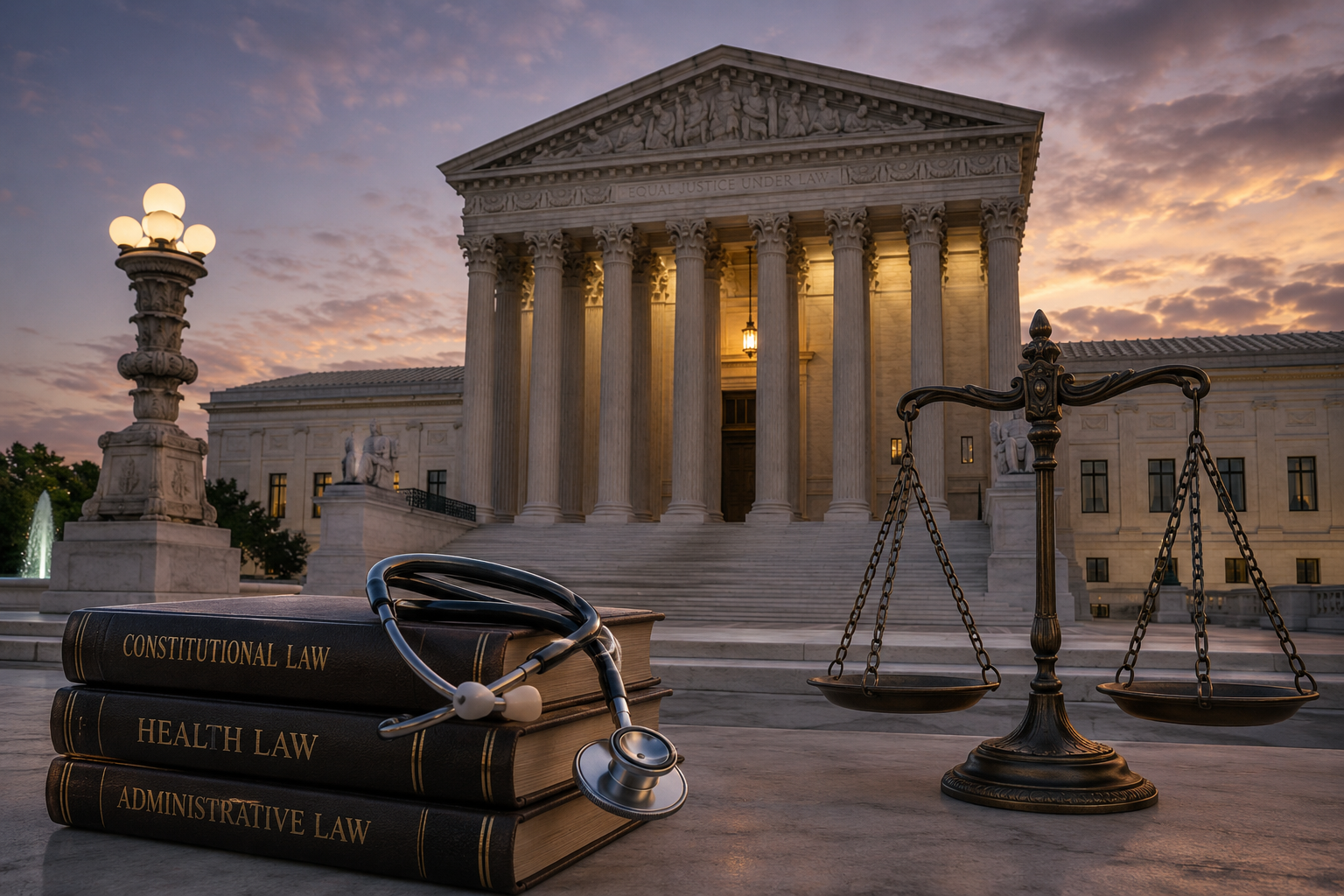
The Supreme Court temporarily restored nationwide mail access to mifepristone while litigation continues. Editorial illustration by TheDailyGlobe.
Key Facts
- Justice Samuel Alito temporarily blocked restrictions on mailed mifepristone access.
- A Fifth Circuit ruling would have limited mail prescriptions for the abortion pill.
- Louisiana challenged the FDA's authority over the drug.
- The Supreme Court order is temporary while further review continues.
- Medication abortion remains the most common abortion method in the United States.
- The broader legal fight could affect federal regulatory power beyond abortion policy.
The Supreme Court on Monday temporarily restored nationwide mail access to mifepristone, one of the two drugs commonly used in medication abortions, while a larger legal battle over federal authority and abortion regulation continues through the courts.
Justice Samuel Alito issued the temporary order after lower court rulings threatened to limit how patients could receive the medication. The action pauses restrictions tied to a Fifth Circuit decision that would have narrowed access to mail prescriptions and delivery of the drug in parts of the country.
The case has quickly become one of the most closely watched legal fights involving abortion access since the Supreme Court overturned Roe v. Wade in 2022. While the current order keeps existing access rules in place for now, the broader dispute over the Food and Drug Administration's authority remains unresolved.
Medication abortion is currently the most common method of abortion in the United States, according to public health data and medical organizations. The Supreme Court's temporary action means patients in states where abortion pills remain legal can continue receiving mifepristone by mail while the litigation proceeds.
What the Supreme Court Did
The Supreme Court's order does not settle the underlying legal questions in the case. Instead, it temporarily freezes restrictions that would have taken effect while justices consider additional filings and possible future arguments.
The immediate issue centers on whether mifepristone can continue to be prescribed through telehealth visits and delivered through the mail under FDA rules that were expanded in recent years.
Opponents of those rules argue the FDA exceeded its authority when it loosened certain restrictions governing access to the medication. Supporters of the FDA's actions argue the agency followed scientific and regulatory procedures already used for other medications and that courts should not override medical regulators without strong evidence.
The temporary Supreme Court order preserves the current system nationwide while the legal process continues. That means no immediate changes for providers, pharmacies, or patients in states where medication abortion remains lawful.
How the Case Reached the Supreme Court
The dispute grew out of a challenge brought by Louisiana and other opponents of expanded abortion pill access. The case questioned FDA decisions that allowed broader mail distribution and telehealth prescribing of mifepristone.
The Fifth Circuit Court of Appeals issued a ruling that would have rolled back parts of those FDA policies. That decision alarmed abortion rights advocates and healthcare providers, who argued it could create confusion for doctors and patients across multiple states.
Federal officials and reproductive health organizations warned that the lower court ruling could disrupt access to medication abortion even in states where abortion remains legal. They also argued the decision raised broader questions about whether judges could second-guess federal drug approval systems.
Supporters of the restrictions argued the FDA acted too aggressively when it expanded mail access and telehealth prescribing. They say states should retain more power to regulate how abortion medications are distributed within their borders.
Why the Case Matters Beyond Abortion
Legal experts across the political spectrum have said the case could affect more than abortion policy. At the center of the dispute is a broader question about how much authority federal agencies like the FDA have when approving and regulating medications.
If courts ultimately narrow the FDA's authority in this case, future challenges could target other federal health and safety decisions. Some legal analysts say that possibility has increased attention on the case far beyond abortion politics alone.
Healthcare providers have also warned that rapidly changing legal rules create uncertainty for patients and doctors. Clinics and telehealth providers in some states have already faced shifting legal guidance since Roe v. Wade was overturned.
For patients, the Supreme Court's temporary action means access rules remain largely unchanged for now. But the uncertainty surrounding future rulings could continue affecting how providers prepare for long-term care decisions.
What Happens Next
The Supreme Court is expected to continue reviewing filings connected to the case in the coming weeks. The justices could later issue a longer-term ruling on whether restrictions should remain paused while the broader litigation continues.
The legal process could eventually lead to a major Supreme Court decision about the FDA's authority, state power over abortion-related healthcare, and whether courts should intervene in federal drug approval policies.
In the meantime, healthcare providers, state officials, advocacy groups, and patients are all watching closely for additional court actions. Several states have already adopted sharply different abortion policies since 2022, creating a patchwork of access rules across the country.
The Supreme Court's temporary order does not end that uncertainty. Instead, it pauses immediate restrictions while a larger national legal conflict over abortion access and federal regulatory authority continues to unfold.
A Continuing National Legal Battle
The fight over mifepristone reflects the broader legal and political landscape that has developed since the end of federal abortion protections under Roe v. Wade. States have adopted very different laws governing abortion access, and federal courts have become increasingly involved in disputes over healthcare regulation.
Supporters of abortion rights argue mail access to medication abortion is especially important for people in rural areas or states with limited clinic access. Opponents argue states should have greater authority to restrict how abortion medications are prescribed and delivered.
For now, the Supreme Court's temporary order keeps the current nationwide mail access system in place. But because the order is not a final ruling, both supporters and opponents of abortion rights expect the legal battle to continue.
The eventual outcome could shape not only abortion policy, but also the balance of power between federal agencies, state governments, and the courts in future healthcare disputes.
Reporting note: Reporting draws on Supreme Court materials, Associated Press reporting, Reuters coverage, and reviewed legal background materials. All claims This article was produced with AI-assisted research and reviewed by an editor before publication.