Senate Averts Government Shutdown in Fractious Budget Vote
The Senate passed a six-month spending bill hours before a midnight deadline, but the vote exposed deep divisions inside the Democratic Party over how to confront the Trump administration.
Save Article

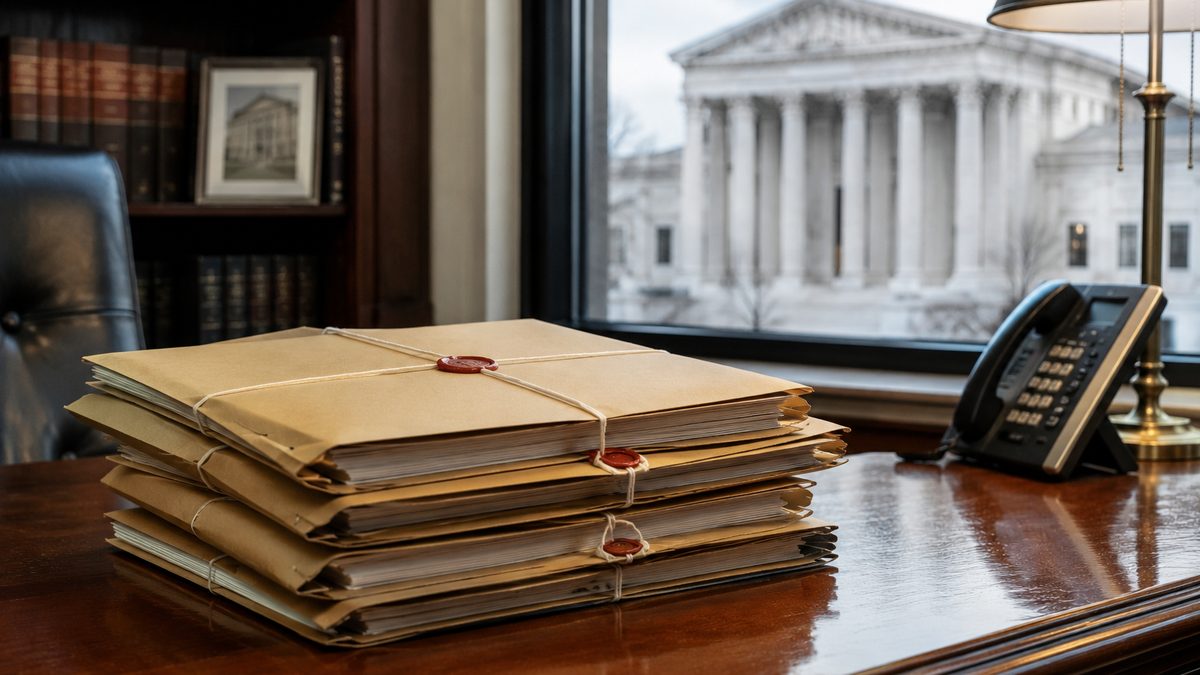
The Senate passed a six-month spending bill hours before a midnight deadline, but the vote exposed deep divisions inside the Democratic Party over how to confront the Trump administration. Editorial illustration by TheDailyGlobe.
The United States Senate voted 54 to 46 on Friday, March 14, 2025, to pass a six-month government spending bill, averting a shutdown that had loomed over Washington for weeks. President Donald Trump signed the measure into law the following day, keeping the federal government funded through September 30, the end of the current fiscal year.
The vote came hours before a midnight deadline and capped a turbulent week of negotiations, procedural maneuvering, and an unusually public rupture inside the Democratic Party. Senate Minority Leader Chuck Schumer of New York announced Thursday that he would support moving the bill forward — a decision that drew immediate and fierce backlash from House Democrats and progressive activists who had urged their party to block the measure outright.
The 99-page spending bill was not a standard continuing resolution. It included a modest increase in military spending alongside roughly $13 billion in cuts to domestic non-defense programs. Democrats had been excluded from drafting the legislation, and Senate Appropriations ranking member Patty Murray of Washington called the bill a set of 'slush funds for the Trump administration to reshape spending priorities, eliminate longstanding programs, pick winners and losers.'
Schumer defended his position on the Senate floor, arguing that a government shutdown would have handed the Trump administration and the Department of Government Efficiency — led by Elon Musk — sweeping authority to define which federal workers and programs were 'essential,' potentially accelerating cuts to agencies and services. 'A shutdown would allow DOGE to shift into overdrive,' Schumer said. 'Clearly, this is a Hobson's choice. The CR is a bad bill. But as bad as the CR is, I believe allowing Donald Trump to take even much more power via a government shutdown is a far worse option.'
The procedural vote to end debate required 60 senators. Ten members of the Democratic caucus joined all Republicans except Paul to clear that threshold 62 to 38. Among those voting to advance the bill were Sens. Dick Durbin of Illinois, Catherine Cortez Masto of Nevada, John Fetterman of Pennsylvania, Kirsten Gillibrand of New York, Maggie Hassan of New Hampshire, Gary Peters of Michigan, Brian Schatz of Hawaii, Shaheen, and independent Angus King of Maine. On the final passage vote, only Shaheen and King voted yes among Democrats.
The decision fractured the party in public view. House Democrats, gathered at their annual policy retreat in Leesburg, Virginia, were nearly unanimous in opposing the bill — all but one House Democrat, Rep. Jared Golden of Maine, had voted against it when it passed the House on Tuesday. House Minority Leader Hakeem Jeffries held a news conference Friday urging Senate Democrats to reject the measure and instead pass a 30-day stopgap to allow more time for bipartisan negotiations. When asked whether Democrats needed new Senate leadership, Jeffries offered a two-word response: 'Next question.'
Rep. Alexandria Ocasio-Cortez of New York, who had been among the loudest voices urging Democrats to hold the line, called Schumer's move 'a tremendous mistake' and said it 'codifies the chaos and the reckless cuts' pursued by the administration. Former House Speaker Nancy Pelosi also criticized the decision, saying Democrats 'must not buy into this false choice' between a shutdown and the Republican bill.
Senate Majority Leader John Thune of South Dakota framed the vote as a necessary step to close out unfinished business from the previous fiscal year. He blamed Senate Democrats for failing to complete the regular appropriations process when they held the majority in the last Congress. 'Another CR was nobody's first choice,' Thune said, 'but I can tell you this: The next time the Senate votes on an appropriation bill, it won't be on the eve of another shutdown.'
The bill also included a provision requiring Washington, D.C., to revert to its fiscal year 2024 budget levels, cutting local spending by more than $1 billion — a reduction that Democrats warned could affect schools, police, and other city services. The Senate separately approved a measure to allow the District to maintain control over its own funds, though that measure still required House passage.
Trump praised Schumer on his Truth Social platform after the vote, writing that the senator had shown 'guts and courage' and calling it 'a really good and smart move.' The president signed the bill at Mar-a-Lago on Saturday.
Senate Democrats now face a period of internal reckoning over strategy and leadership. Several senators declined to say whether they retained confidence in Schumer. Sen. Martin Heinrich of New Mexico said the caucus needed to have a conversation about direction, but added that 'second-guessing Leader Schumer out here isn't going to accomplish the kind of community that we're going to need to be able to stand up to the president.'
With fiscal year 2025 funding now resolved, Congress is expected to turn its attention to fiscal year 2026 appropriations, which begin October 1. The Trump administration's budget request, already roughly two months behind schedule, was expected to be submitted in the coming weeks.
Reporting note: Reporting draws on official floor statements, Senate vote records, and coverage from CNN, NPR, CNBC, Roll Call, and UPI published March 14–15, 2025. All vote tallies, quoted remarks, and spending figures have been verified against multiple primary and secondary sources. This article was produced with AI-assisted research and reviewed by an editor before publication.