Immigration Court Closure Shows How Judge Cuts Can Reshape Asylum Cases
The shutdown of San Francisco’s immigration court shows how staffing cuts and case transfers can change the path for asylum seekers.
Save Article
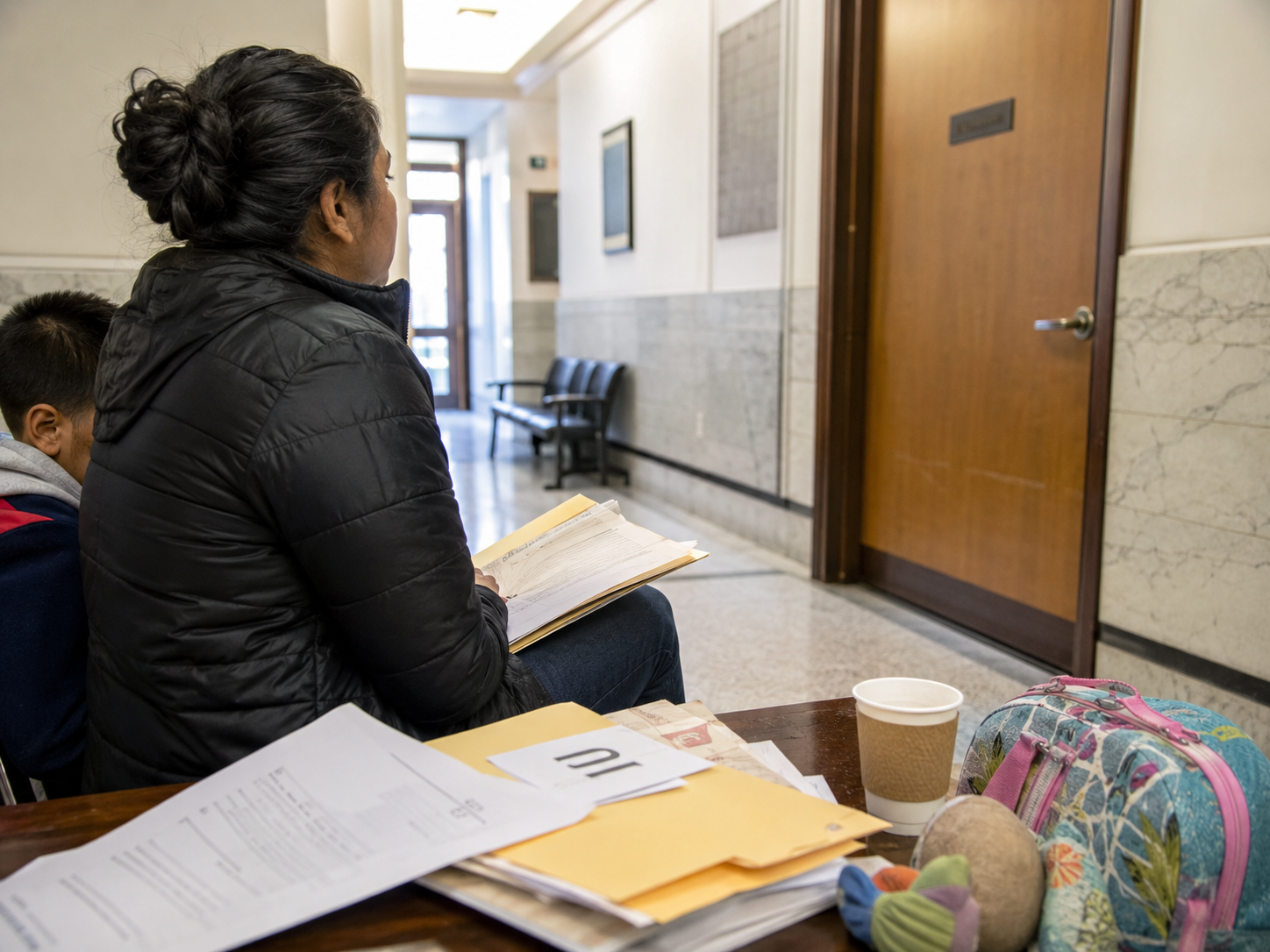
The shutdown of San Francisco’s immigration court shows how staffing cuts and case transfers can change the path for asylum seekers. Editorial illustration by TheDailyGlobe.
Key Facts
- AP reported that the San Francisco immigration court closed after a sharp reduction in immigration judges.
- AP reported that many cases were moved to a newer courthouse in Concord.
- AP reported that the changes disrupted immigration proceedings and added uncertainty for asylum seekers.
- The Executive Office for Immigration Review is the Justice Department office responsible for immigration court administration.
- Immigration courts have long faced large backlogs and staffing pressure.
The closure of San Francisco’s immigration court after a sharp reduction in immigration judges is turning a local courthouse shutdown into a larger question about court capacity, asylum backlogs, and due process.
The Associated Press reported that the court closed after judge reductions and that many cases were moved to a newer courthouse in Concord. AP also reported that the changes disrupted immigration proceedings and added uncertainty for asylum seekers.
For readers, the issue is not only where a hearing takes place. Immigration courts decide whether people can remain in the United States, whether they qualify for asylum, and whether the government can remove them. When judges are reduced or cases are moved, the effects can reach directly into how long people wait and how clearly they can prepare their cases.
Why This Is Bigger Than One Courthouse
A courthouse closure can sound like a local facilities issue. In immigration court, it is more than that. These courts handle high-stakes cases for people facing removal, including asylum seekers who say they would face danger if sent back to their home countries.
The Executive Office for Immigration Review, known as EOIR, is the Justice Department office that administers the immigration court system. Its courts already operate under pressure from large backlogs, limited staffing, and heavy caseloads.
When a court closes and cases move elsewhere, the system has to absorb more than boxes of files. Hearing schedules, judge assignments, attorney availability, interpreter needs, transportation, and public access can all become harder to manage.
How Case Transfers Can Affect Asylum Seekers
For asylum seekers, a transferred case can mean a new location, a changed timeline, or more uncertainty about when a hearing will happen. That uncertainty matters because asylum cases often depend on documents, testimony, legal representation, and the ability to appear in court on time.
A move from San Francisco to Concord may be manageable for some people and difficult for others. The article’s source material does not show exactly how long individual cases will be delayed, but it does show that the changes have disrupted proceedings.
Former judges, lawyers, and advocates argue that closures and judge reductions can undermine access to asylum and due process. Those are claims from people criticizing the change, not court findings. Still, they point to a real legal-system concern: a right to a hearing means less if the process becomes harder to navigate.
Why Judge Staffing Matters
Judges are the central capacity point in immigration court. More cases than judges means longer waits. Fewer judges can mean crowded calendars, postponed hearings, and more pressure on the remaining court staff.
Immigration court backlogs have been a long-running problem. TRAC Immigration’s backlog tool provides public context for the size and persistence of the issue, while EOIR materials describe the federal office responsible for managing the system.
The staffing question also affects fairness. Judges need time to review records, hear testimony, consider legal arguments, and issue decisions. If the system is stretched too thin, the risk is not only delay. It is that cases become harder for everyone involved to handle carefully.
What Remains Unclear
Several important questions remain unresolved. It is not yet clear whether similar closures or staffing cuts will affect other immigration courts. It is also unclear how long transferred cases will be delayed or how EOIR will manage the added workload at the Concord courthouse.
Another open question is whether legal challenges or congressional oversight will follow. Lawmakers, advocates, former judges, or affected parties may seek more information about why the reductions happened, how cases were selected for transfer, and whether the changes meet legal and procedural standards.
The safest conclusion for now is narrow but important: the San Francisco closure shows how immigration court staffing decisions can affect real cases. For asylum seekers, the difference between a stable court schedule and a disrupted one can shape the path of a case long before a judge reaches the final decision.
Reporting note: Reporting draws on wire reporting, Justice Department immigration court materials, immigration-court backlog data, and reviewed legal context. This article was produced with AI-assisted research and reviewed by an editor before publication.