EPA Refrigerant Rollback Puts Grocery Costs and Climate Rules in the Same Fight
The EPA says loosening refrigerant rules will lower costs, while critics warn the rollback could undercut climate goals and disrupt business planning.
Save Article
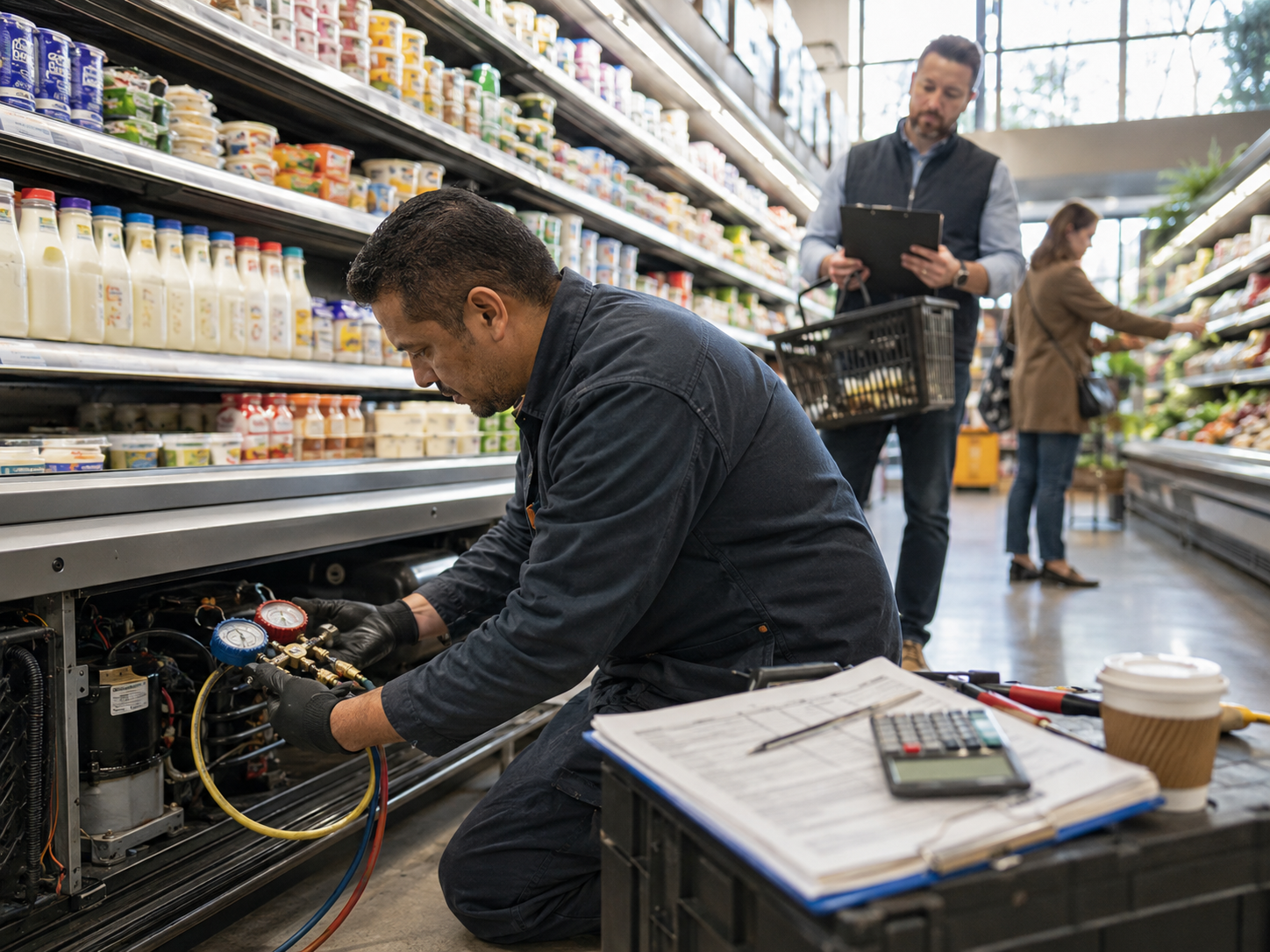
The EPA says loosening refrigerant rules will lower costs, while critics warn the rollback could undercut climate goals and disrupt business planning. Editorial illustration by TheDailyGlobe.
Key Facts
- EPA announced two actions related to Biden-era refrigerant rules and estimated more than $2.4 billion in savings.
- AP reported that the Trump administration loosened federal rules requiring grocery stores and air-conditioning companies to reduce greenhouse gas emissions from cooling equipment.
- The White House said the administration was reversing Biden-era refrigerant rules tied to refrigerators and air conditioners.
- EPA’s HFC program materials describe the American Innovation and Manufacturing Act framework for reducing hydrofluorocarbons.
- EPA materials say the action involves the Technology Transitions Rule and HFC management requirements affecting cooling equipment.
The Environmental Protection Agency is rolling back parts of Biden-era refrigerant rules, putting grocery costs, cooling equipment, business compliance, and climate regulation into the same policy fight.
EPA announced two actions related to refrigerant rules and estimated more than $2.4 billion in savings. The White House framed the move as a reversal of Biden-era rules affecting refrigerators and air conditioners, while The Associated Press reported that the Trump administration loosened federal requirements for grocery stores and air-conditioning companies to reduce greenhouse gas emissions from cooling equipment.
For readers, the issue is practical even if the rule sounds technical. Refrigerants are used in grocery store cooling systems, refrigerated transportation, home air conditioners, and commercial equipment. Changing the rules can affect business costs, climate policy, equipment planning, and possibly consumer prices, though it remains unclear how much savings would actually reach shoppers.
What EPA Changed
EPA said its actions cut Biden-era refrigerant rules and would save families and businesses more than $2.4 billion. The agency described the changes as cost relief tied to refrigerators, air conditioners, grocery store systems, and other cooling equipment.
The action involves two related policy areas: the Technology Transitions Rule and HFC management requirements. In plain terms, those rules deal with what kinds of refrigerants can be used in certain equipment and how businesses handle chemicals that can contribute to climate change when released.
The administration’s argument is that the prior rules created costly compliance deadlines for businesses and families. EPA and the White House say loosening the requirements will reduce costs for supermarkets, cooling companies, and consumers.
Why Refrigerants Matter
Hydrofluorocarbons, or HFCs, are chemicals used in refrigeration and air conditioning. They do not usually get the public attention that gasoline, power plants, or car emissions do, but they can be powerful greenhouse gases.
EPA’s HFC program materials describe the American Innovation and Manufacturing Act framework for reducing these chemicals. The policy goal behind that framework is to move the market toward refrigerants and systems with lower climate impact.
That creates a real tradeoff. Businesses need cooling equipment that works, is affordable to install and repair, and can be serviced by technicians. Climate policy pushes the market toward lower-emission alternatives. The fight is over how fast that transition should happen and who bears the cost.
Why Grocery Costs Are Part of the Debate
Grocery stores depend on refrigeration at almost every step: storage rooms, display cases, warehouses, trucks, and repair systems. If stores have to replace or upgrade cooling equipment quickly, those costs can be substantial.
That is why the administration is linking the rollback to food prices. The White House says the change will ease costs on grocery stores and businesses, with savings that could help families.
But that claim should not be treated as guaranteed consumer savings. Even if businesses spend less on compliance, it is not yet clear how much of that would show up as lower prices at the checkout line, how quickly it would happen, or whether other supply-chain costs would outweigh the savings.
What Critics Are Warning About
Critics and some industry observers argue the rollback could undercut climate goals and disrupt investment in lower-emission refrigerants and equipment. Businesses that already spent money preparing for the previous rules may now face a different regulatory path than the one they planned around.
Environmental critics also argue that weakening HFC requirements slows progress on climate pollutants. Their concern is that delaying or loosening the transition keeps older, higher-emission systems in use longer.
The administration sees the same rule fight differently. It argues that the prior requirements were too costly and that easing them will protect consumers and businesses. The court of public policy will now turn on which claim proves more persuasive: immediate compliance relief or longer-term climate and market stability.
What Remains Unclear
The biggest unknown is how much money consumers would actually save. EPA has put forward a savings estimate, but grocery prices depend on many factors, including labor, transportation, energy, rent, supply contracts, tariffs, weather, and competition.
It is also unclear whether the rollback will face litigation or further regulatory challenges. Environmental groups, businesses, states, or industry groups could challenge parts of the action depending on the final legal form and timing.
Another question is how businesses that already invested in lower-emission systems will adjust. Some may welcome more flexibility. Others may have made capital plans based on the previous deadlines and now face a less predictable market.
For now, the EPA rollback shows how a technical climate rule can become a household-cost story. Refrigerants are mostly invisible to shoppers, but the systems they support help keep food cold, buildings cool, and climate policy moving or slowing depending on which rules are in place.
Reporting note: Reporting draws on EPA materials, White House statements, wire reporting, environmental-policy reporting, HFC program materials, and reviewed regulatory context. This article was produced with AI-assisted research and reviewed by an editor before publication.