Federal Appeals Courts Split Further Over Trump Immigration Detention Policy
A growing divide among federal appeals courts over immigration detention rules is increasing pressure on the Supreme Court to step in.
Save Article
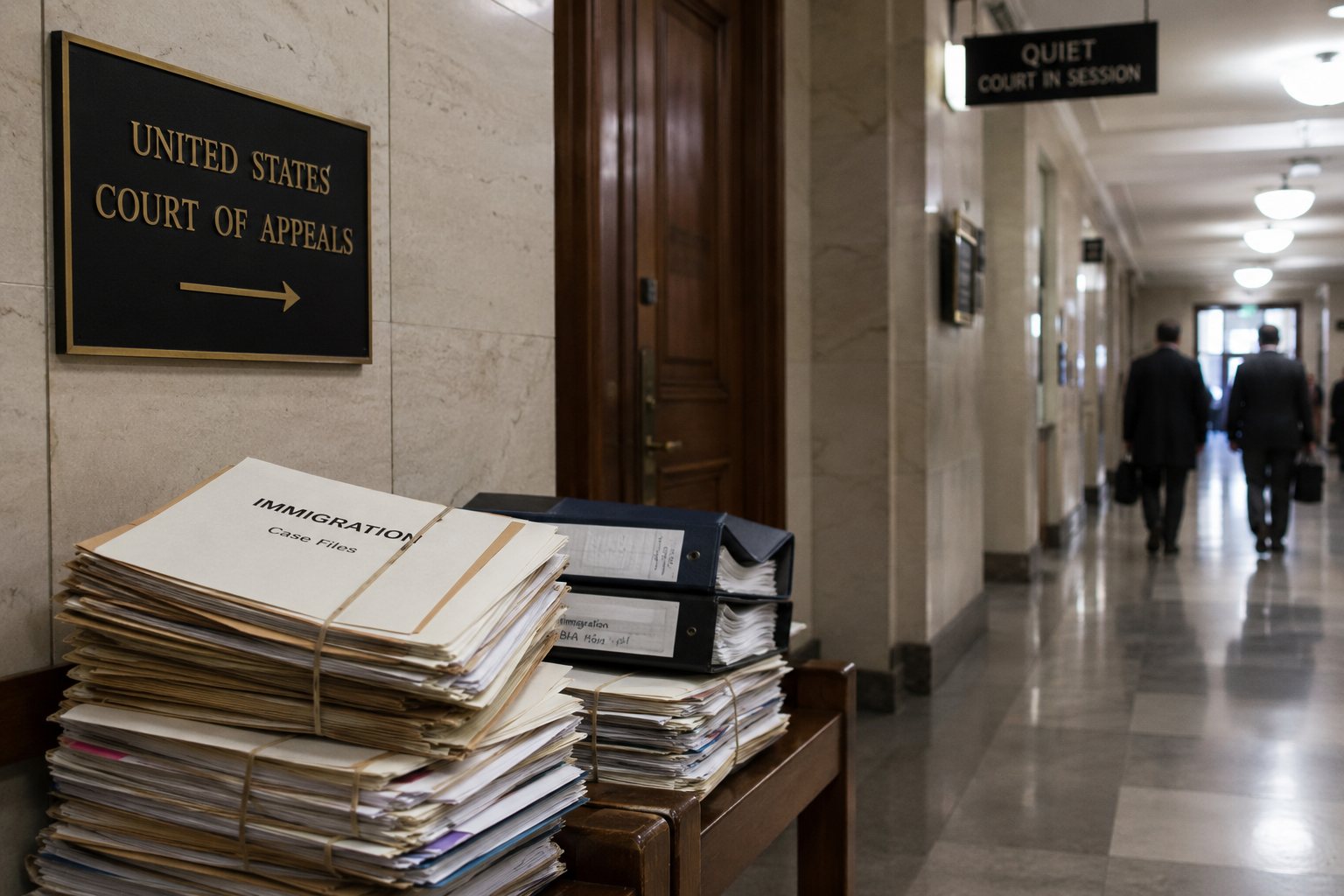
A growing divide among federal appeals courts over immigration detention rules is increasing pressure on the Supreme Court to step in. Editorial illustration by TheDailyGlobe.
Key Facts
- The 11th Circuit rejected the administration's no-bond detention position.
- Federal appeals courts in other regions have issued conflicting rulings.
- The legal disagreement centers on immigration detention and bond hearings.
- Thousands of habeas filings have followed detention-related disputes.
- The widening circuit split increases the likelihood of Supreme Court review.
Federal appeals courts across the country are becoming more sharply divided over whether the Trump administration can continue holding some immigrants in detention without bond hearings, setting up what legal analysts increasingly view as a likely Supreme Court fight.
The latest development came from the 11th U.S. Circuit Court of Appeals, which rejected the administration's position on mandatory no-bond detention in a recent ruling tied to immigration custody challenges. The decision deepened an already growing disagreement among federal appellate courts that have reached different conclusions on how immigration detention laws should be interpreted.
The dispute centers on whether certain immigrants facing removal proceedings are entitled to individualized bond hearings while their cases move through the immigration court system. The administration has argued that federal law allows broad detention authority in some categories of cases without requiring those hearings.
Immigrant advocacy groups and some lower courts have argued that long-term detention without a bond review raises constitutional concerns, particularly under due process protections.
Why the Courts Are Divided
At the center of the legal fight is how federal immigration law should be interpreted alongside constitutional protections. Some courts have taken a more expansive view of the government's authority to detain migrants during removal proceedings. Others have concluded that indefinite or lengthy detention without a hearing can violate constitutional safeguards.
The disagreement is not simply political. Judges across multiple circuits have focused heavily on technical legal questions involving statutory language, prior Supreme Court precedent, and the balance between immigration enforcement powers and individual liberty rights.
Several courts that sided with detainees have pointed to the length of some detention periods and the absence of individualized review. Those rulings have argued that even non-citizens in immigration proceedings retain certain constitutional protections while inside the United States.
Other courts have emphasized Congress' broad authority over immigration enforcement and national border policy. Those decisions have generally deferred more heavily to federal immigration agencies and executive branch enforcement priorities.
Why the Supreme Court May Step In
When federal appeals courts issue conflicting rulings on the same legal issue, the Supreme Court often becomes the final authority responsible for resolving the disagreement nationwide. Legal experts commonly refer to this as a "circuit split."
The expanding split over immigration detention rules now affects multiple regions of the country, creating uncertainty for immigration courts, federal detention systems, and migrants challenging their detention status.
In practice, immigrants in different parts of the country may face different legal standards depending on which federal circuit oversees their case. That uneven application of federal law is one reason Supreme Court review becomes more likely in cases involving major constitutional or national policy questions.
The Court has addressed immigration detention issues before, but several current disputes involve narrower procedural questions and evolving constitutional arguments that lower courts continue interpreting differently.
Growing Pressure on Federal Courts
The legal conflict has also generated a large number of detention-related habeas corpus filings in federal courts. Habeas petitions allow detainees to challenge the legality of their detention before a judge.
Federal judges in several districts have faced increasing caseloads tied to immigration detention reviews, especially in areas with large detention populations. The volume of cases has added pressure on courts already managing heavy immigration-related dockets.
Immigration enforcement remains one of the most contested areas of federal policy, and detention standards have become a major battleground in both the courts and national political debate. Still, many of the current appeals cases focus less on broader immigration politics and more on legal interpretations of detention authority.
That distinction matters because courts reviewing these cases are generally not deciding whether immigration enforcement itself is legal. Instead, they are examining how detention powers can be applied under existing federal law and constitutional standards.
What Happens Next
The administration could seek further review of the 11th Circuit ruling, including a request for the full appeals court to reconsider the decision or a direct appeal to the Supreme Court. Additional cases moving through other circuits may also reach the high court in the coming months.
If the Supreme Court agrees to hear one of the cases, the outcome could establish a nationwide standard governing when immigration detainees must receive bond hearings and how long detention can continue without judicial review.
A ruling from the Court could affect thousands of current and future immigration cases, particularly as federal agencies continue managing detention systems tied to border enforcement and removal proceedings.
For now, the legal landscape remains unsettled. Different federal courts are continuing to apply different standards, and the growing divide is increasing pressure for a final national resolution from the Supreme Court.
Any eventual Supreme Court decision would likely carry major implications not only for immigration enforcement policy, but also for broader questions about executive power, due process rights, and the limits of federal detention authority.
Reporting note: Reporting draws on Associated Press reporting, federal court filings, and reviewed legal background materials. All claims This article was produced with AI-assisted research and reviewed by an editor before publication.