Alabama Map Fight Returns to Supreme Court With 2026 House Stakes
Alabama is asking the Supreme Court to let it use a disputed congressional map after a lower court said the plan intentionally discriminated against Black voters.
Save Article
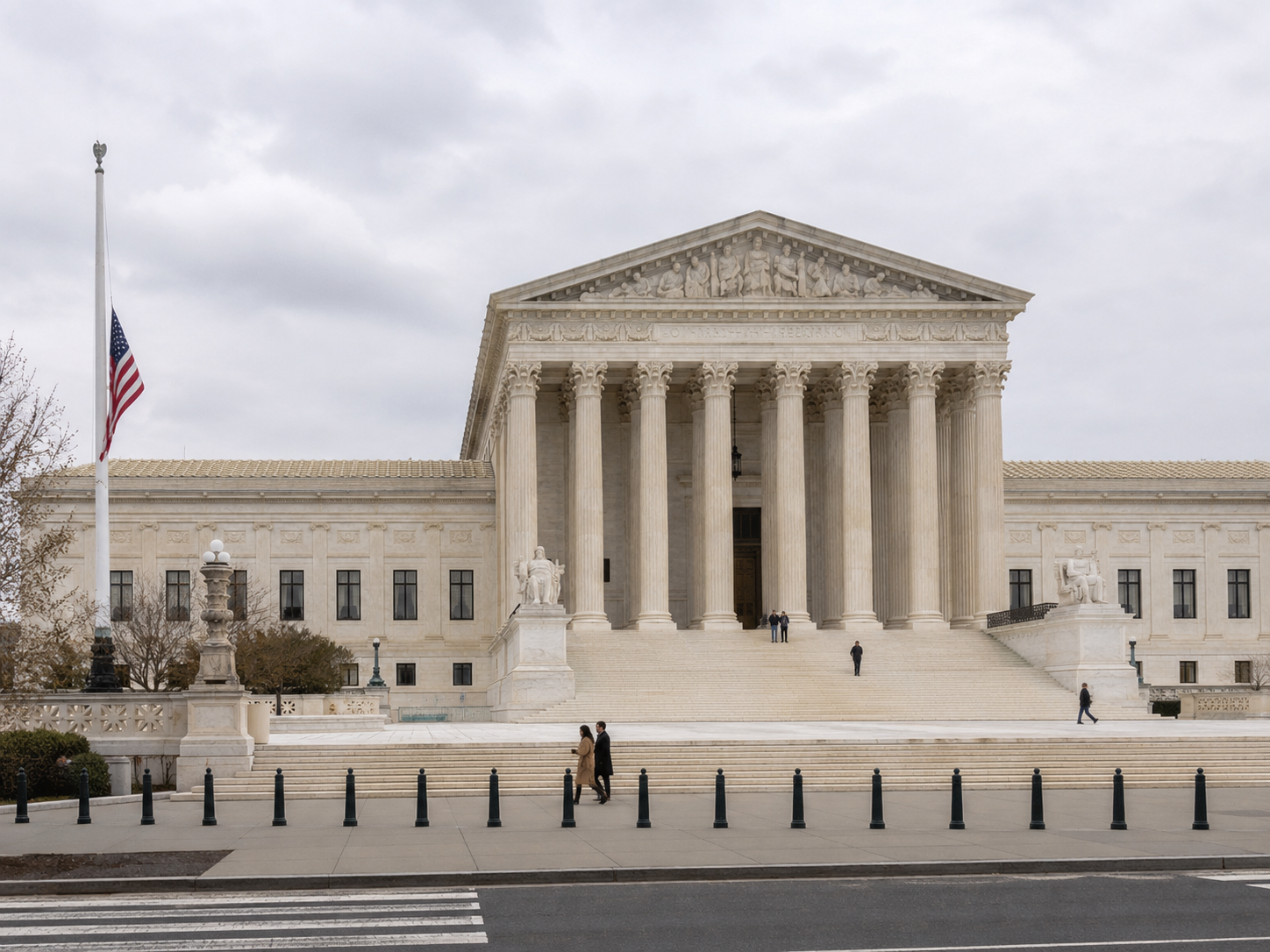
The Supreme Court is again being asked to intervene in Alabama's congressional map fight. Editorial illustration by TheDailyGlobe.
Key Facts
- Alabama asked the U.S. Supreme Court to allow use of its disputed congressional map.
- A lower federal court ruled that the map intentionally discriminated against Black voters.
- Alabama argues that state officials did not act with discriminatory intent.
- Opponents argue that the map dilutes Black voting power.
- The Supreme Court had not resolved the emergency request at the time of drafting.
A fight over Alabama's congressional map is back before the U.S. Supreme Court, leaving voters, candidates, and election officials waiting to see which districts will be used in the 2026 elections.
Alabama filed an emergency request Wednesday asking the justices to let the state use a disputed congressional map that a lower federal court had blocked. That lower court found that the map intentionally discriminated against Black voters.
The request puts the Court in the middle of a fast-moving election-law dispute with both state and national consequences. For Alabama voters, the question is which map will govern their representation. For the country, the case lands amid a wider wave of redistricting fights before the next battle for control of the U.S. House.
What Alabama Is Asking For
Alabama's emergency request asks the Supreme Court to step in quickly and allow the state to use its preferred congressional map for the 2026 election cycle. Emergency applications are often handled on a compressed timeline, especially when election deadlines are approaching.
The state is not asking the justices to write a map themselves. It is asking them to pause the lower court's order so Alabama can move forward under the map the lower court rejected.
That distinction matters. A stay from the Supreme Court would not necessarily settle every legal question in the case. But it could decide which map is used while the broader dispute continues, which can be the practical question that matters most before an election.
Why the Lower Court Blocked the Map
The lower court's ruling is central to the dispute. It found that Alabama's map was intentionally discriminatory toward Black voters. That is a serious legal finding, and it gives opponents of the map their strongest argument against letting the state use it while the case continues.
Alabama disputes that conclusion. The state argues that it did not draw the map with discriminatory intent and should be allowed to conduct elections under the plan it adopted.
Opponents argue the opposite: that the map weakens Black voters' ability to elect candidates of their choice. That disagreement is not just a political argument. It goes to how courts apply constitutional and voting-rights protections when race, district lines, and election timing collide.
Why One State Map Has National Attention
Alabama's case is not happening in isolation. Several states have been caught up in mid-decade redistricting fights ahead of the 2026 elections. Those fights can affect the balance of power in the U.S. House because even a small number of seats can matter in a closely divided Congress.
That does not mean the Alabama case alone will determine House control. It does mean the case is part of a larger fight over who draws congressional districts, how courts review those maps, and how close to an election a court should allow changes to take effect.
For voters, the issue is more basic. A congressional map shapes which communities are grouped together, which candidates run where, and how much influence different groups of voters can realistically have.
What Remains Unclear
The biggest unanswered question is what the Supreme Court will do with Alabama's emergency request. The justices could allow the disputed map to be used, leave the lower court's ruling in place, or issue a narrower order that affects timing without fully resolving the underlying dispute.
The timing is also uncertain. Election officials and candidates need stable district lines to prepare for primaries and the general election, but courts also have to weigh the legal claims before them. That tension is common in election cases, and it often puts pressure on judges to decide quickly.
It also remains unclear how any Supreme Court order would shape the broader case after 2026. An emergency ruling can have immediate effects without answering every legal issue.
What To Watch Next
The next step is any action from the Supreme Court on Alabama's request. If the Court grants emergency relief, Alabama may be able to proceed under the disputed map while the legal fight continues. If the Court denies relief, the lower court's order would remain the controlling decision unless another court action changes the situation.
Alabama election officials will also have to respond to whatever the Court does. Candidates, campaigns, and voters will be watching for the practical result: which congressional districts will be used, and when that answer becomes final enough for the election calendar to move forward.
For now, the case is a reminder that redistricting fights are not only about maps on paper. They decide how communities are represented, how courts police discrimination claims, and how much uncertainty voters face before they cast a ballot.
Reporting note: Reporting draws on Supreme Court docket materials, federal court reporting, Associated Press coverage, and reviewed redistricting context. This article was produced with AI-assisted research and reviewed by an editor before publication.