How Both Political Parties Left Many Americans Feeling Abandoned
An average American view of how both major parties changed, hardened, and left many ordinary Americans feeling financially squeezed and politically homeless.
Save Article
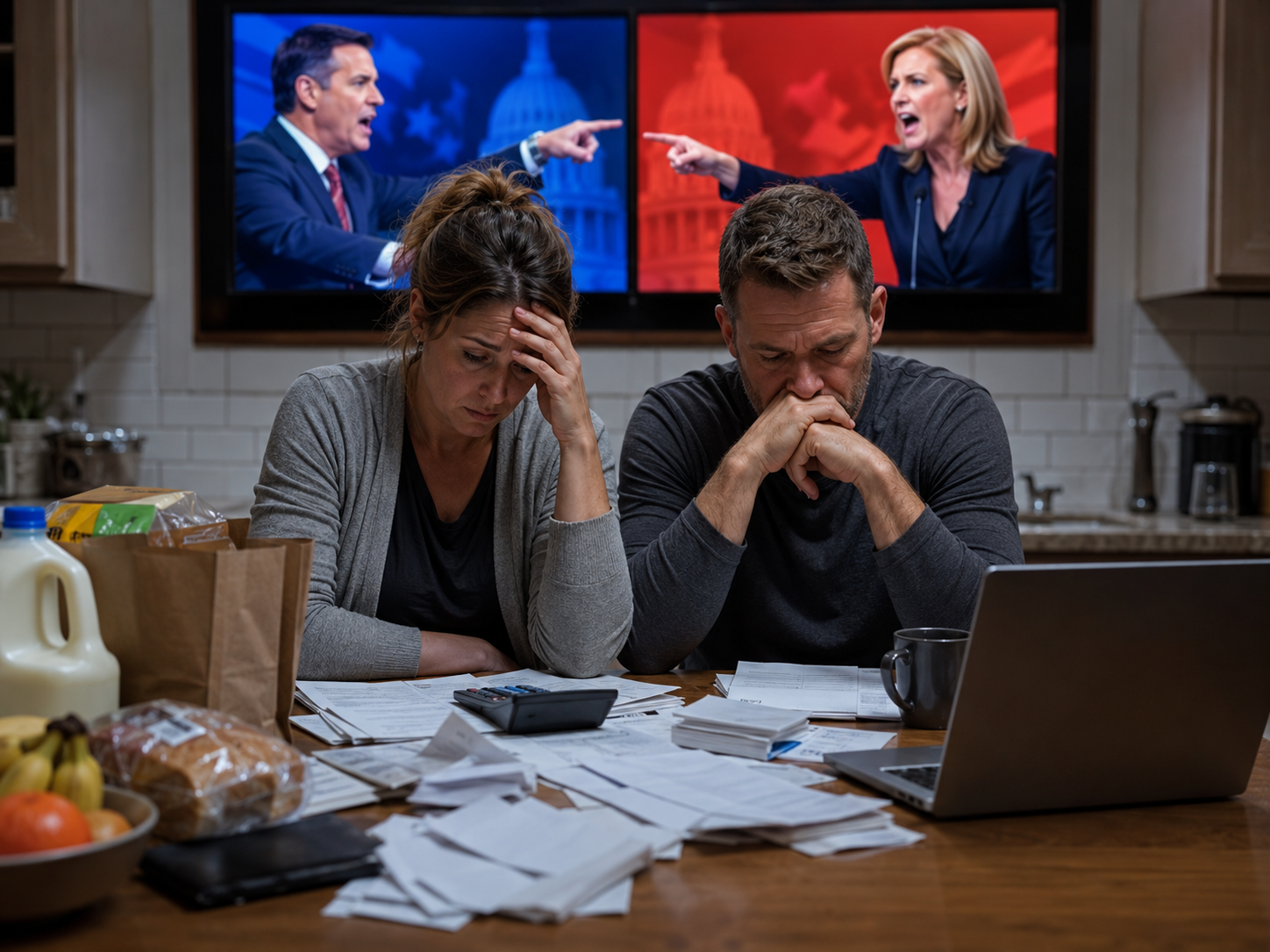
An average American view of how both major parties changed, hardened, and left many ordinary Americans feeling financially squeezed and politically homeless. Editorial illustration by TheDailyGlobe.
If you are an average American trying to pay bills in 2026, it can feel like the two major parties are arguing over the country while ordinary people are trying to survive it.
That is not a fashionable position in a political culture that rewards team loyalty. Democrats and Republicans both prefer to explain why the other side is dangerous, reckless, corrupt, extreme, or unserious. Sometimes those criticisms are grounded in real facts. Sometimes they are campaign language dressed up as moral certainty. But for many Americans, the daily experience is simpler: prices are high, housing is hard, health care is expensive, debt is heavy, trust is low, and politics rarely seems built around normal life.
This is an opinion piece, but the frustration behind it is not imaginary. Pew Research Center has tracked deep political polarization in American public life. Gallup has reported that Republicans and Democrats are historically polarized ideologically. The Federal Reserve’s household financial well-being surveys have found that many families remain pressured by prices even when broader economic indicators look stable. The American Psychological Association’s Stress in America work has repeatedly found that the future of the nation, the economy, and elections are major sources of stress.
The Parties Did Not Always Look Like This
Over the last 50 years, both parties changed. The Democratic Party moved from a coalition that included Southern conservatives, labor unions, urban machines, civil rights liberals, and working-class voters into a party increasingly identified with social liberalism, professional-class voters, urban America, climate policy, racial and gender equality, and a larger role for government in health care and social protection.
The Republican Party also changed. It moved from a coalition that included business conservatives, anti-communists, moderates, suburban voters, religious conservatives, and small-government advocates into a party increasingly shaped by cultural conservatism, distrust of federal institutions, immigration restriction, tax cuts, deregulation, populist anger, and, in the Trump era, a more confrontational form of nationalist politics.
Neither shift happened overnight. Civil rights, Vietnam, Watergate, Roe v. Wade, globalization, the decline of organized labor, cable news, talk radio, the internet, the Iraq War, the financial crisis, social media, immigration fights, the pandemic, and the Trump years all helped sort Americans into harder partisan identities. The parties became less like broad tents and more like cultural teams.
What Democrats Got Right and Wrong
Democrats can fairly argue that they pushed the country toward broader civil rights, expanded health coverage, stronger environmental rules, labor protections, consumer protections, and recognition for groups that had long been excluded from full public life. Many Americans benefited from those fights. It would be dishonest to pretend otherwise.
But Democrats also helped lose the trust of many working- and middle-class Americans. Too often, the party sounded more fluent in institutional language than kitchen-table language. It defended expertise even when institutions failed. It embraced trade, technology, and cultural change without always taking seriously the communities that were disrupted by them. It sometimes treated disagreement on social issues as proof of ignorance or cruelty rather than as something to persuade through respect and evidence.
The result is that many Americans who might support parts of the Democratic economic agenda still feel talked down to by the party’s cultural tone, and lied to by its leaders. A political party that says it stands for working people cannot afford to sound confused by how working people actually live.
What Republicans Got Right and Wrong
Republicans can fairly argue that they gave voice to Americans who felt ignored by elite institutions, national media, universities, bureaucracies, and corporate cultural pressure. The party also raised real concerns about government overreach, border security, crime, religious liberty, taxes, regulation, and the social cost of rapid cultural change. Those concerns are not automatically illegitimate just because Democrats dislike how Republicans frame them.
But Republicans also made choices that damaged public trust. The party spent decades promising fiscal discipline while often supporting tax cuts, spending priorities, and deficits that did not match the rhetoric. They defended market freedom while many communities and institutions were hollowed out. In the Trump era, too many Republican leaders became willing to excuse attacks on institutions, election trust, public servants, and basic civic norms when doing so served partisan power.
A politics that says it defends ordinary Americans cannot turn every institution into an enemy, every critic into a traitor, and every election loss into proof of conspiracy. That kind of politics may energize a base, but it leaves the country more suspicious, more exhausted, and harder to govern.
The Average American Is Not Living Inside a Party Platform
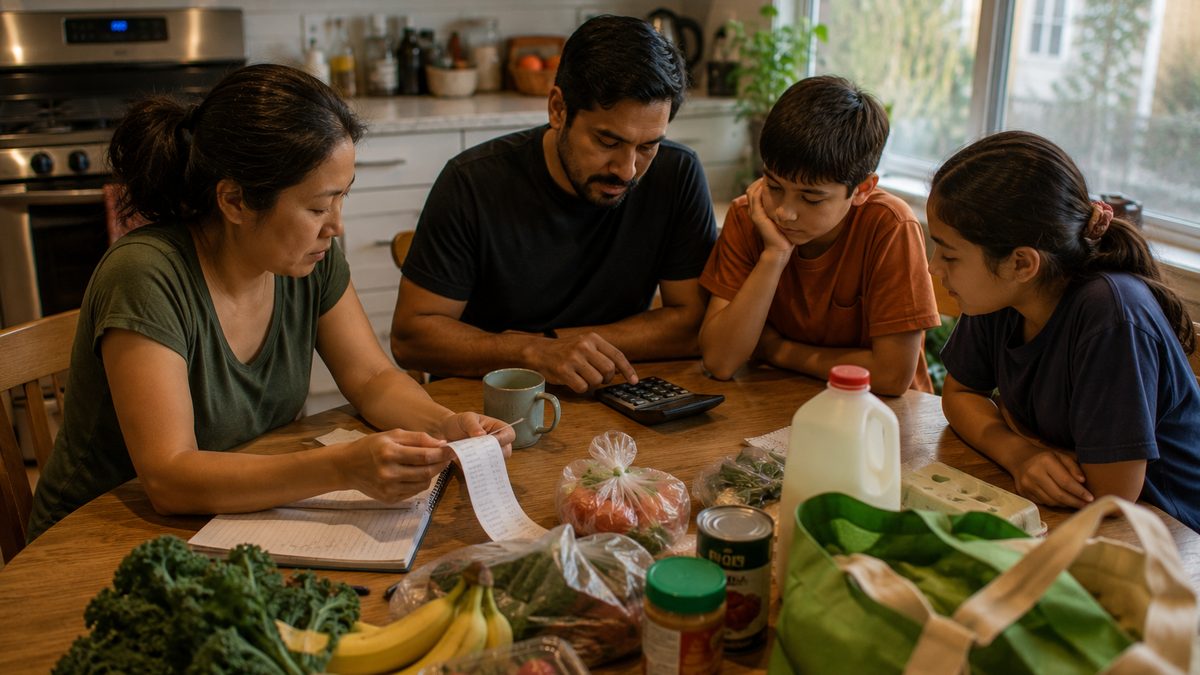
Most Americans do not experience politics as a clean ideological argument. They experience it through rent, mortgage payments, groceries, insurance premiums, child care, student loans, gas prices, medical bills, retirement fears, and the feeling that one surprise expense could knock the household sideways.
That is why the national argument can feel so insulting. One party says the other side is destroying democracy. The other says its opponents are destroying America. Meanwhile, regular people are trying to figure out why working hard does not seem to buy the same security it once promised.
The Federal Reserve’s household survey work is a reminder that economic well-being is not just a talking point. Even when employment looks solid or markets rise, many families still feel the pressure of prices, debt, housing, and limited savings. The APA’s stress research adds another piece: politics itself has become one of the things making people feel worse.
Both Parties Learned to Win Arguments Instead of Solving Problems
The harsh truth is that both parties benefit from division. Fundraising works better when people are afraid. Media attention rewards conflict. Primary elections punish compromise. Social media turns every disagreement into a performance. Cable news and partisan influencers make moderation look weak, even when moderation is often where most of adult life happens.
Democrats too often act as if the answer is more institutional competence, even when people no longer trust the institutions. Republicans too often act as if the answer is tearing institutions down, even when people still need government to work. One side can sound bloodless. The other can sound reckless. Neither posture is enough for a country this stressed.
The country needs a politics that can admit tradeoffs. Immigration needs order and humanity. Policing needs safety and accountability. Climate policy needs urgency and affordability. Health care needs access and fiscal realism. Schools need both inclusion and high standards. Free speech matters, and so does basic civic responsibility. A serious politics would stop pretending these tensions are easy.
Why the Public Square Feels Broken
This is where a healthier public square has a job to do. Not to invent a fake middle between truth and falsehood. Not to pretend both parties are always equally wrong. Not to drain moral seriousness out of public life. But to insist that facts come before teams, claims need evidence, and Americans deserve clarity instead of agitation.
An average American reader does not need politics that flatters both parties. That would be cowardice. A reader needs the same standard applied to both parties. If Democrats are right on a fact, say so. If Republicans are right on a concern, say so. If either side is misleading people, say so clearly. If the evidence is incomplete, do not fill the gap with attitude.
The American people have been asked to carry too much of the emotional cost of political failure. They are told every election is existential, every disagreement is betrayal, every institution is suspect, and every compromise is surrender. No wonder people are stressed. No wonder they tune out. No wonder they do not know whom to trust.
The answer is not nostalgia. The parties of 50 years ago had serious failures of their own. The answer is not pretending politics does not matter. It does. The answer is rebuilding a public square where Americans can understand what is happening without being manipulated into rage before breakfast.
For a financially strained average American in 2026, the question is not which party has the better slogan. The question is whether either party can remember the people living beneath the slogans.
Until they do, the country needs more than another round of partisan combat. It needs a clearer way to see through it.
Reporting note: Opinion analysis draws on Pew Research Center materials on political polarization, Gallup ideology research, Federal Reserve household financial well-being data, American Psychological Association stress research, and reviewed political history context. This article was produced with AI-assisted research and reviewed by an editor before publication.