Child Care Is Work, Not a Private Luxury
Families need choices, but a country that expects parents to work cannot treat child care as a side issue or private luxury.
Save Article

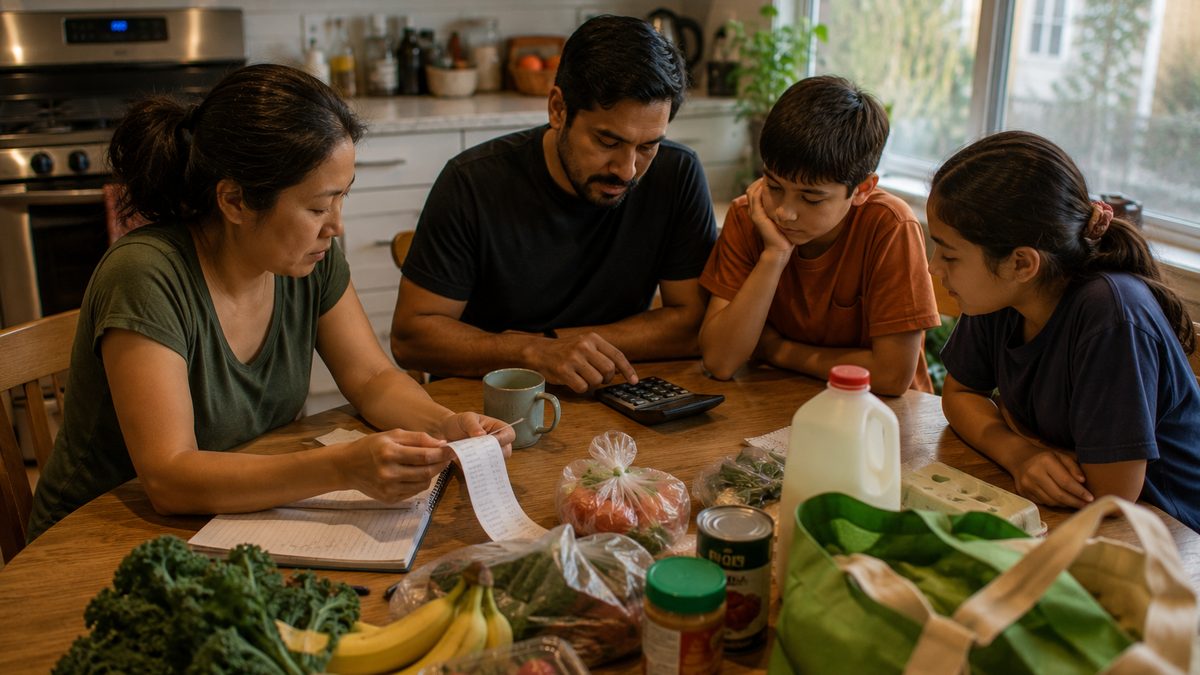
Child care costs shape whether many parents can work, earn and keep family schedules stable. Editorial illustration by TheDailyGlobe.
A parent sitting at the kitchen table with a paycheck in one hand and a child care bill in the other is not facing a lifestyle puzzle.
They are doing work math.
Can they afford to keep the job? Can they afford not to? Will a raise be swallowed by care costs? Does a second shift make sense if pickup time is impossible? What happens when a provider closes, a child gets sick, or a relative who usually helps is no longer available?
America often talks about child care as if it were mainly a private family purchase. Families choose what they prefer, pay what it costs, and arrange the rest around work. But that framing leaves out the obvious: child care is part of whether parents can work at all.
Child care is work infrastructure, not a private luxury.
The Math Shapes the Workday
Child Care Aware of America tracks child care price and supply nationally and by state. Its 2025 materials compare child care prices with major family expenses, which is exactly how many households experience the issue: not as an abstract policy question, but as one of the largest and most difficult bills in the family budget.
The Federal Reserve’s household well-being report also includes childcare among the topics connected to household finances and economic hardship. That matters because care costs do not sit apart from rent, groceries, transportation, debt, medical bills or wages. They land on the same kitchen table.
When child care is too expensive or too hard to find, the effects are not limited to parents. Employers feel it when workers cut hours, turn down shifts, leave jobs, arrive late, miss days or cannot accept promotions that require schedules their families cannot support.
Families Need Different Choices
There is a fair counterpoint. Child care is not one thing. Families have different needs and different values. Some prefer care from relatives. Some choose centers. Some use faith-based care, home-based providers, preschool programs, neighbors or a parent staying home. A serious conversation should not pretend that one model fits every family.
Quality, staffing, safety and cost are also difficult to balance. Lower prices mean little if families cannot trust the setting. Expanding supply means little if workers in child care cannot earn enough to stay in the field. Convenience matters, but so does safety. Affordability matters, but so does quality.
That is exactly why the issue should not be waved away as a private preference. The more complicated the tradeoffs are, the more honest the public conversation needs to be.
Parents Are Being Asked to Absorb Too Much
The Surgeon General’s advisory on parental mental health and well-being links parental stressors to caregiver and family well-being. That should not be stretched into a claim about any one household, but it does fit what many parents already know: the pressure of arranging care is not just logistical. It is emotional, financial and constant.
A parent can love working and still be exhausted by the care puzzle. A parent can love staying home and still feel the financial weight of that choice. A family can make responsible decisions and still find that the available options do not match the hours, wages or needs of real life.
The country should stop congratulating parents for grit while designing systems that require too much of it.
This Is a Workforce Issue
If roads, broadband, transit and schools are discussed as part of economic life, child care belongs in the same practical conversation. It affects who can work, when they can work, how much they can earn, and whether employers can staff their workplaces.
That does not mean every answer must come from Washington, or that every family should use the same kind of care. Local supply, state programs, employer benefits, flexible schedules, provider pay, safety rules and family preferences all matter. The right mix may look different in a rural county, a small city, a suburb and a dense urban neighborhood.
But the starting point should be clear: a country cannot tell parents to participate fully in the economy while treating care for young children as if it were an optional upgrade.
What Readers Should Watch
The next useful test is not whether leaders say they support families. It is whether parents can realistically work and care for children without impossible math.
Readers should watch employer benefits, state child care programs, local provider supply, federal proposals and the way communities support parents outside normal office hours. They should also watch whether public debates respect the full range of family choices rather than forcing the issue into a narrow political script.
Child care is personal because children are personal. But it is not only personal. It is tied to work, income, stress, child development and family stability.
Calling it a private luxury may make the problem easier to ignore. It does not make the math work.
Reporting note: Reporting draws on public records, official household survey materials, child care affordability research, public health materials, and reviewed background materials used to ground the argument. This article was produced with AI-assisted research and reviewed by an editor before publication.